Begleiten Sie uns auf eine literarische Weltreise!
Buch zum Bücherregal hinzufügen
Grey
Einen neuen Kommentar schreiben Default profile 50px
Grey
Jetzt das ganze Buch im Abo oder die ersten Seiten gratis lesen!
All characters reduced
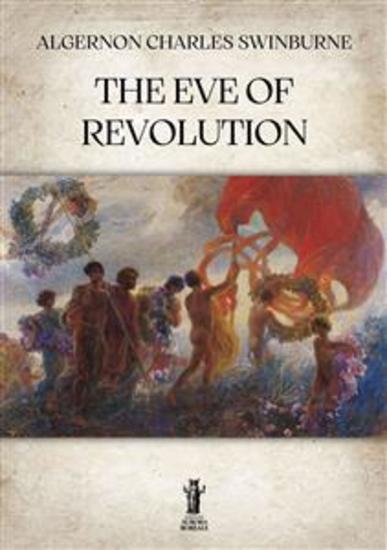
The Eve of Revolution - cover

The Eve of Revolution

Algernon Charles Swinburne

Verlag: Edizioni Aurora Boreale

  • 0
  • 0
  • 0

Beschreibung

Algernon Charles Swinburne (1837-1909) was a British poet, writer and playwright of the Victorian era.Active in the aesthetic circle, romantic and then decadent, he met Oscar Wilde and other famous intellectuals and artists of the same environment, attending the Pre-Raphaelite Brotherhood and becoming a friend of the poet, artist and initiate Dante Gabriel Rossetti. Eccentric personality, with a strong taste for artistic provocation, inspired by writers such as the Marquis de Sade, Percy Bysshe Shelley and Charles Baudelaire, his poetry was very controversial, due to its themes (sadomasochism, suicide, lesbianism, irreligiosity); his lyrics are also characterized by original versification solutions, by the cult of paganism and the idealized Middle Ages, and of absolute freedom. From 1903 to 1909 he was nominated for the Nobel Prize for Literature. With Alfred Edward Housman, Robert Browning, Alfred Tennyson, Ernest Dowson and William Butler Yeats, he is considered one of the most representative lyric poets of Victorian literature. He died in Putney (London) on April 10, 1909.Swinburne’s literary output is vast and includes poems, plays, songs, novels, short stories and essays on literary criticism.The poem The Eve of Revolution was included in 1871 by Swinburne in one of his finest collections of poetry, Songs before Sunrise, dedicated to the Italian revolutionary and Freemason Giuseppe Mazzini; a collection based on his pagan and pantheistic ideals and on the revolutionary spirit of that time, a devoted and warm homage to Italy and the Mediterranean, with references to ancient mythology and the national independence of peoples.In those years, the whole of Europe was in turmoil and a new revolutionary spirit hovered everywhere which would lead to the end of many despotisms and to the independence and sovereignty of the peoples. Swinburne felt emotionally involved in this revolutionary spirit and hoped for the advent of a new era of freedom and social progress.
Verfügbar seit: 18.05.2023.


Weitere Bücher, die Sie mögen werden

  • Decade of the Brain: Poems - cover

    Decade of the Brain: Poems

    Janine Joseph

    • 0
    • 0
    • 0
    In the deeply personal Decade of the Brain, Janine Joseph writes of a newly-naturalized American citizen who suffers from post-concussive memory loss after a major auto accident.The collection is an odyssey of what it means to recover—physically and mentally—in the aftermath of trauma and traumatic brain injury, charting when “before” crosses into “after.” Through connected poems, buckling and expansive syntax, ekphrasis, and conjoined poetic forms, Decade of the Brain remembers and misremembers hospital visits, violence and bodily injury, intimate memories, immigration status, family members, and the self.  
    After the accident I turned outall of the lights in the room while I watched, 
    concussed, from the mirror. I edged like a feverwith nothing on the tip of my tongue.
    Zum Buch
  • Behind the Web - cover

    Behind the Web

    Fimalia McNoll

    • 0
    • 0
    • 0
    Tears, dropping, running like a river 
    Genuine attention needed 
    But how to wipe them with hands tied 
    Call for help, people will hear 
    Some might hear and turn a blind eye 
    Others might pretend they don't hear you cry 
    Yet a kind one must come running 
    If not running, to your aid, walking, scrambling
    Zum Buch
  • Dreaming and Drowning - cover

    Dreaming and Drowning

    Kwame Owusu

    • 0
    • 0
    • 0
    'The supernatural is possible and the impossible is natural and life teeters on the edge of the unreal'
    Malachi's been looking forward to a fresh start at uni for months. He's settling in, he's got a stack of books to read and he's met someone new – Kojo, a musician with a megawatt smile, who's basically perfect.
    But something doesn't feel right. He keeps having the same nightmare – sinking, crushed by the weight of the ocean – and it's getting worse… A beast grows in the water, hungry, relentless, hunting him but always just out of sight. As the boundaries between nightmare and reality fracture, Malachi must fight harder than ever to stay afloat.
    Kwame Owusu's play Dreaming and Drowning is an intimate and visceral deep-dive into the boundless mind of a young Black queer man wrestling with anxiety.
    It won the Mustapha Matura Award, was shortlisted for the Alfred Fagon Award, and was one of the winning plays in the RSC's 37 Plays competition. It was first performed at the Bush Theatre, London, in November 2023, directed by the playwright, performed by Tienne Simon, and produced by WoLab.
    Zum Buch
  • Crooked Sticks Smouldering Wicks - Anthology of Collateral Damage - cover

    Crooked Sticks Smouldering Wicks...

    Stephen Davis

    • 0
    • 0
    • 0
    Words for wanderers, troubled souls, kindred spirits.
    Zum Buch
  • The Poetry of Sarojini Naidu - One of the finest modern global poets - cover

    The Poetry of Sarojini Naidu -...

    Sarojini Naidu

    • 0
    • 0
    • 0
    Sarojini Chattopadhyay was born into a Bengali family in Hyderabad, India on 13th February 1879, the eldest of the eight siblings. The family was well-respected in Hyderabad and were established artists. 
     
    Naidu passed her matriculation examination at the University of Madras and took a four-year break from her studies.  
     
    In 1895, H.E.H. the Nizam's Charitable Trust founded by the 6th Nizam, Mahbub Ali Khan, gave her the chance to study in England, first at King's College, London and later at Girton College, Cambridge.  
     
    Even in these early times she was a social activist.  It was whilst in England that she worked as a suffragist and was first drawn to the Indian National Congress' Hindu movement for India's independence from British Colonial rule.  
     
    She began writing at the age of twelve. Her play, ‘Maher Muneer’, written in Persian, impressed the Nawab of Hyderabad. It was an auspicious start. 
     
    Sarojini met Paidipati Govindarajulu Naidu, a physician, and after finishing her studies at age 19 married him. The couple would have five children.  Interestingly their families approved their marriage even though they were from different castes and society was not as tolerant as it might be today.  Additionally, Sarojini was from Bengal and Naidu from Andhra Pradesh and marriages between those from the north and south were frowned upon.  Happily, they overcame these problems and both marriage and careers thrived. 
     
    In 1905, her first collection of poems, ‘The Golden Threshold’ was published. 
     
    Naidu became a part of the Indian nationalist movement and was a follower of Mahatma Gandhi and his idea of swaraj (this was an India without its colonial administration systems).  Despite her growing political career she still found time to write and published several further volumes of poetry. Such was her eloquence that she became known as the ‘Nightingale of India’. 
    Sarojini was appointed the President of the Indian National Congress in 1925 and was a major influence and figure in the Independence movement.  
     
    Along with several other Congress leaders including Gandhi and Jawaharlal Nehru she was arrested for taking part in the 1930 Salt March.  Indeed Sarojini faced frequent arrest by the British Authorities and spent, in total, many months in prison. 
     
    Following India's independence from British rule in 1947, Sarojini was appointed as the governor of the present-day Uttar Pradesh in so doing she became India's first female governor. 
     
    Returning from work in New Delhi on 15th February, 1949 she was advised to rest by her doctors, and her official engagements were cancelled.  Her health deteriorated rapidly and on 1st March bloodletting was performed after she complained of severe headache.  
     
    Sarojini Naidu died of a cardiac arrest on 2nd March 1949.  She was 70.
    Zum Buch
  • Someone Somewhere Maybe - Poems - cover

    Someone Somewhere Maybe - Poems

    Sophie Diener

    • 0
    • 0
    • 0
    This program is read by the author and features music accompanying each poem.For fans of Rupi Kaur, Cleo Wade, and Amanda Lovelace, Someone Somewhere Maybe speaks to the joys and sorrows of finding your way as a young woman today.Poignant and beautifully written, TikTok fan favorite Sophie Diener’s debut poetry collection takes listeners on an introspective journey through first love, first heartbreak, first loss, identity, and self-worth. Filled with honesty and warmth, each poem reveals something new about the human condition, and brilliantly captures what growing up feels like, in a way that is both relatable and affirming.Someone Somewhere Maybe is the perfect companion for a rainy day, curling up in bed with a cup of tea, sitting on the porch with a glass of lemonade, or lying on the beach watching the waves. It offers listeners hope, healing, understanding, and the certainty that they are not alone.A Macmillan Audio production from St. Martin's Press.
    Zum Buch