Begleiten Sie uns auf eine literarische Weltreise!
Buch zum Bücherregal hinzufügen
Grey
Einen neuen Kommentar schreiben Default profile 50px
Grey
Jetzt das ganze Buch im Abo oder die ersten Seiten gratis lesen!
All characters reduced
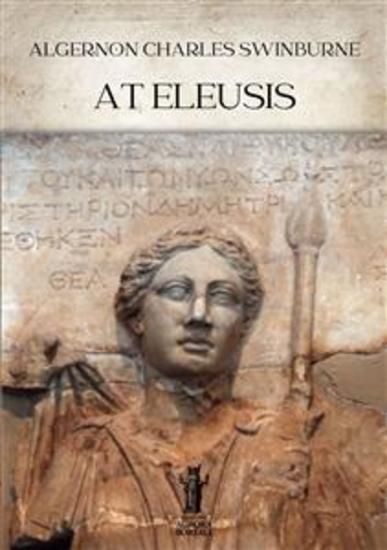
At Eleusis - cover

At Eleusis

Algernon Charles Swinburne

Verlag: Edizioni Aurora Boreale

  • 0
  • 0
  • 0

Beschreibung

Algernon Charles Swinburne (1837-1909) was a British poet, writer and playwright of the Victorian era. Active in the aesthetic circle, romantic and then decadent, he met Oscar Wilde and other famous intellectuals of the same environment, attending the Pre-Raphaelites and becoming a friend of the poet, artist and initiate Dante Gabriel Rossetti. Eccentric personality, with a strong taste for artistic provocation, inspired by writers such as De Sade, Shelley and Baudelaire, his poetry was controversial and characterized by the cult of paganism. From 1903 to 1909 he was nominated for the Nobel Prize for Literature. With Robert Browning, Alfred Tennyson and William Butler Yeats, he is considered one of the most representative poets of Victorian literature.
Swinburne’s literary output is vast and includes poems, plays, novels, short stories and essays on literary criticism.
The poem At Eleusis, which today we re-propose to modern readers, was included in 1866 by Swinburne in one of his finest collections of poetry, Poems and Ballads, dedicated to its friend Edward Burne Jones, the British artist and designer closely associated with the later phase of the Pre-Raphaelite movement. Poems and Ballads is a collection with an exquisitely mythological and pantheistic spirit. It includes masterpieces such as Laus Veneris, Phædra, Anactoria, Hermaphroditus, and the famous Hymn to Proserpine. But it is At Eleusis, the poem dedicated to the holiest place on Earth, the crowning glory of this collection. Eleusis, the place where ended the events and drama of the two Goddesses, the Mother and the Daughter, and where a new era for mankind began. Swinburne celebrates Demeter and Kore-Persephone, emblems of the Sacred Feminine, the Goddesses who brought to all humanity a message of redemption and hope of immortality, with the establishment of the Eleusinian Mysteries.
Verfügbar seit: 23.07.2023.

Weitere Bücher, die Sie mögen werden

  • The Poetry of Damon Runyon - We have an exciting poetry anthology here from the celebrated author Runyon whose stories were the source material for the musical Guys & Dolls - cover

    The Poetry of Damon Runyon - We...

    Damon Runyon

    • 0
    • 0
    • 0
    Alfred Damon Runyan was born on 4th October 1880, in Manhattan, Kansas.  
     
    When Runyon was two his father was forced to sell his newspaper and the family moved eventually settling in Pueblo, Colorado where Runyon spent his youth.  
     
    By most accounts, he attended school only through the fourth grade and then worked for his father in the newspaper trade.  
     
    In 1898 Runyon enlisted in the U.S. Army to fight in the Spanish–American War. After his service he returned to Colorado and worked for the local newspapers.  
     
    By 1910 he had moved to New York to work for Hearst newspapers, writing a daily column.  He was soon promoted to be the Hearst newspapers' baseball columnist and developed his trademark viewpoint of writing up the eccentric and the unusual, whether on the field or in the stands. 
     
    But Runyon also wrote poetry, plays, essays and, of course, his short stories with his famous ‘Runyonesque’ characters who were funny, gritty and instantly memorable, all distilled into black and white type. 
     
    Of course, the cliché about newspapermen and writers is that they are heavy drinkers, chain-smokers, gamblers and obsessively chase women with a sideline in gathering info and only getting something written just before the deadline hits.  And that, pretty much, was Runyon’s life. 
     
    In 1938 he developed throat cancer which would leave him unable to speak but he continued to work at a ferocious pace, pursuing a Hollywood career as writer and producer at MGM, Universal and RKO studios. 
     
    Alfred Damon Runyon died in New York City on 10th December 1946 from throat cancer.  He was 66. 
     
    His ashes were scattered from a plane over Broadway.   
     
    In his early short Story ‘The Defense of Strikerville’ Runyon takes up the cause of workers’ rights as it comes up against the nasty tactics of big-dog capitalism.  
     
    Runyon’s poems brilliantly illustrate his style and ideas with works that are individual, observational, heavy on the vernacular and bring a rarely seen poetic talent to our attention.  
     
    1 - The Poetry of Damon Runyon - An Introduction 
    2 - The Song of the Strike-Breakers by Damon Runyon 
    3 - Song of the Steel Worker by Damon Runyon 
    4 - The Song of the Bullet by Damon Runyon 
    5 - A Song of the Panama Canal by Damon Runyon 
    6 - A Song of the Rails by Damon Runyon 
    7 - The Song of King Barleycorn 
    8 - The King of Moo by Damon Runyon 
    9 - The Song of Silence by Damon Runyon 
    10 - Song O' the Lost Trains by Damon Runyon 
    11 - The Song of the Saddle by Damon Runyon 
    12 - The Ghosts of the Great White Way by Damon Runyon 
    13 - The Softest Town by Damon Runyon 
    14 - The Ballad of the Big Town by Damon Runyon 
    15 - Ballads of a Beach Comber by Damon Runyon 
    16 - When the Ships Go Home by Damon Runyon 
    17 - Dream of a Drowsy Day by Damon Runyon 
    18 - Ballad of Hop Looey 
    19 - The Ladies in the Trenches - a Solider Song of the Sulu Isles by Damon Runyon 
    20 - Nostalgia by Damon Runyon 
    21 - A Divorce Problem by Damon Runyon 
    22 - The Boy She Used to Know by Damon Runyon 
    23 - Roses of a Dream by Damon Runyon 
    24 - Homeward Bound by Damon Runyon 
    25 - The Spirit of You by Damon Runyon 
    26 - Ghosts by Damon Runyon 
    27 - Ballad of Lonely Graves by Damon Runyon 
    28 - Pal, Algeria 1910 by Damon Runyon 
    29 - Requiem by Damon Runyon
    Zum Buch
  • When Love Grows Hot - cover

    When Love Grows Hot

    Yahchanan

    • 0
    • 0
    • 0
    A chapbook of experimental Christian poems that push the boundaries of typical patterns and topics. For those who have a basic understanding of scriptures already and wish to think in ways we habitually choose not to think about. Enjoy.
    Zum Buch
  • Poetry Book Society Autumn 2023 Bulletin - cover

    Poetry Book Society Autumn 2023...

    Alice Kate Mullen

    • 0
    • 0
    • 0
    The quarterly poetry magazine of the Poetry Book Society, founded by T.S. Eliot, featuring poems, reviews and exclusive interviews from Choice Poet Daljit Nagra and Recommended poets Mary Jean Chan, Jen Campbell, Terrance Hayes, Jacqueline Saphra, Mary Oliver, Lutz Seiler, and Stefan Tobler.
    Zum Buch
  • What Breaks Us - a love letter to what breaks you - cover

    What Breaks Us - a love letter...

    Megan Davis

    • 0
    • 0
    • 0
    “What Breaks Us” by Megan Davis is a cathartic collection of poetry that channels pain and angst into strength for healing and self-discovery. This poetry collection is a candid reflection on heartache, loss, and the difficult work of self-examination to uncover unhealed wounds. With topics ranging from love to spirituality, grief to psychology, Davis’s poetry is an outpouring of emotion that balances the deeply personal with the universality of the human experience. 
      
    Davis initially began writing poetry in lieu of journaling, using creative writing as a way to process tumultuous feelings of attraction, loneliness, struggles with mental health, her relationship with spirituality, and the suffering faced by people around the world. She wrote the poems without intending to share them with an audience, and the palpable honesty in each piece of work reflects that intimacy, as well as the author’s approach to poetry as personal catharsis. 
      
    As the sections of the collection progress, readers move through phases of the author’s life alongside her, from heartbreak and anger to battles with addiction, through to growing self-acceptance, connection with others, and ultimately, a sense of empowerment built on perseverance and a willingness to engage with pain as a source of strength. 
      
    Beautifully written and poignantly capturing the internal battles faced by many, Davis’s poems are a touching portrait of the things that hurt us – and the ways these damaging experiences can be alchemized into sources of hope and growth.
    Zum Buch
  • The Poetry of John Milton - Sparkling poems from the famed man behind Paradise Lost - cover

    The Poetry of John Milton -...

    John Milton

    • 0
    • 0
    • 0
    John Milton was born in Bread Street, London, on December 9th, 1608.  His early years were privately tutored before gaining a place at St Paul’s School and in 1625 he matriculated at Christ's College, Cambridge, earning a BA in 1629 and an MA in 1632. At Cambridge he had developed a reputation for poetic skill but also experienced alienation from his peers and university life as a whole.  
    The next 6 years were spent in private study. He read both ancient and modern works of theology, philosophy, history, politics, literature and science, in preparation for a poetical career.  Milton mastered Latin, Greek, Hebrew, French, Spanish, and Italian. To these he would add Old English (whilst researching his History of Britain) and also acquired more than a passing acquaintance in Dutch.  
    Although he was studying, some of his poetry from this time is remarkable; L’Allegro and Il Penseroso in 1631 and Lycidias in 1638. 
    In May 1638, Milton embarked upon a 15 month tour of France and Italy. These travels added a new and direct experience of artistic and religious traditions, especially Roman Catholicism.  He cut the journey short to return home during the summer of 1639 because of what he claimed were "sad tidings of civil war in England."  
    Once home, Milton wrote prose tracts against episcopacy, in the service of the Puritan and Parliamentary cause.  
    He married 16-year-old Mary Powell in June 1643 but she left him after only a few months during which he wrote and published several writings on divorce. Mary did return after 3 years and their life thereafter seemed harmonious.  Milton received a hostile response to the divorce tracts and drove him to write Areopagitica, his celebrated attack on pre-printing censorship.  
    With the parliamentary victory in the Civil War, Milton wrote The Tenure of Kings and Magistrates (1649) which defended popular government and implicitly sanctioned the regicide which led to his appointment as Secretary for Foreign Tongues by the Council of State.  
    On 24 February 1652 Milton published his Latin defense of the English People, Defensio Pro Populo Anglicano, also known as the First Defense. Milton's Latin prose and intellectual sweep, quickly gained him a European reputation.  
    Tragically his first wife, Mary, died on May 5th, 1652 following the birth of their fourth child.   The following year Milton had become totally blind, probably due to glaucoma.  He then had to dictate his verse and prose to helpers, one of whom was the poet Andrew Marvell. 
    He married again to Katherine Woodcock but she died in February 1658, less than four months after giving birth to a daughter, who also tragically died.  
    Though Cromwell’s death in 1658 caused the English Republic to collapse Milton stubbornly clung to his beliefs and in 1659 he published A Treatise of Civil Power, attacking the concept of a state-dominated church. Upon the Restoration in May 1660, Milton went into hiding for his life. An arrest warrant was issued and his writings burnt. He re-emerged after a general pardon was issued, but was nevertheless arrested and briefly imprisoned before influential friends, such as Marvell, now an MP, intervened 
    His third marriage was to Elizabeth Mynshull. Despite a 31-year age gap, the marriage seemed happy and Milton spent the remaining decade of his life living quietly in London, apart from a short spell in Chalfont St. Giles, during the Great Plague of London.  
    Milton was to now publish his greatest works, which had been gestating for many years.
    Zum Buch
  • Ave Maria - A dramatic monologue poem written from the perspective of Christopher Columbus - cover

    Ave Maria - A dramatic monologue...

    Hart Crane

    • 0
    • 0
    • 0
    Harold Hart Crane was born on the 21st July 1899 in Garrettsville, Ohio. 
    Crane was drawn to literature at an early age, becoming a voracious reader and pursuing self-education rather than attach himself to a more formal college education, although he did attend East High School in 1913.  His developing love of poetry was nurtured with the works of the English Romantics and the French Symbolists, as well as near contemporary American poets. 
    Much of his youth was spent shuttling between Cleveland and New York as his parents’ marriage descended into continuing conflict before they separated with Crane still in his teens.  Shortly after Crane attempted to enlist in the U S Military but was rejected for being a minor. 
    His first published poem also came in 1917 with ‘C33’ and its reference to the cell number that Oscar Wilde was incarcerated in. 
    Crane now centred more of his time in New York and immersed himself in the vibrant artistic scene of Greenwich Village.  Alongside this he dabbled in various jobs to support himself, including copywriting and work in a munitions factory, as he continued to develop his ambitions for a poetic career.   
    His early work was already being noticed for its lush and rich use of words and by the time ‘White Buildings’ was published in 1926 he was being critically acclaimed. 
    Despite this success his personal life was troubled.  It was both nourishing his work and fuelling complex patterns of despair as he sought to establish his identity.  In a time when homosexuality was openly condemned his openly gay attitude sat uneasily as he pursued relationships that were both intense and emotionally fraught. 
    His acclaimed work ‘The Bridge’ in 1930 was both ambitious and a foundation stone for new American poetry.  Against this his battles with depression and alcoholism were being lost. 
    Hart Crane died on the 27th April 1932 by jumping from the deck of a steamship into the Gulf of Mexico upon his return to the United States from Mexico.  He was 32.
    Zum Buch