Rejoignez-nous pour un voyage dans le monde des livres!
Ajouter ce livre à l'électronique
Grey
Ecrivez un nouveau commentaire Default profile 50px
Grey
Abonnez-vous pour lire le livre complet ou lisez les premières pages gratuitement!
All characters reduced
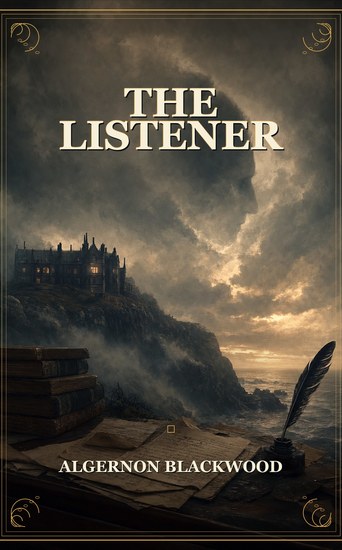
The Listener - cover

The Listener

Algernon Blackwood

Maison d'édition: Caelwick Press

  • 0
  • 0
  • 0

Synopsis

The Listener by Algernon Blackwood is offered here in a clean English digital edition prepared for fluent ebook reading. The work stands within horror and gives modern readers direct access to a public-domain classic with navigable structure and a restrained typographic presentation. The opening pages establish the book's atmosphere with this first movement: Sept. 4. — I have hunted all over London for rooms suited to my income — £120 a year — and have at last found them. Two rooms, without modern conveniences, it is true, and in an old, ramshackle building, but within a stone's throw of P— Place and in an eminently respectable street. The rent is only This edition is suited to readers who want a reliable, uncluttered version of the text for study, rediscovery, and sustained reading.
Disponible depuis: 06/06/2026.
Longueur d'impression: 37 pages.

D'autres livres qui pourraient vous intéresser

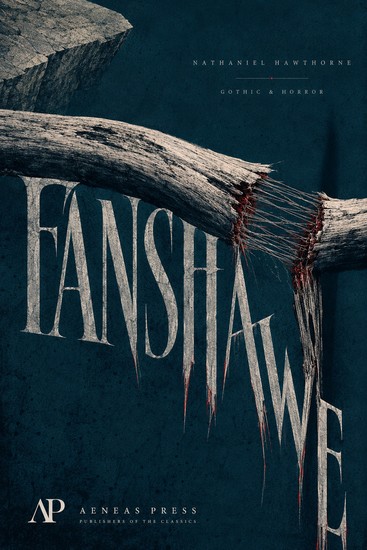
  • Fanshawe - A First Novel of a New England College - cover

    Fanshawe - A First Novel of a...

    Nathaniel Hawthorne

    • 0
    • 0
    • 0
    A quiet college in the American woods, a girl left in the care of its president, and a man who comes to take her away — with a student who loves her and will not say so. Hawthorne published this anonymously at twenty-four, at his own expense, then bought back and burned every copy he could find; it was not reprinted until after his death. Read it as the first, uncertain sketch of everything he did later. Fifty-eight plates of woodland and forest landscape painting, from Durand to Munch, run through the book like the New England woods that surround the college.
    Voir livre
  • Lenore - cover

    Lenore

    Edgar Allan Poe

    • 0
    • 0
    • 0
    "Lenore" is a poem by the American author Edgar Allan Poe. It began as a different poem, "A Paean", and was not published as "Lenore" until 1843.
    The poem discusses proper decorum in the wake of the death of a young woman, described as "the queenliest dead that ever died so young". The poem concludes: "No dirge shall I upraise,/ But waft the angel on her flight with a paean of old days!" Lenore's fiancé, Guy de Vere, finds it inappropriate to "mourn" the dead; rather, one should celebrate their ascension to a new world. Unlike most of Poe's poems relating to dying women, "Lenore" implies the possibility of meeting in paradise.
    Voir livre
  • Strange Case of Dr Jekyll and Mr Hyde - An Audiobook Empire Production - cover

    Strange Case of Dr Jekyll and Mr...

    Robert Louis Stevenson

    • 0
    • 0
    • 0
    “I sat in the sun on a bench; the animal within me licking the chops of memory; the spiritual side a little drowsed, promising subsequent penitence, but not yet moved to begin.” 
    Narrator RJ Bayley and Audiobook Empire have once again teamed up to bring you another Gothic classic from Bayley's Bookshelf.  
    Robert Louis Stevenson's 1886 novella Strange Case of Dr Jekyll and Mr Hyde explores the bifurcated nature of one man's psyche and the turmoil it can bring upon society, in a time when such things were not fully understood.
    Voir livre
  • Agnes Grey - cover

    Agnes Grey

    Anne Brontë

    • 0
    • 0
    • 0
    Agnes Grey endures two hard governess houses, keeps her integrity, and finds honesty with Mr Weston while Hatfield’s vanity shows what not to want. Spoken as Brontë working life when dignity is the real romance.
    Voir livre
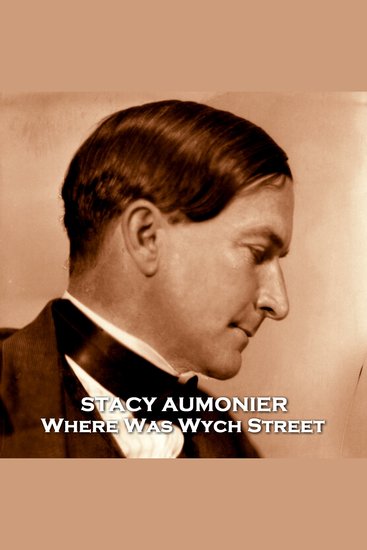
  • Where Was Wych Street - From their pens to your ears genius in every story - cover

    Where Was Wych Street - From...

    Stacy Aumonier

    • 0
    • 0
    • 0
    Stacy Aumonier was born at Hampstead Road near Regent’s Park, London on 31st March 1877. 
    He came from a family with a strong and sustained tradition in the visual arts; sculptors and painters. 
    In 1890 the teenage Aumonier attended Cranleigh School in Surrey. Although he would later write critically about English public schools (with articles for the London Evening Standard and New York Times) in how they tried to impose conformity on students, records indicate that he integrated well into Cranleigh. Aumonier was a passionate cricket player, belonged to the Literary and Debating Society, and, in his final year, became a prefect. 
    On leaving school it seemed the family tradition of the visual arts would be his career path. In particular his early talents were that of a landscape painter. He exhibited paintings at the Royal Academy in 1902 and 1903, and 1908. An exhibition of his work would later be held at the Goupil Gallery in London in 1911. 
    In 1907 he married the international concert pianist, Gertrude Peppercorn, at West Horsley in Surrey. She herself was the daughter of a landscape painter (Arthur Douglas Peppercorn, occasionally cited as ‘the English Corot’.) A son, Timothy, was born in 1921. 
    A year after his marriage, Aumonier began a brief career in a second branch of the arts at which he enjoyed outstanding success—as a stage performer writing and performing his own sketches.  
    The Observer newspaper commented that "...the stage lost in him a real and rare genius, he could walk out alone before any audience, from the simplest to the most sophisticated, and make it laugh or cry at will." 
    In 1915, Aumonier published a short story ‘The Friends’ which was well received (and voted one of the best short stories of 1915 by the Boston Magazine, Transcript).  
    Despite his age being 40 in 1917 he was called up for service in World War I. He began as a private in the Army Pay Corps, and then transferred as a draughtsman in the Ministry of National Service. 
    By now he had four books published—two novels and two books of short stories—and his occupation is recorded with the Army Medical Board as ‘author.’ 
    In the mid-1920s, Aumonier received the shattering diagnosis that he had contracted tuberculosis. In the last few years of his life, he would spend long spells in various sanatoria, some better than others. In a letter to his friend, Rebecca West, written shortly before his death, he described the debilitating conditions in a sanatorium in Norfolk during the winter of 1927, where the dampness was so severe that a newspaper left beside the bed would feel "sodden to the touch in the morning." 
    Shortly before his death, Stacy Aumonier sought treatment in Switzerland, but died of the disease in Clinique La Prairie at Clarens beside Lake Geneva on 21st December 1928. He was 55.
    Voir livre

  • The Woman in White - cover

    The Woman in White

    Wilkie Collins

    • 0
    • 0
    • 0
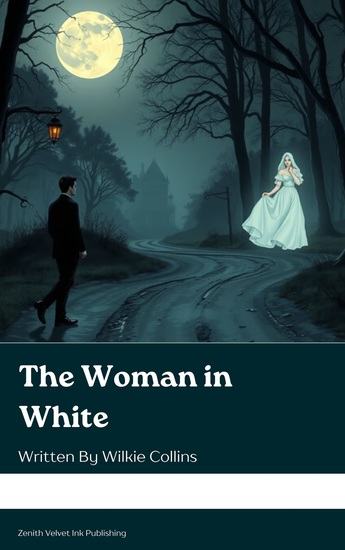
    🌕 A midnight encounter. A mysterious woman in white. A secret that changes everything.
    In The Woman in White, Wilkie Collins delivers one of the first — and greatest — sensation novels of the Victorian era, weaving a tale of mystery, madness, romance, and deception that has captivated readers for more than 150 years.
    
    The story begins when young drawing master Walter Hartright meets a terrified woman dressed entirely in white on a moonlit road.
    From that moment, he is drawn into a dark web of forbidden identities, hidden crimes, and dangerous conspiracies, all tied to the wealthy and enigmatic Fairlie family.
    
    With unforgettable characters like the cunning Count Fosco, the gentle Laura Fairlie, and the fiercely intelligent Marian Halcombe, Collins builds a masterwork of tension and intrigue.
    Every chapter deepens the mystery, revealing the fragile line between truth and illusion — and the lengths to which some will go to protect their secrets.
    
    Atmospheric, suspenseful, and brilliantly plotted, The Woman in White remains a defining classic of detective fiction and psychological drama.
    
    🕯 Click "Buy Now" and unravel The Woman in White — Wilkie Collins's haunting masterpiece of identity, danger, and Victorian intrigue.
    Voir livre