Begleiten Sie uns auf eine literarische Weltreise!
Buch zum Bücherregal hinzufügen
Grey
Einen neuen Kommentar schreiben Default profile 50px
Grey
Jetzt das ganze Buch im Abo oder die ersten Seiten gratis lesen!
All characters reduced
The Malay Archipelago - cover

The Malay Archipelago

Alfred Russel Wallace

Verlag: DigiCat

  • 0
  • 0
  • 0

Beschreibung

In "The Malay Archipelago," Alfred Russel Wallace presents an engaging and meticulously detailed account of his explorations through the diverse islands of Southeast Asia. Written in a vivid and accessible style, Wallace's narrative combines his observations of natural history with profound reflections on evolution, showcasing the rich biodiversity of the region. This work is not only a travelogue but also a crucial contribution to the scientific discourse of the 19th century, where he laid the groundwork for biogeography and underscored the importance of geographical isolation in species development. Alfred Russel Wallace, a contemporary of Charles Darwin, was a pioneering naturalist and explorer whose travels in the Malay Archipelago profoundly influenced his ideas about evolution and natural selection. His extensive fieldwork, marked by a keen eye for detail, allowed him to collect thousands of specimens and establish connections between species and their environments. Wallace's unique perspective on the interconnectedness of life and the impact of ecological factors undoubtedly shaped the insights presented in this seminal work. "The Malay Archipelago" is essential reading for both enthusiasts of natural history and those seeking to understand the foundations of evolutionary biology. Wallace's passion for discovery and his eloquent prose invite readers to explore the complexities of nature alongside him, making this book a timeless treasure that resonates with the spirit of inquiry and adventure.
Verfügbar seit: 17.05.2022.
Drucklänge: 542 Seiten.

Weitere Bücher, die Sie mögen werden

  • Speech Therapy - Improving Pronunciation for Stuttering Children with Autism and More - cover

    Speech Therapy - Improving...

    Rachel Mendoza

    • 0
    • 0
    • 0
    Welcome to the world of speech therapy, a field dedicated to the transformative power of communication. In a society where words are our primary means of connection, speech plays a profound role in our personal, academic, and professional lives. Yet, for some individuals, the path to clear, confident speech can be fraught with challenges. 
    This book, "Speech Therapy: Improving Pronunciation for Stuttering, Children with Autism, and More," is an exploration of the art and science of speech therapy. Whether you are a concerned parent, a speech therapist, a person who stutters, or someone seeking to support individuals with speech difficulties, this comprehensive guide aims to provide you with the knowledge, tools, and strategies to enhance speech and communication. 
    This book is designed to cater to a diverse audience. Whether you are a parent seeking guidance for your child's speech development, a speech therapist looking for evidence-based approaches, or an individual striving to improve your own speech, you'll find valuable information and practical advice tailored to your needs. 
    Throughout this journey, we will navigate the intricacies of speech therapy for stuttering, offer support and strategies for children with autism, explore techniques for articulation and pronunciation improvement, and venture beyond the therapy room to discover how speech can empower us in various facets of life. 
    Speech therapy is not merely about addressing speech disorders; it is about empowering individuals to express themselves confidently and authentically. It is about fostering connections and creating opportunities for growth. With the right knowledge and dedication, we can all contribute to a world where every voice is heard and understood.
    Zum Buch
  • Escaping from Eden - Does Genesis teach that the human race was created by God or engineered by ETs? - cover

    Escaping from Eden - Does...

    Paul Wallis

    • 0
    • 0
    • 0
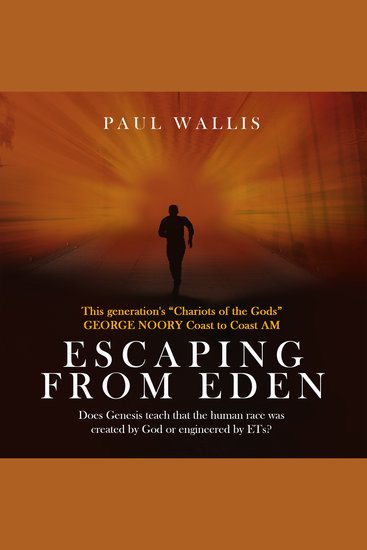
    The familiar stories of the book of Genesis affirm that God made the universe, planet Earth, and you and me. However, various anomalies in the text clue us that we are not reading the original version of these stories. So what were the original narratives and what did they say about who we are and where we all came from? What was the earlier story of human origins, almost obliterated from the Hebrew Scriptures in the 6th century BC, and suppressed from Christian writing in the 2nd and 3rd centuries AD? And what does any of this have to do with extraterrestrials? 
    Escaping from Eden will take you on a journey around the world and into the mythologies of ancient Sumeria, Mesoamerica, India, Africa, and Greece, to reveal a profound secret, hidden in plain sight in the text of the Bible. Far reaching and deepy controversial, this book points to truths about ourselves, the universe and everything which you may have long suspected but not dared to speak!
    Zum Buch
  • Your Brain Is Playing Tricks On You - How the Brain Shapes Opinions and Perceptions - cover

    Your Brain Is Playing Tricks On...

    Albert Moukheiber

    • 0
    • 0
    • 0
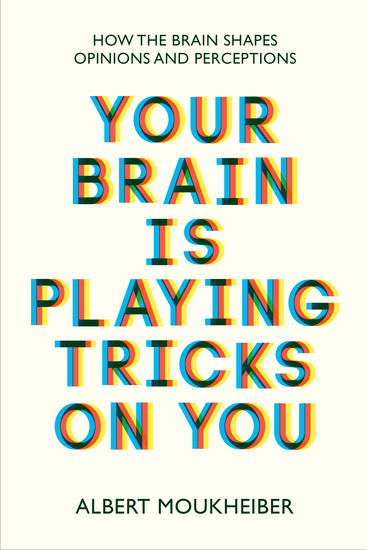
    Why are we often convinced that we’re right even when we’re wrong? Why are we jealous, or paranoid, even when we have absolutely no reason to be? Why is it so easy for fake news to spread around the globe and fool us? It’s because we don’t see the world as it is, rather we reconstruct it in our mind.
    Zum Buch
  • The Planet You Inherit - Letters to My Grandchildren when Uncertainty's a Sure Thing - cover

    The Planet You Inherit - Letters...

    Larry L. Rasmussen

    • 0
    • 0
    • 0
    For the first time ever, love letters consciously written by elders of one geologic epoch to the young of another. 


    Our children's and grandchildren's generation will face a different world, one affected by climate instability, mass uncertainty, and breathtaking extinction. In fact, the next generation will face the reality that human activity is changing the planet from one geological epoch to another. 


    From this vantage point—two generations across two geological epochs facing a fundamentally changing planet—Larry Rasmussen writes to his grandchildren. As a grandfather invested in a green earth and climate justice as well as a scholar of faith-based earth ethics, Rasmussen bridges this gap between generations to write to the future about climate change, global citizenship, democracy, and legacy. In topics ranging from "A Viable Way of Life" and "Democracy" to "Where We've Come From" and "Who We Are Now," Rasmussen explores the large questions of justice, meaning, and faith, encouraging us to speak to and look to the future generation and their future world.
    Zum Buch
  • Nightstalkers - The Wright Project and the 868th Bomb Squadron in World War II - cover

    Nightstalkers - The Wright...

    Richard Phillip Lawless

    • 0
    • 0
    • 0
    “Takes the reader into the Pacific war and offers a front-row seat to the exploits of the Wright Project and their highly innovative technology.” —War History Network 
     
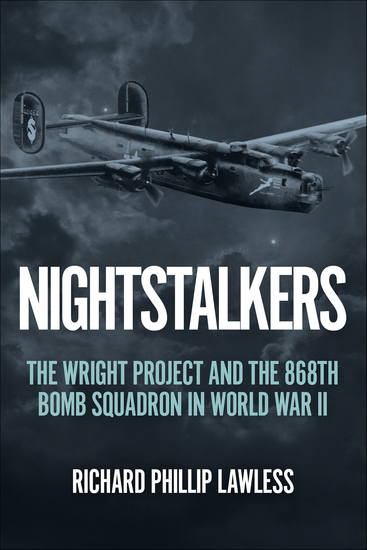
    In August 1943, a highly classified US Army Air Force unit, code-named the “Wright Project,” departed Langley Field for Guadalcanal in the South Pacific to join the fight against the Empire of Japan. Operating independently, under sealed orders drafted at the highest levels of Army Air Force, the Wright Project was unique, both in terms of the war-fighting capabilities provided by classified systems the ten B-24 Liberators of this small group of airmen brought to the war, and in the success these “crash-built” technologies allowed. The Wright airmen would fly only at night, usually as lone hunters of enemy ships. In so doing they would pave the way for the United States to enter and dominate a new dimension of war in the air for generations to come.  
     
    This is their story, from humble beginnings at MIT’s Radiation Lab and hunting U-boats off America’s eastern shore, through to the campaigns of the war in the Pacific in their two-year march toward Tokyo. The Wright Project would prove itself to be a combat leader many times over and an outstanding technology innovator, evolving to become the 868th Bomb Squadron.  
     
    Comprehensive and highly personal, this story can now be revealed for the very first time, based on official sources, and interviews with the young men who flew into the night. 
     
    “A limber romp across the world of electronics and into the history of World War II.” —ARGunners.com
    Zum Buch
  • Mind and Intelligence - The Brain’s Strengths and Weaknesses (5 in 1) - cover

    Mind and Intelligence - The...

    John Harpoon

    • 0
    • 0
    • 0
    This illuminating audiobook explores the fascinating complexities of human cognition and behavior through five compelling sections: 
    12 Habits That Damage Your Brain 
     Discover the everyday behaviors and patterns that can impair cognitive function over time. 
    12 Habits That Make You More Attractive 
     Explore the science-backed behaviors that increase personal appeal beyond physical appearance. This part reveals how intellectual curiosity, emotional intelligence, conversational skills, and other cultivated habits can dramatically enhance how others perceive you, improving your relationships, opportunities, and social connections. 
    Why Intelligent People Do Stupid Things 
     Examine the counterintuitive relationship between high intelligence and poor decision-making. Understand how cognitive biases, emotional blind spots, and overconfidence can lead even the brightest minds astray, and discover strategies for balancing intellectual capacity with practical wisdom in everyday life. 
    Why Smart People Don't Have Many Friends 
     Investigate the social challenges that often accompany high intelligence. From differing interests and communication styles to the psychological need for deeper connections, this section explores why intellectually gifted individuals sometimes struggle with social relationships and offers insights for building meaningful connections. 
    How School Makes Kids Stupid 
     Challenge conventional educational paradigms by examining how traditional schooling can sometimes inhibit genuine intellectual development. This section analyzes how standardized testing, rigid curricula, and outdated teaching methods may suppress creativity, critical thinking, and natural curiosity.
    Zum Buch