Begleiten Sie uns auf eine literarische Weltreise!
Buch zum Bücherregal hinzufügen
Grey
Einen neuen Kommentar schreiben Default profile 50px
Grey
Jetzt das ganze Buch im Abo oder die ersten Seiten gratis lesen!
All characters reduced
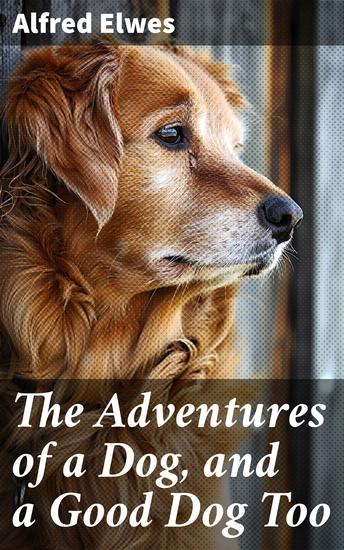
The Adventures of a Dog and a Good Dog Too - A Timeless Journey of Loyalty and Friendship with a Loyal Canine Companion - cover

The Adventures of a Dog and a Good Dog Too - A Timeless Journey of Loyalty and Friendship with a Loyal Canine Companion

Alfred Elwes

Verlag: Good Press

  • 0
  • 0
  • 0

Beschreibung

In "The Adventures of a Dog, and a Good Dog Too," Alfred Elwes crafts a delightful narrative that melds humor with poignant observations about loyalty and companionship. Set against the backdrop of Victorian England, the book tells the story of a spirited dog embarking on thrilling escapades, exploring themes such as bravery, friendship, and the intrinsic bond between humans and their animal companions. Elwes'Äô prose is imbued with whimsical charm, employing vivid imagery and lively dialogue that captures the adventures and misadventures of the canine protagonist, thus inviting readers into a rich tapestry of emotion and adventure. Alfred Elwes, an esteemed author and translator, was deeply influenced by the changing social fabric of his time. His experiences in the theatrical world and interactions with various cultures enrich his storytelling, enabling him to weave nuanced characters and situations. Elwes' affection for animals, cultivated throughout his life, lends authenticity to the voice of the dog, transforming simple tales into profound reflections on human nature and societal issues. This enchanting book is highly recommended for readers of all ages, especially those who cherish stories of friendship and adventure. It not only entertains but also encourages reflection on the values of loyalty and bravery, making it a timeless read perfect for animal lovers and literature enthusiasts alike.
Verfügbar seit: 22.08.2023.
Drucklänge: 58 Seiten.

Weitere Bücher, die Sie mögen werden

  • Club-Hauling of the Diomede The (Unabridged) - cover

    Club-Hauling of the Diomede The...

    Frederick Marryat

    • 0
    • 0
    • 0
    Captain Frederick Marryat (10 July 1792 - 9 August 1848) was a Royal Navy officer, a novelist, and an acquaintance of Charles Dickens. He is noted today as an early pioneer of nautical fiction, particularly for his semi-autobiographical novel Mr Midshipman Easy (1836). He is remembered also for his children's novel The Children of the New Forest (1847), and for a widely used system of maritime flag signalling known as Marryat's Code.
    THE CLUB-HAULING OF THE DIOMEDE: We continued our cruise along the coast, until we had run down into the Bay of Arcason, where we captured two or three vessels, and obliged many more to run on shore.
    Zum Buch
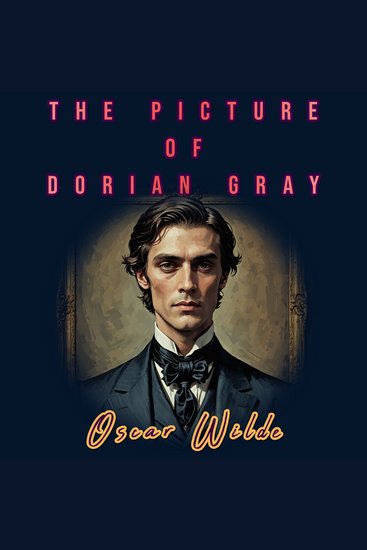
  • The Picture of Dorian Gray - cover

    The Picture of Dorian Gray

    Oscar Wilde

    • 0
    • 0
    • 0
    "It is your best work, Basil, the best thing you have ever done," said Lord Henry, languidly. "You must certainly send it next year to the Grosvenor. The Academy is too large and too vulgar. The Grosvenor is the only place."    "I don't think I will send it anywhere," he answered, tossing his head back in that odd way that used to make his friends laugh at him at Oxford. "No: I won't send it anywhere."    Lord Henry elevated his eyebrows, and looked at him in amazement through the thin blue wreaths of smoke that curled up in such fanciful whorls from his heavy opium-tainted cigarette. "Not send it anywhere? My dear fellow, why? Have you any reason? What odd chaps you painters are! You do anything in the world to gain a reputation. As soon as you have one, you seem to want to throw it away. It is silly of you, for there is only one thing in the world worse than being talked about, and that is not being talked about. A portrait like this would set you far above all the young men in England, and make the old men quite jealous, if old men are ever capable of any emotion."    "I know you will laugh at me," he replied, "but I really can't exhibit it. I have put too much of myself into it."    Lord Henry stretched his long legs out on the divan and shook with laughter.  "Yes, I knew you would laugh; but it is quite true, all the same."    "Too much of yourself in it! Upon my word, Basil, I didn't know you were so vain; and I really can't see any resemblance between you, with your rugged strong face and your coal-black hair, and this young Adonis, who looks as if he was made of ivory and rose-leaves. Why, my dear Basil, he is a Narcissus, and you--well, of course you have an intellectual expression, and all that.    But beauty, real beauty, ends where an intellectual expression begins. Intellect is in itself an exaggeration, and destroys the harmony of any face. The moment one sits down to think, one becomes all nose, or all forehead, or something horrid. Look at the successful men in any of the learned professions. How perfectly hideous they are! Except, of course, in the Church. But then in the Church they don't think. A bishop keeps on saying at the age of eighty what he was told to say when he was a boy of eighteen, and consequently he always looks absolutely delightful. Your mysterious young friend, whose name you have never told me, but whose picture really fascinates me, never thinks. I feel quite sure of that. He is a brainless, beautiful thing, who should be always here in winter when we have no flowers to look at, and always here in summer when we want something to chill our intelligence. Don't flatter yourself, Basil: you are not in the least like him."
    Zum Buch
  • War and Peace (First Epilogue: 1813-20) - cover

    War and Peace (First Epilogue:...

    Leo Tolstoy

    • 0
    • 0
    • 0
    War and Peace is a literary work mixed with chapters on history and philosophy by the Russian author Leo Tolstoy. It was first published serially, then published in its entirety in 1869. It is regarded as one of Tolstoy's finest literary achievements and remains an internationally praised classic of world literature.
    First Epilogue: 1813-20: Seven years had passed. The storm-tossed sea of European history had subsided within its shores and seemed to have become calm. But the mysterious forces that move humanity (mysterious because the laws of their motion are unknown to us) continued to operate.
    Zum Buch
  • After Twenty years - From their pens to your ears genius in every story - cover

    After Twenty years - From their...

    O Henry

    • 0
    • 0
    • 0
    William Sydney Porter was born on 11th September 1862 in Greensboro, North Carolina. At age 3 his mother died from tuberculosis. From an early age it was clear Porter had a large appetite for reading as he absorbed the world around him. 
    He first attended at a school run by his aunt before enrolling at the Lindsey Street High School and then worked at his uncle’s drugstore and gained a pharmacists’ license in 1881.  
    A persistent cough took him to Texas in the hope that a change of climate would help his symptoms. He took on various types of work, initially from ranch hand and cook and then as varied as pharmacist, draftsman, bank teller and journalist. He also began to write, though for now, purely as a hobby. 
    He was a member of several singing and dramatic groups when he met 17 year old Athol Estes, daughter of a wealthy Austin family. Despite her mother’s objection owing to Athol’s tuberculosis, they began courting and in July 1887, they eloped and soon married. 
    Athol, impressed by his writing, encouraged him to get them published. A job as a draftsman at the Texas General Land Office paid a healthy $100 dollars per month and life was good. 
    But then life turned cruel. His son died a few hours after birth although a daughter, Margaret, came the following year.  His job had to be vacated but another was found at the First National Bank of Austin. The bank operated informally and Porter was careless in keeping the books. He lost that job but began writing for the humourous weekly The Rolling Stone and the Houston Post. Some time later the federal Bank auditors went through his former accounts and he was arrested on charges of embezzlement. 
    Porter fled the day before his trial to Honduras. Holed up for several months he began to write.  Athol had become too ill to travel to meet him and learning that her health was deteriorating he surrendered to the court in February 1897.  Bail was obtained so that he could stay with Athol during her final days.  
    Porter was sentenced to five years at the Ohio Penitentiary in Columbus. His pharmacy qualifications got him the job of night druggist.  His sentence also gave him time to write and publish fourteen short stories. In December 1899 in McClure’s Magazine he published a short story as O Henry.  
    He was released two years early in July 1901, and reunited with Margaret, now 11, in Pittsburgh.  He now began his most prolific period of writing; a short story per week for the New York World, while also publishing works in other magazines.  Eventually over 600 of his short stories were published. 
    Porter was a heavy drinker and in 1908 his health, which had deteriorated for several years, took a dramatic turn for the worse, as did his writing. 
    O Henry died of cirrhosis of the liver complicated by diabetes and an enlarged heart on 5th June 1910.<
    Zum Buch
  • Emma - Full Cast Drama - cover

    Emma - Full Cast Drama

    Jane Austen

    • 0
    • 0
    • 0
    "Emma," one of Jane Austen's most beloved novels, published in 1815, introduces readers to the spirited and well-intentioned but often misguided heroine, Emma Woodhouse. Set in the early 19th century in the fictional village of Highbury, the novel revolves around Emma's penchant for matchmaking and her journey of self-discovery. 
     
    At the heart of "Emma" is the titular character's desire to arrange advantageous marriages for her friends and acquaintances. Emma's well-meant but misguided attempts at matchmaking lead to a series of comedic misunderstandings and romantic entanglements. Through Emma's adventures, Austen explores the complexities of human relationships, the consequences of meddling in others' lives, and the pitfalls of making snap judgments about people's characters. 
     
    The novel also delves into the theme of self-awareness and personal growth. As the story progresses, Emma undergoes a transformation from a self-assured but somewhat arrogant young woman to a more humble and self-aware individual. Her journey of self-discovery serves as a central narrative arc, highlighting Austen's skill in portraying the moral and emotional development of her characters. 
    Austen's signature wit and humor shine through in "Emma." The novel is replete with clever dialogue, satirical observations, and sharp social commentary. The characters, from the well-meaning but misguided Emma to the reserved but perceptive Mr. Knightley, come to life through Austen's masterful storytelling.
    Zum Buch
  • Twelfth Night - cover

    Twelfth Night

    William Shakespeare

    • 0
    • 0
    • 0
    A Shakespeare Society Production. 
     The complete play in five acts.
    Zum Buch