Begleiten Sie uns auf eine literarische Weltreise!
Buch zum Bücherregal hinzufügen
Grey
Einen neuen Kommentar schreiben Default profile 50px
Grey
Jetzt das ganze Buch im Abo oder die ersten Seiten gratis lesen!
All characters reduced
Our Presidents and how we make them - cover

Our Presidents and how we make them

Alexander K. McClure

Verlag: Good Press

  • 0
  • 0
  • 0

Beschreibung

In "Our Presidents and How We Make Them," Alexander K. McClure offers an incisive examination of the intricate processes that shape the ascent of American presidents. Through a blend of historical analysis, biographical sketches, and political theory, McClure delves into the socio-political dynamics that influence presidential selection. His rich narrative style enhances the reader's understanding of how public perception, party politics, and institutional frameworks converge to mold leaders who resonate with the American populace, reflecting both contemporary issues and longstanding traditions in governance. Alexander K. McClure, a distinguished political historian and commentator, draws from his extensive background in American politics and history to craft this illuminating work. His passion for unpacking the fabric of American democracy is informed by years of academic research and a keen interest in the mechanics of leadership. McClure expertly integrates insights from political science with engaging anecdotes, creating a compelling narrative that invites readers to reflect on the broader implications of electoral choices and leadership qualities. This book is essential reading for anyone seeking to understand the complexities of presidential elections and the evolving nature of American leadership. Whether you are a student of politics, history enthusiast, or informed citizen, McClure's insightful analysis will encourage you to think critically about the figures who have shaped the nation and the collective responsibility of the electorate.
Verfügbar seit: 24.04.2025.
Drucklänge: 200 Seiten.
Weitere Bücher, die Sie mögen werden

  • Good and Evil: 12 Philosophers on How to Live - cover

    Good and Evil: 12 Philosophers...

    Andrew Irwin

    • 0
    • 0
    • 0
    *Introduced by Rory Stewart* 
    What makes a person good? What does it mean to be evil? And what does it tell us about being human? 
    Philosophers have been grappling with these questions for thousands of years, and they remain as vital as ever in our present moment. Here, in a selection of essays each written by a different world expert, we explore the ideas of twelve strikingly different philosophers. From Hannah Arendt’s 'banality of evil' to Nietzsche’s embrace of suffering, from John Stuart Mill’s ethics of happiness to the ruthless realism of Machiavelli, there is an approach for readers of all persuasions. This is the book for anyone trying to understand how humans can sometimes behave so badly, and how we can all be better. 
    Dive into the GOOD AND EVIL, the latest literary masterpiece edited by Andrew Irwin, as it delves into the moral themes of philosophy. This non-fiction book, a top pick among individual readers, is a must-have for anyone seeking to understand the subjects of good and evil. 
    nan 
    HarperCollins 2025
    Zum Buch
  • Poetics - cover

    Poetics

    Aristotle

    • 0
    • 0
    • 0
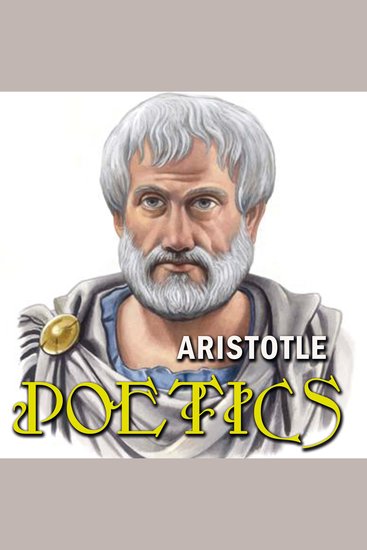
    Aristotle's Poetics (Greek: Περὶ ποιητικῆς; Latin: De Poetica) is the earliest surviving work of dramatic theory and first extant philosophical treatise to focus on literary theory. In it, Aristotle offers an account of what he calls "poetry" (a term that derives from a classical Greek term, ποιητής, that means "poet; author; maker" and in this context includes verse drama – comedy, tragedy, and the satyr play – as well as lyric poetry and epic poetry). They are similar in the fact that they are all imitations but different in the three ways that Aristotle describes: Differences in music rhythm, harmony, meter and melody. Difference of goodness in the characters.Difference in how the narrative is presented: telling a story or acting it out. In examining its "first principles", Aristotle finds two: 1) imitation and 2) genres and other concepts by which that of truth is applied/revealed in the poesis. His analysis of tragedy constitutes the core of the discussion. Although Aristotle's Poetics is universally acknowledged in the Western critical tradition, "almost every detail about his seminal work has aroused divergent opinions". The work was lost to the Western world for a long time. It was available in the Middle Ages and early Renaissance only through a Latin translation of an Arabic version written by Averroes.Aristotle's work on aesthetics consists of the Poetics, Politics and Rhetoric. The Poetics is specifically concerned with drama. At some point, Aristotle's original work was divided in two, each "book" written on a separate roll of papyrus.
    Zum Buch
  • Where You'll Find Me - Risk Decisions and the Last Climb of Kate Matrosova - cover

    Where You'll Find Me - Risk...

    Ty Gagne

    • 0
    • 0
    • 0
    On February 15, 2015, Kate Matrosova, an avid mountaineer, set off before sunrise for a traverse of the Northern Presidential Range in New Hampshire's White Mountains. Late the following day, rescuers carried her frozen body out of the mountains amid some of the worst weather ever recorded on these deceptively rugged slopes. 


    At thirty-two, Matrosova was ultra-fit and healthy and had already summited much larger mountains on several continents. Her gear included a rescue beacon and a satellite phone. Yet, despite their best efforts, more than forty expert search and rescue personnel, a New Hampshire Army National Guard Blackhawk helicopter, and a Civil Air Patrol Cessna airplane could not reach her in time to save her. 


    What went wrong? 


    Where You'll Find Me offers possible answers to that question, demonstrating why Matrosova's story—what we know and what we will never know—represents such an intriguing and informative case study in risk analysis and decision-making.
    Zum Buch
  • God Is in the Details (and So Is Thomas Aquinas) - How to Weaponize Aristotle for the Church and Still Be Canonized - cover

    God Is in the Details (and So Is...

    Sophia Blackwell

    • 0
    • 0
    • 0
    God Is in the Details (and So Is Thomas Aquinas): How to Weaponize Aristotle for the Church and Still Be Canonized 
    Ever wanted to read 3,000 pages of systematic theology written by a man who thought angel transportation was a valid academic subject? No? Great—this book is for you. 
    This is not a polite introduction to Thomas Aquinas. This is a fully sarcastic, gloriously disrespectful roast of the chubbiest, holiest overachiever in Catholic history—a Dominican friar who took Aristotle’s metaphysics, added Latin, guilt, and divine purpose, and built the intellectual operating system of the Catholic Church. 
    Inside, you’ll find: 
    A breakdown of Aquinas’ Five Ways to Prove God Exists (spoiler: it's always God) 
    An introduction to natural law, also known as “why everything you enjoy is probably a sin” 
    His obsession with angel hierarchies, because theology needed a Pokémon-style ranking system 
    The Summa Theologica, or what happens when you try to explain God using spreadsheet logic and footnote warfare 
    Why Aquinas is still being cited in modern debates about abortion, bioethics, transubstantiation, and leggings 
    From his flaming-stick celibacy defense to the fact that he nearly out-argued Augustine with a smile, Aquinas is the blueprint for theological overachievement—and this book is the spiritual field guide you didn’t know you needed. 
    Perfect for: 
    Recovering theology majors 
    Catholic guilt survivors 
    Philosophy nerds who love a good roast 
    Anyone trying to understand how Aquinas still dominates moral debates despite being very, very dead 
    Come for the metaphysics, stay for the footnote-based moral mic drops. 
    Thomas Aquinas: he came, he theologized, he canonized himself through sheer force of logic.
    Zum Buch
  • The Resilient Mind - Executive Functions Emotion Regulation And Mental Health in Children And Adolescents - cover

    The Resilient Mind - Executive...

    Brittany Forrester

    • 0
    • 0
    • 0
    This audiobook is narrated by an AI Voice.   
    "The Resilient Mind" is a vital guide illuminating the crucial role of executive functions, emotion regulation, and mental health in shaping the well-being of children and adolescents. Drawing on cutting-edge research and practical insights, this book equips parents, educators, and mental health professionals with actionable strategies to nurture resilience and promote positive mental health in young minds. Through real-life examples and practical techniques, it offers invaluable tools for fostering robust cognitive skills, emotional regulation, and adaptive behaviors essential for navigating life's challenges.
    Zum Buch
  • How States Shaped Postwar America - State Government and Urban Power - cover

    How States Shaped Postwar...

    Nicholas Dagen Bloom

    • 0
    • 0
    • 0
    The history of public policy in postwar America tends to fixate on developments at the national level, overlooking the crucial work done by individual states in the 1960s and ’70s. In this book, Nicholas Dagen Bloom demonstrates the significant and enduring impact of activist states in five areas: urban planning and redevelopment, mass transit and highways, higher education, subsidized housing, and the environment. Bloom centers his story on the example set by New York governor Nelson Rockefeller, whose aggressive initiatives on the pressing issues in that period inspired others and led to the establishment of long-lived state polices in an age of decreasing federal power. Metropolitan areas, for both better and worse, changed and operated differently because of sustained state action—How States Shaped Postwar America uncovers the scope of this largely untold story.
    Zum Buch