¡Acompáñanos a viajar por el mundo de los libros!
Añadir este libro a la estantería
Grey
Escribe un nuevo comentario Default profile 50px
Grey
Suscríbete para leer el libro completo o lee las primeras páginas gratis.
All characters reduced
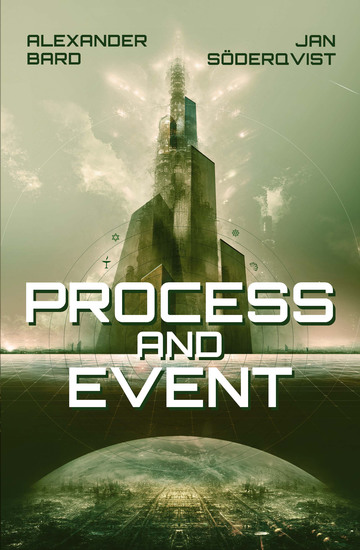
Process and Event - cover

Process and Event

Alexander Bard, Jan Söderqvist

Editorial: Aniara

  • 0
  • 0
  • 0

Sinopsis

We have to improve our thinking. We must think in terms of motion and change, and we must abandon all childish dreams of a reality more real than the real one.  

If, for example, we play with the idea that the Process called History leads to the Event called God, we have to understand what that means. Namely: that God is something we humans create because we have that need not something that created the world or us humans (or anything else).  

This God of the new era does not yet exist, but the current technological revolutions mean that the moment of creation is near. Good news, you might say, but thereby Man reduces himself to a historical parenthesis, at least if we are to believe cyberphilosophers Alexander Bard and Jan Söderqvist. And we are closer to the age of the gods than you think.  

Join in a breathtaking expedition that takes us from the infancy of religions in the form of magic and superstition via Persian mystics and iconoclasts to the age of enlightenment, modernity and artificial intelligence. Bard & Söderqvist carry out a necessary and radical rewriting of the history of Western ideas and explain why Man's search for the divine inevitably leads us to a Messiah machine with an agenda of its own.  

Process and Event rounds off a quarter of a century of systematic thinking and concludes the internationally acclaimed Narratology trilogy. It sets every imaginable form of erudition in motion and is exactly as entertaining and provocative as only a book by Bard & Söderqvist can be.
Disponible desde: 16/08/2024.
Longitud de impresión: 1060 páginas.

Otros libros que te pueden interesar

  • Culture - 50 Insights from Mythology - cover

    Culture - 50 Insights from...

    Devdutt Pattanaik

    • 0
    • 0
    • 0
    How do myths and stories influence culture? What is the difference between one culture and another, and how did these differences come to be? Are cultures fixed or do they change over time?Devdutt Pattanaik, India's leading mythologist, breaks down the complex maze of stories, symbols and rituals to examine how they shape cultures. He investigates how stories influence perception and construct truths, the cultural roots of the notion of evil and reveals the need for mythology through a telling of various Indian and Western myths. In doing so, he shows how myths reflect the culture they emerge from while simultaneously reinforcing the source.Culture is a groundbreaking work that contextualizes mythology and proposes that myths are alive, dynamic, shaped by perception and the times one lives in.
    Ver libro
  • Dark Psychology and Manipulation - Are people with dark personality traits more likely to succeed? Understanding the Tactics & Schemes of Mind Control Brainwashing NPL Persuasion Hypnosis and Deception - cover

    Dark Psychology and Manipulation...

    Christopher Kingler

    • 0
    • 0
    • 0
    Are you tired of being prey to emotional predators and manipulators and want to learn the art of dark psychology in order to fully protect yourself? 
    Is someone close to you a manipulator and have you thought about escaping their terrible claws? 
    What kind of traits do malicious and exploitative people have? What are the psychological drives that lead people to act in ways that are contrary to social norms and harmful to others? 
      
    Dark psychology can be seen as the study of the human condition, in relation to the psychological nature of the many different types of people who prey on others. The concept of prey does not always mean that an individual is harmed, but a branch of dark psychology is entirely devoted to this. 
      
    Warning! The dark techniques within this book, if used in the manner indicated, will allow you to: 
      
    ● Master the basics of persuasion and use it to become more charismatic. 
      
    ● Identify the dark personalities that you will meet in your life and annihilate them. 
      
    ● Acquire everything you need to know about powerful mind control techniques and tactics. 
      
    ● Make use of powerful tips to improve your covert persuasion skills by mastering the art of brainwashing. 
      
    ● Build an instant relationship with people and make them appreciate and trust you from the first meeting. 
      
    ● Fully understand and comprehend deception and be able to protect yourself from the manipulative techniques of others. 
      
    Please use them with care. 
      
    In addition to offering personal protection, this book will give you the dark psychology skills to improve your emotional and mental health, along with other aspects of your life. This is one of the best gifts you can give yourself.
    Ver libro
  • DECIDE and SOLVE - Decision-making and Problem-solving Skills for Teenagers Young Adults and You - cover

    DECIDE and SOLVE -...

    Stephany K. Thomann

    • 0
    • 0
    • 0
    Are you overwhelmed with a never-ending parade of choices? Still can’t catch the moment when it is time to decide, and what to decide? Still, waiting for the problem to “solve itself”?The choices you make now in your teenage years are the building blocks on your path to maturity. In adulthood, each day brings new challenges, new problems that need to be solved, and new decisions that need to be made. So how can you ensure now that you’re making the right steps to prepare yourself for the future?Decide and Solve will help you to face your choices head-on, and make decisions with confidence. Inside, you will discover:The difference between decision-making and problem-solving – and the psychology behind them.The process of decision-making and problem-solving – and how to put it to use.How to ensure your decisions today will reflect positively on your future.How to keep an open mind and be bold when it's needed.How decision-making and problem-solving skills are connected to self-confidence, happiness and success.You will come to understand why the adolescent brain approaches decisions differently from adults.You will be empowered to deal with outside pressure to ensure your decisions are your own, and not based on someone else’s words or actions.You will know what to do when your family and friends don’t support the choices you make.And much more!Note for adults:If you are looking for advice to help your fast-growing kid to be more confident and independent, this easy-to-read and down-to-earth guide for teens and young adults contains many ideas. It is a life instruction manual for making rational choices. As a parent, you will also find this an interesting read, helping you to grasp decision-making for teenagers, and also to assist in your own problem-solving.
    Ver libro
  • Daily Life in Rome - A Social and Cultural History - cover

    Daily Life in Rome - A Social...

    Rogan Fish

    • 0
    • 0
    • 0
    The foundation of Roman society was built upon a complex hierarchy that influenced daily life, social interactions, and political structures. At its core, the Roman family served as the most fundamental unit, shaping personal identity, social standing, and economic stability. The paterfamilias, or male head of the household, wielded significant authority over his family, including his wife, children, and even enslaved individuals. Roman families emphasized duty, tradition, and respect for elders, with ancestral lineage playing a crucial role in societal reputation. Women, while largely confined to domestic roles, could exert influence within the household and, in some cases, in business affairs. Marriage alliances were also instrumental in forging political and social ties, reinforcing the interconnected nature of Roman society. 
    Beyond the family, Roman society was stratified into distinct classes, each with its own privileges and restrictions. At the top were the patricians, an elite group of aristocratic families who traditionally held political power. Their wealth and influence allowed them to dominate the Senate and other governing bodies. Below them were the plebeians, a broad class of commoners that included farmers, artisans, and merchants. Although they had fewer political rights in the early Republic, the plebeians gradually gained influence through social and political struggles, such as the Conflict of the Orders. The lowest tier of society consisted of enslaved individuals and freedmen. Slaves were often prisoners of war or those born into servitude, playing essential roles in both households and large-scale economic activities. Freedmen, formerly enslaved individuals who had gained their freedom, occupied an intermediate status, often working as skilled laborers or entrepreneurs while still facing social limitations.
    Ver libro
  • Simplicity Comes Into Being When There is Freedom From the Desire to Achieve - Ojai 1949 - Public Talk 13 - cover

    Simplicity Comes Into Being When...

    Jiddu Krishnamurti

    • 0
    • 0
    • 0
    Simplicity comes into being when there is freedom from the desire to achieve 
    • One who is sincere can never be simple because he who is trying to be sincere always has the desire to pattern or approximate himself to an idea. 
    • Self-knowledge can be discovered more fully, deeply, widely, only when there is passive awareness, which is not the exertion of will. 
    • In the search for self-knowledge we get caught in self-consciousness. Being caught we make the thing in which one is caught the most important thing. 
    • To go beyond self-consciousness there must be freedom from the desire to achieve a result, because the achievement of a result is what the mind wants. 
    • Q: Would you please explain what you mean by dying daily? 
    • Q: How does a truth when repeated become a lie? What really is a lie? 
    • Q: I think I can help, but whatever I say or do to another is interpreted as interference and as domineering. Why does this happen to me? 
    • Q: What is aloneness? Is it a mystical state?
    Ver libro
  • The Common Reader - "Volume 2" - cover

    The Common Reader - "Volume 2"

    Virginia Woolf

    • 0
    • 0
    • 0
    Do not think, because this collection of essays is titled Volume 2, that there is anything lesser or additional to it. Here is Virginia Woolf at her most entertaining and informative, relishing the portraits and insights she presents as she surveys a varied collection of individuals in English society and English literature. 
     
    The subjects range from the Elizabethans to Thomas Hardy, and then concludes, unexpectedly, with ‘How Should One Read A Book?’ Here is one delight after another: twenty-six occasional pieces (journalistic diversions) which demonstrate that her eye for history, for an individual’s place in history and in books, is just as acute and vivid as any character in her better-known novels. 
     
    Many are familiar names. John Donne, Robinson Crusoe, De Quincey, Lord Chesterfield. There is Dr Burney’s Evening Party and George Gissing, names which indicate there is no overall scheme whatsoever! Woolf champions certain figures, such as Mary Wollstonecraft (admiring her personal stance and strength) and yet has time to cast a softer, kindly eye on Dorothy Wordsworth. The detail contained in these portraits will last long in the memory—Beau Brummell descending from being the unimpeachable dandy to a sad decline; the curious eccentric personality of the poet and hymn writer William Cowper and his affection for Lady Austen. 
     
    Time and again, the skill and the wit of the great writer that is Virginia Woolf simply stops one in one’s tracks, as in her opening lines on Laurence Sterne. The essay is on A Sentimental Journey but she starts with tipping the hat to Tristram Shandy, which appeared when the author was 45. Woolf comments on Sterne: ‘No young writer could have dared to take such liberties with grammar and syntax and sense and propriety and the longstanding tradition of how a novel should be written. It needed a strong dose of the assurance of middle age and its indifference to censure to run such risks of shocking the lettered by the unconventionality of one's style, and the respectable by the irregularity of one's morals. But the risk was run and the success was prodigious.’ What a final sentence! Has the 21st century little time for the elegant essay, the joy of focused wit, of kindness, of acute observation, where the very brevity of format provides a space in which to think and reflect? In The Common Reader Volume 2, (published in 1932), the essay lives on and even more so in this sensitive and engaging book by Georgina Sutton.
    Ver libro