Rejoignez-nous pour un voyage dans le monde des livres!
Ajouter ce livre à l'électronique
Grey
Ecrivez un nouveau commentaire Default profile 50px
Grey
Abonnez-vous pour lire le livre complet ou lisez les premières pages gratuitement!
All characters reduced
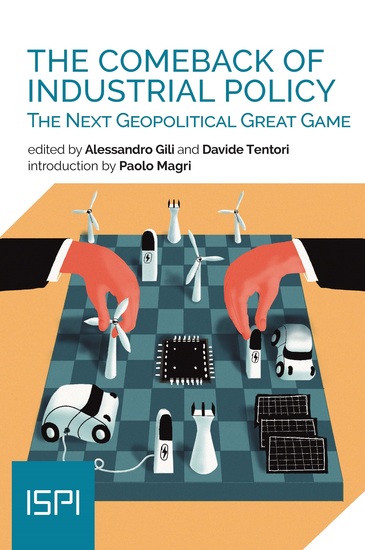
The Comeback of Industrial Policy - The Next Geopolitical Great Game - cover

The Comeback of Industrial Policy - The Next Geopolitical Great Game

Alessandro Gili, Davide Tentori

Maison d'édition: Ledizioni

  • 0
  • 0
  • 0

Synopsis

Industrial policies are the key element underlying today's geopolitical scramble and a pillar of national security.
Reacting to Western weaknesses and bottlenecks in the global supply chains, highlighted by multiple shocks such as the pandemic, the war in Ukraine, and the recent Israel-Hamas war, the US in first place and the EU later have started to introduce new industrial legislation aimed at making up for lost ground with respect to other industrial
powerhouses, such as China. Besides being policy tools to accelerate the green and digital transitions, however, the US Inflation Reduction Act and the Net Zero Industry Act, as well as the US and the EU Chips Acts, entail subsidies, local content requirements and export controls targeted at strengthening the domestic industrial base for critical technologies, fostering strategic autonomy and de-risking from excessive foreign dependencies.
This race poses risks for the weaponisation of industrial policies and fragmentation of international trade and also potentially jeopardises technological development. How can we strike a balance between economic security and efficiency? Which sectors are the most critical and which ones are the leading global powers pursuing? What will the consequences be for global value chains and international trade? Is it possible to reach an agreement on rules for a new level playing field to prevent economic competition turning into economic warfare?
Disponible depuis: 05/03/2024.
Longueur d'impression: 337 pages.

D'autres livres qui pourraient vous intéresser

  • Free Exercise - Religion the First Amendment and the Making of America - cover

    Free Exercise - Religion the...

    Chris Beneke

    • 0
    • 0
    • 0
    CONGRESS SHALL MAKE NO LAW RESPECTING AN ESTABLISHMENT OF RELIGION, OR PROHIBITING THE FREE EXERCISE THEREOF. Those words, scratched on parchment in 1789, open the US Constitution's First Amendment. From them, countless interpretations have been drawn. As a consequence, an astonishing variety of activities in modern America—prayer after football games, Bible reading in classrooms, company healthcare policies, the baking of wedding cakes, and Ten Commandment displays around courthouses—have been alternately authorized, prohibited, or modified. 


    In this compelling historical account, Chris Beneke explains how the religion clauses came into existence and how they were woven into American culture. He brings prominent early national figures to life, including George Washington, James Madison, and Thomas Paine, while chronicling the First Amendment's relationship to defining social conditions like slavery, civility, family life, and the free market. 


    Going beyond traditional church-state scholarship, Beneke also demonstrates how white women, African Americans, Roman Catholics, Jews, and nonbelievers widened religious liberty's application and illuminated its boundaries. In doing so he makes a groundbreaking contribution to both constitutional history and the history of American pluralism.
    Voir livre
  • Wild Democracy - Anarchy Courage and Ruling the Law - cover

    Wild Democracy - Anarchy Courage...

    Anne Norton

    • 0
    • 0
    • 0
    Wild Democracy calls for a more anarchic, more courageous democracy. This is an ethic for people who know the rights they hold, and who struggle to rule themselves. This is an ethic for unfinished revolutions; an ethic for those who will not be mastered. This is an ethic for those who hold fast to the rights they have by nature. 


    Democracy is always a risky business; full of promise and danger. The promise is the freedom to rule ourselves. The danger is fear: fear of the unknown, fear of the unruly, fear of one another, fear of anarchy. The fearful look for a strong hand, a powerful leader, a protector, a gun. Anarchy leads to courage, to self-reliance, self-discipline, self-rule, and solidarity. Anarchy is the nursery of democracy. It is not anarchy we have to fear, it is authoritarianism. 


    We have been taught to see the people as a problem to be managed. Anne Norton sees them as a source of strength. Anarchic democracy grows wild: springing from the everyday actions of ordinary human beings. 


    Liberalism and conservatism alike have turned away from the democratic, to institutions, rules, and regulations. Anne Norton turns to anarchic people who practice democratic ethics.
    Voir livre
  • Revolutionary Movements and Their Outcomes - The Rise and Fall of Revolutionary Ideals (4 in 1) - cover

    Revolutionary Movements and...

    Arlo Holders

    • 0
    • 0
    • 0
    This book contains these 4 titles: 
    - The Rise of Anarchism  
    - The Populist Wave   
    - The Communist Experiment  
    - The Fall of Communism
    Voir livre
  • Social Conditioning - Manipulating Society Norms to Influence Behavior - cover

    Social Conditioning -...

    Cito Harder

    • 0
    • 0
    • 0
    Social conditioning is the process by which individuals learn and internalize the values, beliefs, and behaviors that are considered acceptable within their society. From an early age, individuals are taught what is considered “normal” by their families, communities, schools, and media. These lessons shape how people think, act, and perceive the world around them, often without conscious awareness. Social conditioning operates on a fundamental level to ensure conformity to societal norms, providing structure and predictability in behavior, but it also has profound effects on individual freedom and personal identity. 
    At its core, social conditioning involves the transmission of societal norms and expectations from one generation to the next. This transmission can occur through various channels, such as direct instruction, observation, and participation in social rituals. For example, a child may learn appropriate behavior through parental guidance, but they also learn by watching the actions of peers, teachers, and other authority figures. Over time, these external influences become internalized, and the individual’s beliefs and behaviors are shaped to align with societal expectations.
    Voir livre
  • Self-Censorship - cover

    Self-Censorship

    Glenn C. Loury

    • 0
    • 0
    • 0
    There is no such thing as free, unconstrained speech. Laws and constitutions may protect us from the state when we speak our minds. But the state is just one possible constraint. Glenn Loury, one of America's most outspoken and important intellectuals, provides a provocative and dazzling analysis of the powerful social forces that can prevent speakers from voicing unpopular views in public forums.Every society, Loury notes, has norms to enforce. That can be a good thing: There ought to be social sanctions for, say, compulsive liars. When, however, a society shows a low degree of tolerance for speech about matters of political importance, self-censorship proliferates and public discourse and policy suffer. The answer, Loury argues, is for as many of us as possible to be braver and more human—to take a risk and unapologetically "live within the truth".Loury first presented these ideas in the 1990s in a celebrated and prophetic essay about "political correctness." In Self-Censorship he expands and updates the account, deploying his analytical powers and psychological acuity to diagnose our current political climate. The result illuminates prevailing social dynamics with the same brilliant and startling effect that made the paper an instant classic thirty years ago.
    Voir livre
  • Sedition - How America's Constitutional Order Emerged from Violent Crisis - cover

    Sedition - How America's...

    Marcus Alexander Gadson

    • 0
    • 0
    • 0
    Since protestors ripped through the Capitol Building in 2021, the threat of constitutional crisis has loomed over our nation. The foundational tenets of American democracy seem to be endangered, and many citizens believe this danger is unprecedented in our history. But Americans have weathered many constitutional crises, often accompanied by the same violence and chaos experienced on January 6. However, these crises occurred on the state level. In Sedition, Marcus Alexander Gadson uncovers these episodes of civil unrest and examines how state governments handled them. 


    Sedition takes listeners through six instances of constitutional crisis: The Buckshot War, Dorr's Rebellion, Bleeding Kansas, the Brooks-Baxter War, a successful terrorist campaign to overthrow South Carolina's government during Reconstruction, and the Wilmington Insurrection of 1898. He chronicles these turbulent periods of violent anti-government conflict on the state level, explaining what it was like to experience coup d'états, rival governments fighting in the streets, and disputed elections that gave way to violence. As he addresses constitutional breakdown, Gadson urges Americans to pay increased attention to the risk of constitutional instability in their home states. His sweeping historical analysis provides new insights on the fight to protect democracy today.
    Voir livre