Begleiten Sie uns auf eine literarische Weltreise!
Buch zum Bücherregal hinzufügen
Grey
Einen neuen Kommentar schreiben Default profile 50px
Grey
Jetzt das ganze Buch im Abo oder die ersten Seiten gratis lesen!
All characters reduced
The Psychology Behind Hashish - cover

The Psychology Behind Hashish

Aleister Crowley

Verlag: DigiCat

  • 0
  • 0
  • 0

Beschreibung

In "The Psychology Behind Hashish," Aleister Crowley delves into the intricate relationship between mind-altering substances and the human psyche. Through a blend of anecdotal evidence, philosophical musings, and psychological analysis, Crowley articulates the profound effects of hashish on perception, creativity, and spiritual enlightenment. Written in the early 20th century, the book reflects the era's burgeoning interest in psychoactive substances and their potential for unlocking hidden dimensions of consciousness, underpinned by Crowley's distinctively ornate and evocative literary style. Aleister Crowley, an enigmatic figure often labeled as a magician, mystic, and philosopher, was heavily influenced by his explorations into Eastern religions, occult practices, and the human experience of transcendental states. His own experimentation with psychoactive substances informed his understanding and interpretations of altered states of consciousness, leading him to produce this compelling work. Crowley's background in psychology, coupled with his deep-seated beliefs regarding the nature of reality and spirituality, provides a rich foundation for his insights in this book. "The Psychology Behind Hashish" is recommended for both academic audiences and general readers interested in the intersections of psychology, spirituality, and substance use. Crowley's nuanced exploration challenges assumptions about drug use while illuminating the complexities of the human experience. This essential read not only expands the discourse surrounding psychoactive substances but also invites readers to reflect on their own consciousness.
Verfügbar seit: 11.10.2022.
Drucklänge: 64 Seiten.

Weitere Bücher, die Sie mögen werden

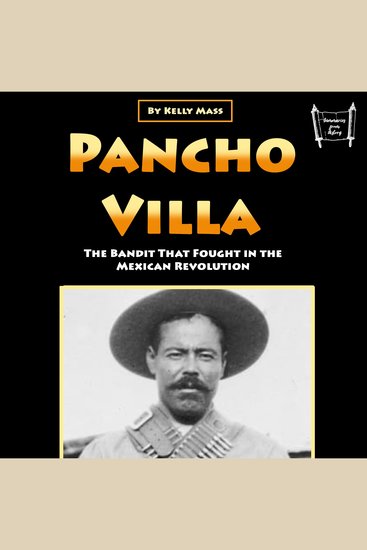
  • Pancho Villa - The Bandit That Fought in the Mexican Revolution - cover

    Pancho Villa - The Bandit That...

    Kelly Mass

    • 0
    • 0
    • 0
    Francisco Villa, better known as Pancho Villa, was a key figure in the Mexican Revolution, known for his transformation from a bandit to one of the revolution’s most influential commanders. Villa’s rise to prominence in the early 20th century marked him as a central player in the violent upheavals that reshaped Mexico’s political landscape. In 1911, Villa became a significant actor in the revolutionary violence that led to the overthrow of President Porfirio Díaz, ushering in Francisco I. Madero’s government. Villa, initially a leader of outlaw groups, aligned himself with Madero’s revolutionary cause, contributing to the instability that culminated in the fall of Díaz’s long-standing dictatorship. 
    The power dynamics in the revolution shifted again when General Victoriano Huerta attempted a right-wing coup in February 1913. As Madero’s government crumbled under Huerta’s forces, Madero led anti-Huerta soldiers in the Constitutionalist Army from 1913 to 1914. The civilian governor of Coahuila, Venustiano Carranza, became the leader of this anti-Huerta coalition. After Huerta’s eventual defeat and exile in July 1914, Villa and Carranza began to diverge politically. Villa, alongside other revolutionary leaders, assembled a gathering of generals in a bid to form a new government, but the resulting coalition was weak and inefficient. Though Villa and Emiliano Zapata, another revolutionary leader, were formally allied during this period, their partnership was largely theoretical. Both men supported land reform, but Villa’s reforms remained unrealized during his tenure of influence.
    Zum Buch
  • Rational Optimist The: Book Summary & Analysis - cover

    Rational Optimist The: Book...

    Briefly Summaries

    • 0
    • 0
    • 0
    This is a concise summary and analysis of The Rational Optimist, by Matt Ridley.
     
    It is not the original book and is not affiliated with or endorsed by Matt Ridley.
     
    Ideal those seeking a quick and insightful overview.
     
    The Rational Optimist presents a compelling argument for optimism about the future of humanity. With an engaging exploration of history, science, and economics, this book outlines how innovation, exchange, and cooperation have driven human progress. It challenges the prevailing narratives of doom, illustrating how creativity and free markets continue to solve the world’s biggest challenges, from poverty to environmental concerns. Thought-provoking and data-driven, it offers a hopeful perspective on the resilience and ingenuity of human civilization.
    Zum Buch
  • Unlock Your Inner Superhero - Conquering the Challenges of ADHD - cover

    Unlock Your Inner Superhero -...

    Hannah Bookbinder

    • 0
    • 0
    • 0
    They’re not broken—they’re extraordinary. 
    For millions of neurodivergent students, especially those with ADHD, daily life can feel like an uphill battle. From forgotten homework to struggles with time management and emotional regulation, these challenges strain relationships, erode self-esteem, and create far-reaching consequences. But ADHD isn’t a flaw—it’s a different way of functioning, one that thrives with the right support. 
      
    In this empowering and actionable guide, Hannah Bookbinder combines 25+ years of expertise with evidence-based strategies and real-life success stories. Each chapter offers tools to help teens and young adults with ADHD navigate their unique challenges, from organizing their day to building healthy relationships and managing anxiety. Designed specifically for neurodivergent high school and college readers, this book fosters self-understanding, confidence, and resilience. 
      
    With compassion and clarity, Unlock Your Inner Superhero is more than a resource—it’s a lifeline for neurodivergent kids, empowering them to embrace their uniquely amazing minds and unlock their full potential.
    Zum Buch
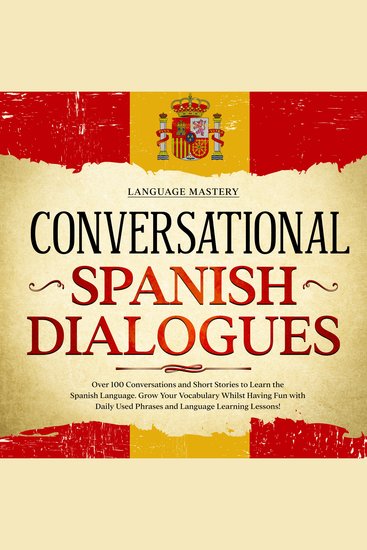
  • Conversational Spanish Dialogues - Over 100 Conversations and Short Stories to Learn the Spanish Language Grow Your Vocabulary Whilst Having Fun with Daily Used Phrases and Language Learning Lessons! - cover

    Conversational Spanish Dialogues...

    Language Mastery

    • 0
    • 0
    • 0
    Improving Vocabulary Skills in Spanish Will No Longer Be Boring And Overly Complicated With This Fun And Engaging Method! 
    Are you looking for a fully immersive Spanish language book to help conquer any conversation? 
    Would you like to use a proven method that will make you speak with a native Spanish speaker in less than 4 weeks? 
    Do you want to find an engaging yet fun way to improve your Spanish vocabulary? 
    Well, search no more...Now you can learn to speak basic Spanish in no time with "Conversational Spanish Dialogues" by Language Mastery! 
    Research has shown that effective language learning happens when students are fully immersed. That's what sets "Conversational Spanish Dialogues" apart from the rest because it provides beginners with over 100 conversations and short stories to learn the Spanish language in no time! 
    Using the power of storytelling, this book delivers compelling short stories with targeted Spanish language topics, including: 
    - Authentic spoken dialogues, to help you learn conversational expressions and improve your speaking ability 
    - Different stories and adventures - making the process fun while you learn a wide range of new vocabulary 
    - Accessible grammar so you learn new structures naturally, in a stress-free way 
    - Comprehension questions to test your understanding of the story 
    - A vocabulary word list to nail down the most relevant terms in your mind 
    And MUCH more! 
    You don't have to struggle when it comes to learn a second language like Spanish! Make it a breeze with "Conversational Spanish Dialogues"! 
    SCROLL UP, GET THE AUDIOBOOK, AND START SPEAKING SPANISH!
    Zum Buch
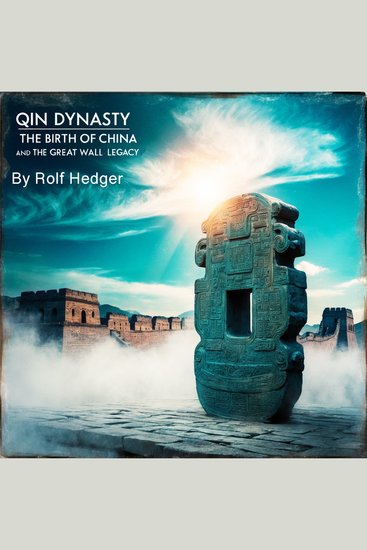
  • Qin Dynasty - The Birth of China and the Great Wall Legacy - cover

    Qin Dynasty - The Birth of China...

    Rolf Hedger

    • 0
    • 0
    • 0
    The Qin state emerged as a formidable power during the turbulent Warring States period (475–221 BCE), a time when rival kingdoms vied for dominance over China. Originally a small and relatively minor state located in the western regions, Qin gradually expanded its influence through strategic warfare, strong leadership, and administrative reforms. Unlike some of the more culturally refined states in the east, Qin was often perceived as a land of rugged warriors and strict discipline, an image that ultimately worked in its favor. 
    One of the key figures in Qin’s rise was Duke Xiao (r. 361–338 BCE), who implemented sweeping reforms with the help of his advisor Shang Yang. Shang Yang, a staunch advocate of Legalism, introduced policies that emphasized merit-based governance, agricultural development, and a powerful military structure. His reforms transformed Qin into a highly efficient and centralized state, strengthening its ability to compete with and eventually surpass its rivals. While Shang Yang's policies greatly benefited Qin, they also led to significant social hardships, as strict laws and severe punishments were imposed to maintain order. 
    Militarily, Qin adopted advanced tactics and weaponry, incorporating iron tools and crossbows that gave its armies a technological edge. The state also developed a well-organized conscription system, ensuring a steady supply of disciplined soldiers. Unlike some of the fragmented alliances among other states, Qin’s centralized command structure allowed for swift and decisive military campaigns. Under leaders such as King Huiwen and later King Zhaoxiang, Qin expanded its territory, securing vital strategic locations that set the stage for its final conquest.
    Zum Buch
  • Portugal's Bush War in Mozambique - cover

    Portugal's Bush War in Mozambique

    Al J. Venter

    • 0
    • 0
    • 0
    A new account of how Portugal fought a bush war in Mozambique for over a decade.Portugal fought a bush war in Mozambique — one of the most beautiful countries in the world — for over a decade. The small European nation was ranged against formidable odds and in the end was unable to muster the resources required to effectively take on the might of the Soviet Union and its collaborators—every single communist country on the planet and almost all of Black Africa. Yet, Al Venter argues, Portugal did not actually lose the war, and indeed fought in difficult terrain with a good degree of success over an extended period. It was radical domestic politics that heralded the end.  Mozambique is once again embroiled in a guerrilla war, this time against a large force of Islamic militants, many from Somalia and some Arab countries, and unequivocally backed by Islamic State and the lessons of Mozambique’s bush war are still relevant today.
    Zum Buch