Begleiten Sie uns auf eine literarische Weltreise!
Buch zum Bücherregal hinzufügen
Grey
Einen neuen Kommentar schreiben Default profile 50px
Grey
Jetzt das ganze Buch im Abo oder die ersten Seiten gratis lesen!
All characters reduced
Little Women - cover

Little Women

Louisa May Alcott

Verlag: Edicions Perelló

  • 0
  • 0
  • 0

Beschreibung

Little Women (1868) tells the story of the March sisters—Meg, Jo, Beth, and Amy—growing up in New England during the American Civil War. As they navigate the joys and struggles of life, each sister embarks on her own journey of self-discovery, love, and ambition. The novel explores themes of family, sacrifice, and the pursuit of personal dreams, all while celebrating the enduring strength of sisterhood. A timeless and heartwarming tale about growing up, facing adversity, and cherishing the bonds that hold us together.
Verfügbar seit: 29.03.2025.
Drucklänge: 473 Seiten.

Weitere Bücher, die Sie mögen werden

  • The Taming of the Shrew - cover

    The Taming of the Shrew

    William Shakespeare

    • 0
    • 1
    • 0
    Shakespeare’s controversial comedy about a man’s quest to break the will of his headstrong wife.Whether this tale is motivated by misogyny, or is simply a satirical critique of men’s treatment of women is a matter up for much debate. Regardless of its potentially polarizing intentions, The Taming of the Shrew is one of William Shakespeare’s most intriguing comedies. Framed as a play within a play, it tells the story of the assertive Katherina’s marriage to Petruchio, who resorts to all sorts of psychological abuse in order to force her to be a traditional obedient wife. The inspiration for the Broadway play Kiss Me, Kate, The Taming of the Shrew is a fascinating glimpse into the sexual politics of the Elizabethan era.
    Zum Buch
  • White Nights - cover

    White Nights

    Fyodor Dostoevsky

    • 0
    • 0
    • 0
    White Nights, a tale of lonelyness by Fyodor Dostoevsky. 
    Like many of Dostoevsky's stories, "White Nights" is told in the first person by a nameless narrator, a young man living in Saint Petersburg who suffers from loneliness. He gets to know and falls in love with a young woman, but the love remains unrequited as the woman misses her lover. How will it end? 
    Narrated by Michael Ward.
    Zum Buch
  • The Jungle - cover

    The Jungle

    Upton Sinclair

    • 0
    • 0
    • 0
    "The Jungle" is a novel written by Upton Sinclair and published in 1906. The book is a work of fiction but is based on Sinclair's own experiences working in the meatpacking industry in Chicago during the early 1900s. 
    The story follows the life of Jurgis Rudkus, a Lithuanian immigrant who comes to America with his family seeking a better life. However, he soon discovers the harsh realities of working in the meatpacking industry, where dangerous working conditions, low wages, and exploitative practices are the norm. 
    Through Jurgis's experiences, Sinclair exposes the corrupt practices of the meatpacking industry, including unsanitary working conditions, unsafe food handling, and the mistreatment of workers. The novel also touches on issues such as poverty, political corruption, and the struggle for workers' rights. 
    "The Jungle" had a profound impact on American society and led to the passage of the Pure Food and Drug Act and the Meat Inspection Act in 1906, which aimed to improve the safety and quality of food products in the United States. 
    Overall, "The Jungle" is a powerful work of social criticism that exposes the harsh realities of industrial capitalism and the impact it has on workers and their families
    Zum Buch
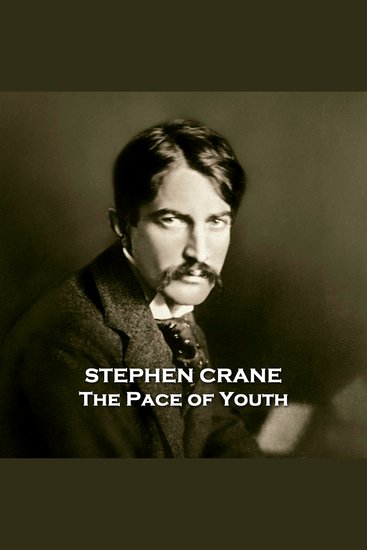
  • The Pace of Youth - A complex yet rewarding story about the challenges of young love - cover

    The Pace of Youth - A complex...

    Stephen Crane

    • 0
    • 0
    • 0
    Stephen Crane was born 1st November, 1871 in Newark, New Jersey and was the eighth surviving child out of fourteen.  Incredibly he began writing at the age of four and was published several times by the age of sixteen.   
     
    Crane only began a full-time education when he was nine but quickly mastered the grades needed to catch up and move forward. Although educated at Lafayette and Syracuse he had little interest in completing university and was keener to move on to a career, declaring college to be ‘a waste of time’.  By twenty he was a reporter and two years later had published his debut novel ‘Maggie: A Girl of the Streets’.  In literary circles this was hailed as the first work of American literary Naturalism.  
     
    Two years later, in 1895, he was the subject of worldwide acclaim for his Civil War novel, written without the benefit of any actual war experiences, ‘The Red Badge of Courage’.  It was indeed a masterpiece and his finest hour.  A year later life began its downwards descent when he became embroiled in a scandal which was to doom his career.  In attempting to help a suspected prostitute being falsely charged by a policeman he became the target of the authorities. 
     
    Later the same year en-route to Cuba as a War Correspondent he met the hotel madam Cora Taylor in Jacksonville, Florida.  This was to become the defining relationship of his life.  Continuing his journey, somewhere between Florida and Cuba his ship sank, and he was cast adrift for several days.  Rescued, he returned to cover conflicts wherever they were situated, some as far away as Greece.  For a time he lived in England with Cora, usually beyond their means, befriending fellow writers such as H G Wells and Joseph Conrad.    
     
    In declining health and beset by money problems, Stephen Crane died of tuberculosis, aged a mere 28 on 5th June 5, 1900, at Badenweiler, Germany. He is buried in New Jersey.
    Zum Buch
  • A Wireless Message - From their pens to your ears genius in every story - cover

    A Wireless Message - From their...

    Ambrose Bierce

    • 0
    • 0
    • 0
    Ambrose Gwinnett Bierce was born on 24th June 1842 at Horse Cave Creek in Meigs County, Ohio. His parents were poor but they introduced him to literature at an early age, instilling in him a deep appreciation of books, the written word and the elegance of language.  
    Growing up in Koscuisko County, Indiana poverty and religion were defining features of his childhood, and he would later describe his parents as “unwashed savages” and fanatically religious, showing him little affection but always quick to punish. He came to resent religion, and his introduction to literature appears to be their only positive effect. 
    At age 15 Bierce left home to become a printer’s devil, mixing ink and fetching type at The Northern Indian, a small Ohio paper. Falsely accused of theft he returned to his farm and spent time sending out work in the hopes of being published. 
    His Uncle Lucius advised he be sent to the Kentucky Military Institute. A year later he was commissioned as an Officer.  As the Civil War started Bierce enlisted in the 9th Indiana Infantry Regiment.  
    In April 1862 Bierce fought at the Battle of Shiloh, an experience which, though terrifying, became the source of several short stories. Two years later he sustained a serious head wound and was off duty for several months. He was discharged in early 1865.  
    A later expedition to inspect military outposts across the Great Plains took him all the way to San Francisco. He remained there to become involved with publishing and editing and to marry, Mary Ellen on Christmas Day 1871.  They had a child, Day, the following year.  
    In 1872 the family moved to England for 3 years where he wrote for Fun magazine. His son, Leigh, was born, and first book, ‘The Fiend’s Delight’, was published.  
    They returned to San Francisco and to work for a number of papers where he gained admiration for his crime reporting. In 1887 he began a column at the William Randolph Hearst’s San Francisco Examiner.  
    Bierce’s marriage fell apart when he discovered compromising letters to his wife from a secret admirer. The following year, 1889 his son Day committed suicide, depressed by romantic rejection. 
    In 1891 Bierce wrote and published the collection of 26 short stories which included ‘An Occurrence at Owl Creek Bridge’.  Success and further works including poetry followed.  
    Bierce with Hearst’s resources helped uncover a financial plot by a railroad to turn 130 million dollars of loans into a handout. Confronted by the railroad and asked to name his price Bierce answered “my price is $130 million dollars. If, when you are ready to pay, I happen to be out of town, you may hand it over to my friend, the Treasurer of the United States”.  
    He now began his first foray as a fabulist, publishing ‘Fantastic Fables’ in 1899.  But tragedy again struck two years later when his second son Leigh died of pneumonia relating to his alcoholism.  
    He continued to write short stories and poetry and also published ‘The Devil’s Dictionary’.  
    At the age of 71, in 1913 Bierce departed from Washington, D.C., for a tour of the battlefields where he had fought during the civil war. At the city of Chihuahua he wrote his last known communication, a letter to a friend. It’s closing words were “as to me, I leave here tomorrow for an unknown destination,” Ambrose Bierce then vanished without trace.
    Zum Buch

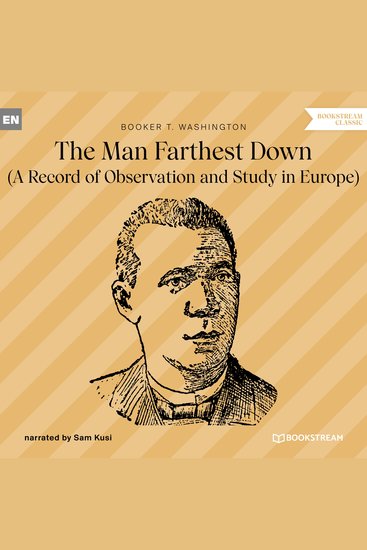
  • Man Farthest Down The - A Record of Observation and Study in Europe (Unabridged) - cover

    Man Farthest Down The - A Record...

    Booker T. Washington

    • 0
    • 0
    • 0
    In View of the rather elaborate plan I have sketched, I am certain that some of my readers Will wonder how I expected to be able, in the eight weeks to which my vacation was limited, to cover all the ground or get any definite or satisfactory notions in regard to the special matters which interested me in the places I pro posed to visit. It seems to me, therefore, that I ought to say something, by way of explana tion and introduction, as to just how this journey was made and in regard to the manner in which the impressions and facts which make up the remainder of this book were obtained.
    Zum Buch