Begleiten Sie uns auf eine literarische Weltreise!
Buch zum Bücherregal hinzufügen
Grey
Einen neuen Kommentar schreiben Default profile 50px
Grey
Jetzt das ganze Buch im Abo oder die ersten Seiten gratis lesen!
All characters reduced
Little Men - Louisa May Alcott's Beloved Sequel to Little Women - cover

Little Men - Louisa May Alcott's Beloved Sequel to Little Women

Louisa May Alcott, Zenith Maple Leaf Press

Verlag: Zenith Maple Leaf Press

  • 0
  • 0
  • 0

Beschreibung

"A heartwarming sequel to Little Women that celebrates childhood, friendship, and the joy of growing up."

From the beloved author of Little Women, Louisa May Alcott continues the story with Little Men, a delightful tale set at Plumfield, the school run by Jo March and her husband, Professor Bhaer.

Here, readers enter a world filled with mischievous boys, curious adventures, and moral lessons that shape their character. With Jo's loving guidance and the lively environment of Plumfield, the children learn not only arithmetic and reading but also kindness, honesty, and compassion.

🌟 Why Readers Love It:

💕 A touching continuation of the March family saga.

📚 Rich in moral values and life lessons, making it perfect for both children and adults.

🎨 Charming portraits of childhood that remind us of the simple joys of family and community.

First published in 1871, Little Men has remained a cherished classic for generations, inspiring readers with its warmth, humor, and timeless lessons.

🎖️ Celebrated as one of Alcott's finest works, alongside Little Women and Jo's Boys.

🎯 Step into Plumfield and rediscover the magic of Louisa May Alcott's world. Click "Buy Now" to join Jo March and her lively band of students in Little Men today!
Verfügbar seit: 18.08.2025.
Drucklänge: 175 Seiten.
Weitere Bücher, die Sie mögen werden

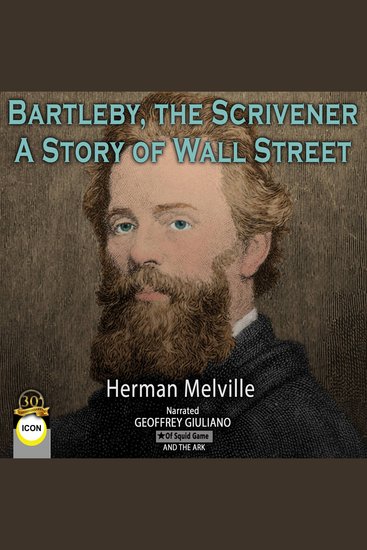
  • Bartleby The Scrivener - A Story of Wall Street - cover

    Bartleby The Scrivener - A Story...

    Herman Melville

    • 0
    • 0
    • 0
    Bartleby, the Scrivener: A Story of Wall Street is a novella by the American novelist Herman Melville (1819–1891). It first appeared anonymously in two parts in the November and December 1853 editions of Putnam's Magazine, and was reprinted with minor textual alterations in his The Piazza Tales in 1856. 
     
    Among Melville's best-known works are Moby-Dick; Typee , a romanticized account of his experiences in Polynesia; and Billy Budd, Sailor, a posthumously published novella. Although his reputation was not high at the time of his death, the 1919 centennial of his birth was the starting point of a Melville revival, and Moby-Dick grew to be considered one of the great American novels. 
     
    During his last years, he privately published two volumes of poetry, and left one volume unpublished. The novella Billy Budd was left unfinished at his death, but was published posthumously in 1924. Melville died from cardiovascular disease in 1891.
    Zum Buch
  • Cone The (Unabridged) - cover

    Cone The (Unabridged)

    H. G. Wells

    • 0
    • 0
    • 0
    The Cone is a short story by H. G. Wells, first published in 1895 in Unicorn. It was intended to be "the opening chapter of a sensational novel set in the Five Towns", later abandoned. The story is set at an ironworks in Stoke-on-Trent, in Staffordshire. An artist is there to depict the industrial landscape; the manager of the ironworks discovers his affair with his wife, and takes him on a tour of the factory, where there are dangerous features.
    Zum Buch
  • In Our Time (1925 Edition) - Short Stories by Ernest Hemingway - cover

    In Our Time (1925 Edition) -...

    Ernest Hemingway

    • 0
    • 0
    • 0
    Ernest Hemingway was born in Oak Park, Illinois, on July 21, 1899. He served in World War I as an ambulance driver on the Italian front; he was wounded and decorated. After the war, he worked as a journalist before settling in Paris, where he met Gertrude Stein and Ezra Pound, who shaped his literary voice. His prose was terse, his sentences short, and his stories of men and their battles with nature, with love, with their own souls. Hemingway wrote many novels and short stories: "The Sun Also Rises," "A Farewell to Arms," "For Whom the Bell Tolls," and "The Old Man and the Sea," for which he received the Pulitzer Prize. He lived in Key West, Cuba, and Idaho, always in pursuit of the perfect sentence, the true experience. 
    He married four times, loved deeply, and fought hard against his inner demons. Hemingway's life was marked by adventure, war, hunting, fishing, and an unyielding quest for authenticity. In 1954, he was awarded the Nobel Prize in Literature. On July 2, 1961, in Ketchum, Idaho, he ended his life with a shotgun. His works endure, capturing the essence of a man facing the world, striving for grace under pressure. 
    Frank Marcopolos lives in Florida with his dog, Sparky.
    Zum Buch
  • The Two Barques - cover

    The Two Barques

    Arthur Conan Doyle

    • 0
    • 0
    • 0
    The Two Barques is a short story by Arthur Conan Doyle first published in the Pearson's Magazine in march 1897. 2nd story of the Captain Sharkey saga.In Kingston, an elderly logwood-cutter saw Captain Sharkey's pirate barque, the Happy Delivery, careening at Torbec on the south-west of Hispaniola, as well as Sharkey himself, with four men, buccaneering on the outlying island of La Vache. Stephen Craddock, an adventurer comes to the Governor Sir Edward Compton with a plan for the extirpation of Sharkey. He want to use the sister ship of the Happy Delivery, the White Rose, and set sail for the Island of La Vache, where Sharkey is slaying the wild oxen. When Sharkey will see the White Rose he will surely mistake it for his own vessel which he is awaiting, and he will come on board to his own undoing. The plan is accepted by the Governor and Craddock set sail to La Vache with a crew of volunteers. When they arrive to La Vache, no sign of Sharkey. They search him in the forest for a few days but finally they decide to return to their boat. When they arrive on board something is strange, as if it was not the same ship, and suddenly they are captured by Sharkey on the deck. They are on the pirate ship the Happy Delivery which came back from its careening upon the very day that they left in the forest. Then the White Rose is scuttled in the bay. Craddock, bruised and wounded in soul and body, is thrown into a dark sail-room. For two days, the Happy Delivery set sail to Jamaica. When he arrives to Port-Royal, Sharkey, with that diabolical cunning and audacity which were among his main characteristics, is simulating the part which Craddock would himself have played had he come back victorious. Sharkey exhibits Craddock on the deck so that the other side could fall into the trap but the later has sprung the bulwarks and is swimming for his life. He is hit and hit again by pistol shots but is still swimming. Irritated, Sharkey takes his musket and fired a fatal blow on Craddock.
    Zum Buch
  • Voices of Poetry Volume 2 - cover

    Voices of Poetry Volume 2

    Edna St Vincent Millay, Ezra...

    • 0
    • 0
    • 0
    Hear rare recordings from some of the world's most-respected poets reading their own works: Ezra Pound, Old Men With Beautiful Manners; William Butler Yeats, The Lake Isle Of Innisfree; Robert Graves, A Last Poem; Edna St. Vincent Millay, The Harp-Weaver; Richard Eberhart, The Groundhog; Philip Levine, Blasting from Heaven; Marianne Moore, The Mind is an Enchanting Thing; Stephen Spender, What I Expected; Vachel Lindsay, An Interpolation by Mr. Lindsay. 
    Recording obtained and published by Rick Sheridan. 
    ©2009 Rick Sheridan (P)2009 Rick Sheridan
    Zum Buch
  • A Scene from the Ghetto of Venice - From their pens to your ears genius in every story - cover

    A Scene from the Ghetto of...

    Rainer Maria Rilke

    • 0
    • 0
    • 0
    René Karl Wilhelm Johann Josef Maria Rilke was born into a troubled marriage on the 4th December 1875 in Prague, then part of the Austro-Hungarian Empire.  His mother, having previously lost a baby girl, would dress the young boy up in girl’s clothing.   
    Later his father dispatched him to a military academy at age 10 but after a miserable 5 years the young Rilke left due to illness and instead entered first Prague and then Munich and finally Berlin university to study art history, philosophy and literature. 
    His initial forays into literature was in poetry.  His intense, mystical and lyrical style was much admired and over time inspired many in succeeding generations.    
    His short prose collection ‘Stories of God’, written in an impassioned burst over several nights was published in 1900 and offers a beguiling view of much of Rilke’s influences and outlook.  
    The following year he married the pioneering sculptor and artist Clara Westhoff.  The union produced one child, a daughter Ruth.   
    He lived in Paris for most of the Century’s first decade where he mixed with many great minds of the time.  Although he continued to write he also worked as a secretary to the sculptor, Rodin.   
    It was only after they settled in Switzerland in 1919 that his writing output was in full flow.  Here he wrote profusely in both German and French, which included much on his previous travels, his left-wing sympathies, his religious and existential thoughts, all part of a unique and consummate style. 
    From 1923 on, Rilke increasingly struggled with his health which was now in constant decline and often spent time rehabilitating at a sanatorium.   
    Rainer Maria Rilke died of leukaemia on the 29th December 1926 in Montreux, Switzerland.  He was 51.
    Zum Buch