Rejoignez-nous pour un voyage dans le monde des livres!
Ajouter ce livre à l'électronique
Grey
Ecrivez un nouveau commentaire Default profile 50px
Grey
Abonnez-vous pour lire le livre complet ou lisez les premières pages gratuitement!
All characters reduced
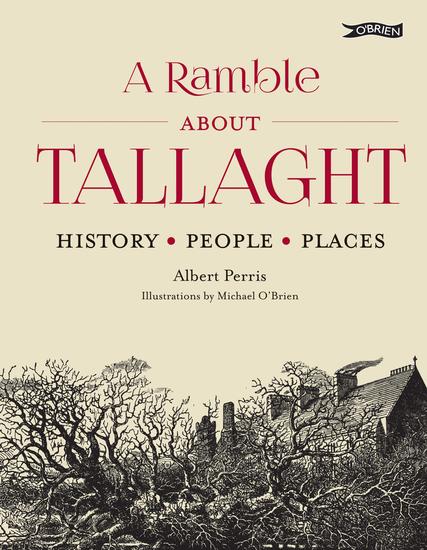
A Ramble About Tallaght - History People Places - cover

A Ramble About Tallaght - History People Places

Albert Perris

Maison d'édition: The O'Brien Press

  • 0
  • 0
  • 0

Synopsis

A fascinating history of an ancient place.
From its first mention in legend in the Book of Invasions, through early Christian monastic settlements, castles and grand residences, Fenian raids and the Battle of Tallaght, there has been huge change in Tallaght. In more recent times it has seen car and motorcycle racing, an aerodrome, the rise and fall of a chocolate factory and a pioneering telecommunications firm. The massive population explosion and rapid modernisation towards the end of the twentieth century means this once-tiny village in Dublin's foothills is now home to over 80,000 people.
Richly illustrated with period photographs and original drawings by Michael O'Brien, Albert Perris tells the often-surprising story of Tallaght.
Disponible depuis: 06/11/2023.
Longueur d'impression: 288 pages.
D'autres livres qui pourraient vous intéresser

  • Protests & Social Movements - Voices of Change and the Fight for Rights (4 in 1) - cover

    Protests & Social Movements -...

    Fredrich Hazelton

    • 0
    • 0
    • 0
    This book contains these 4 titles: 
    - The Arab Spring: The Arab Springs stands as one of the most transformative events of the 21st century, reshaping the political and social landscapes of the Middle East and North Africa. Triggered in December 2010 by the self-immolation of Mohamed Bouazizi in Tunisia, the movement quickly spread across the region, igniting a wave of protests, uprisings, and revolutions.  
    - The Dakota Access Pipeline Protests: The Dakota Access Pipeline (DAPL) protests were a defining moment in the intersection of environmental advocacy and Indigenous rights. Proposed to transport crude oil from the Bakken oil fields in North Dakota to Illinois, the pipeline’s route crossed sacred lands and the Missouri River, threatening water supplies and cultural heritage. While its proponents touted economic benefits and energy security, the project drew fierce resistance from the Standing Rock Sioux Tribe and their allies, sparking a global movement.  
    - The Hong Kong Protests: Hong Kong, a former British colony handed back to China in 1997, has long been a symbol of political and economic success. Its unique status under the "One Country, Two Systems" framework promised a high degree of autonomy, preserving its freedoms and capitalist economy for 50 years after the handover. However, in recent years, this promise has been put to the test, as Beijing's increasing influence over the region has sparked widespread protests and growing unrest. 
    - The MeToo Movement: The movement’s resonance stems from its powerful message: sexual harassment and assault are widespread issues that affect women and marginalized groups across all sectors of society, from entertainment to politics, from workplaces to homes.
    Voir livre
  • What to Do When Your Child Isn't Talking - Expert Strategies to Help Your Baby or Toddler Talk Overcome Speech Delay and Build Language Skills for Life 2nd edition - cover

    What to Do When Your Child Isn't...

    Tracey Blake, Nicola Lathey

    • 0
    • 0
    • 0
    For parents of young children, speech milestones are monumental—from baby babble to first words to full sentences. It's natural to worry when they don't arrive "on schedule" or when your little one seems to lag behind their peers. 


    In What to Do When Your Child Isn't Talking, speech and language therapist Nicola Lathey and journalist Tracey Blake offer parents reassurance and solutions—at a moment when speech delay and regression is more common than ever. Organized by major milestones from birth to age four, this don't-panic guide will empower you to: 


    ● Identify early signs of speech delay and possible causes—"glue ear," tongue tie, suspected autism, or simply your child's individual pace of learning. 


    ● Help your child practice specific speech sounds and words that they find tricky with fun activities, from classic clapping games to filling a "story sack." 


    ● Get to the root of toddler tantrums, chronic shyness, unclear speech, stuttering, social anxiety, and other issues stunting your child's self-expression. 


    ● Communicate better with your child, and watch them thrive! 


    What to Do When Your Child Isn't Talking is an updated and revised edition of Small Talk.
    Voir livre
  • Egyptian Science and Technology - Innovations of the Ancient World - cover

    Egyptian Science and Technology...

    Omar Khalil

    • 0
    • 0
    • 0
    Ancient Egypt, renowned for its monumental architecture and sophisticated culture, was also a hub of intellectual and scientific advancements. At the heart of Egyptian knowledge was a unique blend of practical experience, religious beliefs, and cultural traditions. Understanding the foundations of their knowledge requires examining the interplay between mythology, early scientific thought, and the ways this knowledge was transmitted through generations. 
    The role of religion and mythology in ancient Egypt cannot be overstated. Egyptian cosmology deeply influenced how people understood the world around them. Deities associated with creation, the afterlife, and natural phenomena shaped the Egyptians' perception of science and technology. For example, the god Thoth was believed to be the deity of wisdom, writing, and mathematics, and his influence permeated educational practices. Priests and scribes, who were often part of temple schools, acted as custodians of this sacred knowledge. Their training combined religious teachings with practical subjects like astronomy, mathematics, and medicine. 
    Early scientific thought in ancient Egypt was pragmatic rather than theoretical. Egyptians were skilled observers, and much of their knowledge arose from practical problem-solving. Whether it was calculating the Nile's flooding patterns or designing complex irrigation systems, their science emerged from the need to manage everyday challenges. For instance, their understanding of geometry developed out of the necessity to remeasure fields after the annual inundation of the Nile. Similarly, medical practices were rooted in practical observations of ailments and their treatments, blending empirical knowledge with spiritual beliefs.
    Voir livre
  • Baruch Spinoza - God Nature and the Ethics of Reason - cover

    Baruch Spinoza - God Nature and...

    Hector Davidson

    • 0
    • 0
    • 0
    Baruch Spinoza's philosophy is a comprehensive system that integrates metaphysics, epistemology, ethics, and political theory into a unified framework. Central to his thought is the idea of God and nature as a single, infinite substance, which Spinoza refers to as "Deus sive Natura" (God or Nature). This concept encapsulates his pantheistic view that everything that exists is a part of this one, all-encompassing reality. 
      
    Metaphysics and Substance 
      
    Spinoza's metaphysical framework revolves around the notion of substance monism. He argues that there is only one substance in the universe, which is both God and nature. This substance possesses an infinite number of attributes, with thought and extension being the two that humans can comprehend. Everything that exists, according to Spinoza, is a mode or manifestation of this single substance. This idea challenges traditional theistic views by rejecting the notion of a personal, transcendent God who is separate from the world. 
      
    Epistemology and Knowledge 
      
    In epistemology, Spinoza emphasizes the role of reason and intuitive knowledge in understanding the nature of reality. He distinguishes between different types of knowledge: imagination, reason, and intuition. Imaginative knowledge, based on sensory experience and inadequate ideas, is unreliable and often leads to confusion. Rational knowledge, which arises from understanding the necessary connections between ideas, is more accurate. The highest form of knowledge, according to Spinoza, is intuitive knowledge—an immediate, direct understanding of the essence of things.
    Voir livre
  • Fighting Hell - Headed to Israel - cover

    Fighting Hell - Headed to Israel

    Cheryl Remington

    • 0
    • 0
    • 0
    “Victorious” is the extraordinary autobiographical account of Cheryl Remington, a woman whose remarkable journey transformed her from an innocent child to the Last Prophet of God. This series spans an incredible 70 years and captures the profound trials, revelations, and triumphs that have defined her life. 
    Through vivid storytelling, Cheryl shares the intimate lessons, wisdom, and divine guidance she received, offering readers a rare glimpse into the life of one chosen by **Adonai**. Her unwavering faith in the face of overwhelming adversity will inspire, challenge, and deeply move you. With every page, you will question how she endured unimaginable hardships and emerged more robust, filled with divine purpose. 
    Her absolute dedication to God is unshakable. Despite obstacles or forces trying to sway her, Cheryl’s life is a testament to resilience, divine calling, and unwavering belief in a higher purpose. “Victorious” is not just her story—it is a journey of faith, revelation, and the triumph of the spirit.
    Voir livre
  • Counterrevolution - The Crusade to Roll Back the Gains of the Civil Rights Movement - cover

    Counterrevolution - The Crusade...

    Stephen Steinberg

    • 0
    • 0
    • 0
    In Black Reconstruction W. E. B. Du Bois wrote, "The slave went free; stood for a brief moment in the sun; then moved back again toward slavery." His words echo across the decades as the civil rights revolution, marked by the passage of landmark civil rights laws in the '60s, has seen those gains steadily and systematically whittled away. As history testifies, revolution nearly always triggers its antithesis: counterrevolution. In this book, Steinberg provides an analysis of this backlash, tracing the reverse flow of history that has led to the current national reckoning on race. 


    Steinberg puts counterrevolution into historical and theoretical perspective, exploring the "victim-blaming" and "colorblind" discourses that emerged in the post-segregation era and undermined progress toward racial equality, and led to the gutting of affirmative action. This book reflects Steinberg's long career as a critical race scholar, culminating with his assessment of our current moment and the possibilities for political transformation.
    Voir livre