Join us on a literary world trip!
Add this book to bookshelf
Grey
Write a new comment Default profile 50px
Grey
Subscribe to read the full book or read the first pages for free!
All characters reduced
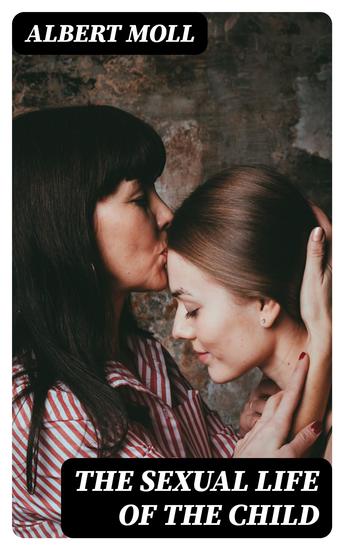
The Sexual Life of the Child - cover

The Sexual Life of the Child

Albert Moll

Translator Eden Paul

Publisher: DigiCat

  • 0
  • 0
  • 0

Summary

In "The Sexual Life of the Child," Albert Moll, a pioneering psychoanalyst and one of the early proponents of child psychology, explores the intricacies of childhood sexuality, a topic often shrouded in taboo. Written in the early 20th century, the book adopts a clinical yet empathetic literary style, merging case studies with theoretical insights that challenge prevailing societal norms. Moll posits that an understanding of children's sexual development is crucial for the holistic approach to their psychological health, hence situating his work firmly within the burgeoning field of psychoanalysis and child psychology of the time, where the intersection of sexuality and childhood was keenly investigated yet poorly understood. Moll's deep interest in the psychological underpinnings of sexual behavior is evident throughout his career. As a student of Sigmund Freud and an impactful figure in early psychoanalytic circles, Moll was undoubtedly influenced by the debates surrounding sexuality and childhood. His professional journey, encompassing both medical science and psychotherapy, equipped him with a unique perspective that allowed him to dismantle misconceptions surrounding children's sexual experiences and articulate their importance in broader developmental contexts. This book is a significant resource for scholars, educators, and parents alike, offering illuminating insights into the often overlooked dimensions of early childhood development. It invites readers to reconsider deeply ingrained biases about childhood sexuality, ultimately fostering a more compassionate and informed dialogue on the subject. Readers seeking to understand the complexities of child psychology and the critical role of sexuality in development will find Moll's work both necessary and revealing.
Available since: 08/01/2022.
Print length: 346 pages.

Other books that might interest you

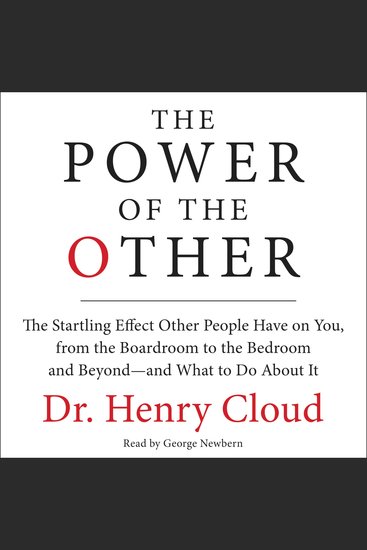
  • The Power of the Other - The startling effect other people have on you from the boardroom to the bedroom and beyond-and what to do about it - cover

    The Power of the Other - The...

    Anonymous

    • 0
    • 0
    • 0
    An expert on the psychology of leadership and the bestselling author of Integrity, Necessary Endings, and Boundaries For Leaders identifies the critical ingredient for personal and professional wellbeing. 
    Most leadership coaching focuses on helping leaders build their skills and knowledge and close performance gaps. These are necessary, but not sufficient. Using evidence from neuroscience and his work with leaders, Dr. Henry Cloud shows that the best performers draw on another vital resource: personal and professional relationships that fuel growth and help them surpass current limits. 
    Popular wisdom suggests that we should not allow others to have power over us, but the reality is that they do, for better or for worse. Consider the boss who diminishes you through cutting remarks versus one who challenges you to get better. Or the colleague who always seeks the limelight versus the one who gives you the confidence to finish a difficult project. Or the spouse who is honest and supportive versus the one who resents your success. No matter how talented, intelligent, or experienced, the greatest leaders share one commonality: the power of the others in their lives. 
    Combining engaging case studies, persuasive findings from cutting-edge brain research, and examples from his consulting practice, Dr. Cloud argues that whether you’re a Navy SEAL or a corporate executive, outstanding performance depends on having the right kind of connections to fuel personal growth and minimize toxic associations and their effects. Presenting a dynamic model of the impact these different kinds of connections produce, Dr. Cloud shows readers how to get more from themselves by drawing on the strength and expertise of others. You don’t have a choice whether or not others have power in your life, but you can choose what kinds of relationships you want.
    Show book
  • Polynesian Mythology - Legends from the Islands of the Pacific - cover

    Polynesian Mythology - Legends...

    Odessa Nightshade

    • 0
    • 0
    • 0
    Polynesian mythology is a vast and intricate tapestry of stories, gods, and legendary heroes that have shaped the cultures of the Pacific Islands for centuries. Spanning across a region known as the Polynesian Triangle—bounded by Hawaii, New Zealand (Aotearoa), and Easter Island (Rapa Nui)—these myths have been passed down through generations via oral tradition. Each island group has its own variations, yet many of the themes, characters, and cosmic beliefs remain deeply connected, reflecting a shared ancestry and worldview.  
      
    At the heart of Polynesian mythology is a deep reverence for nature and the forces that shape the world. The ocean, sky, and land are not merely elements of the physical environment but sacred entities, often personified by gods and spirits. The vast Pacific, for example, is not only a means of travel but also a living force, ruled by deities like Tangaroa, the god of the sea. The sun, moon, stars, and winds play crucial roles in these legends, guiding great navigators and influencing the balance of life.  
      
    Oral tradition is the foundation of Polynesian storytelling. Before the arrival of writing, myths and legends were preserved through chants, songs, and performances. Storytellers, often elders or priests, ensured that each retelling remained faithful to tradition while also adapting to the audience and setting. This fluidity allowed myths to evolve while maintaining their core meanings. Through these stories, people learned about their ancestry, moral values, and the origins of their world. 
    Show book
  • The Book of Shadows Vol 1 - cover

    The Book of Shadows Vol 1

    D. H. Lawrence, Edith Nesbit, E....

    • 0
    • 0
    • 0
    What knowledge was never meant to be forgotten?
    
    The Book of Shadows Vol. 1 is a compelling anthology of occult writings, mystical traditions, and esoteric teachings drawn from ancient, medieval, and early modern sources. Compiled from various authors, this volume explores humanity's hidden relationship with nature, ritual, symbolism, and unseen forces.
    
    Within these pages, readers encounter spells, folklore, philosophical reflections, and spiritual practices rooted in pagan traditions, ceremonial magic, and mystical thought. Rather than sensationalism, this collection emphasizes historical depth, symbolic meaning, and the human desire to understand the invisible world.
    
    Mysterious, atmospheric, and intellectually intriguing, this volume serves as both a gateway and a foundation for readers drawn to the occult and the arcane.
    
    Inside this eBook, you'll explore:
    
    A curated collection of occult and esoteric writings
    
    Ancient rituals, symbolic traditions, and mystical philosophy
    
    Early sources of magical and spiritual thought
    
    A foundational anthology for occult literature enthusiasts
    
    Whether read for study, curiosity, or inspiration, The Book of Shadows Vol. 1 opens a door to humanity's oldest spiritual questions.
    
    Enter the circle. Begin the journey. Buy now and explore The Book of Shadows Vol. 1.
    Show book
  • Chasing the Intact Mind - How the Severely Autistic and Intellectually Disabled Were Excluded from the Debates That Affect Them Most - cover

    Chasing the Intact Mind - How...

    Amy S.F. Lutz

    • 0
    • 0
    • 0
    The concept of the intact mind, first described in a 2006 memoir, refers to the idea that inside every autistic child is an intelligent, typical child waiting to be liberated by the right diet, the right treatment intervention, the right combination of supports and accommodations. The sentiment itself is not new. Though the idea gives hope to parents devastated by a child's diagnosis, Amy Lutz argues that it has also contributed to widespread dismantling of services badly needed by severely disabled children and their families. 


    In Chasing the Intact Mind, Lutz traces the history of the intact mind concept, explaining how it influences current policy and practice affecting those with autism. Lutz provides a historical analysis of the intact mind narrative and describes how the concept—originally unique to autism—has come to inform current debates at the heart of intellectual and developmental disability practice and policy in the United States. Lutz argues that focusing on the intact mind and marginalizing those with severe disability reproduces historic patterns of discrimination that yoked human worth to intelligence, and that it is only by making space for the impaired mind that we will be able to resolve these ongoing clashes—as well as even larger questions of personhood, dependency, and care.
    Show book
  • Critical Look at Jesus A: A Skeptics Approach - cover

    Critical Look at Jesus A: A...

    W. Allen Morris

    • 0
    • 0
    • 0
    What reasonable evidence exists that the Bible is true?Many people, even in intellectual and academic circles, believe that because the Bible is a "religious" book, it can't withstand scientific or critical analysis.In this brief yet comprehensive guide, you can find answers to compelling questions such as:How do we know that the Bible is accurate?Does archaeology support the Bible as a true historical document?Do eyewitness accounts and known historical facts prove the accuracy of the New Testament Record?How do the New Testament documents compare to other ancient texts, like Homer and Aristotle?The answers to these questions might surprise you. And based on the evidence, you can decide for yourself what you think about the Bible and Jesus of Nazareth.
    Show book
  • Beneath Foundations for Eternal Life - Embracing Self-Evident Truth - cover

    Beneath Foundations for Eternal...

    Thomas G. Edel

    • 0
    • 0
    • 0
    Does truth exist? What is truth? How can truth be known?  
    Through observation and reason, many aspects of truth can be known. These kinds of truths form the bedrock on which true faith and knowledge can be built. Consider for yourself whether or not you agree that the “truths” discussed in this book are “self-evident”! 
    This book is divided into three parts: 
    Part 1: Some Self-Evident Truths. 
    Part 2: Faith and Science. 
    Part 3: God Revealed. 
    Part 1 focuses on self-evident truths which are important in understanding matters of faith as well as life in general. 
    Part 2 deals with the tension between faith and science, and how the two can be understood so that they don’t conflict with each other. 
    Part 3 presents how some aspects of God’s character are self-evident from what God has made, and how we can learn from other people about God. 
    Come and explore truth!
    Show book