Begleiten Sie uns auf eine literarische Weltreise!
Buch zum Bücherregal hinzufügen
Grey
Einen neuen Kommentar schreiben Default profile 50px
Grey
Jetzt das ganze Buch im Abo oder die ersten Seiten gratis lesen!
All characters reduced
The Symbolism of Freemasonry - Enriched edition Illustrating and Explaining Its Science and Philosophy Its Legends Myths and Symbols - cover

The Symbolism of Freemasonry - Enriched edition Illustrating and Explaining Its Science and Philosophy Its Legends Myths and Symbols

Albert Gallatin Mackey

Verlag: DigiCat

  • 0
  • 0
  • 0

Beschreibung

In "The Symbolism of Freemasonry," Albert Gallatin Mackey delves into the intricate and nuanced world of Masonic symbolism, exploring the rich tapestry of allegories and metaphors that shape the foundational tenets of Freemasonry. Mackey employs a scholarly yet accessible literary style, merging historical analysis with philosophical inquiry, to elucidate the significance of symbols such as the square and compasses, the all-seeing eye, and various architectural motifs. Situated within the broader context of 19th-century Freemasonry, the book serves as both a spiritual guide and a critical exposition, demonstrating how symbolism functions as a language of moral and ethical instruction among Masons. Albert Gallatin Mackey, a prominent 19th-century Mason and historian, brought his extensive knowledge of the fraternity's rites and philosophies into this seminal work. His deep involvement in Masonic organizations and commitment to education illuminated his understanding of its complex symbolism. Mackey's background as a physician and a journalist empowered him to approach the subject with both precision and clarity, making complex ideas more approachable for the inquisitive reader. "The Symbolism of Freemasonry" is a must-read for anyone interested in the esoteric aspects of Freemasonry or the broader implications of symbolism in moral philosophy. Mackey's work acts as a vital resource for scholars, practitioners, and enthusiasts alike, inviting readers to unlock the deeper meanings behind Masonic traditions and their relevance in contemporary society.

In this enriched edition, we have carefully created added value for your reading experience:
- A succinct Introduction situates the work's timeless appeal and themes.
- The Synopsis outlines the central plot, highlighting key developments without spoiling critical twists.
- A detailed Historical Context immerses you in the era's events and influences that shaped the writing.
- A thorough Analysis dissects symbols, motifs, and character arcs to unearth underlying meanings.
- Reflection questions prompt you to engage personally with the work's messages, connecting them to modern life.
- Hand‐picked Memorable Quotes shine a spotlight on moments of literary brilliance.
- Interactive footnotes clarify unusual references, historical allusions, and archaic phrases for an effortless, more informed read.
Verfügbar seit: 15.09.2022.
Drucklänge: 592 Seiten.
Weitere Bücher, die Sie mögen werden

  • The Tragedy of White Injustice - (BCP Pamphlet) - cover

    The Tragedy of White Injustice -...

    Marcus Garvey

    • 0
    • 0
    • 0
    Marcus Garvey's The Tragedy of White Injustice is a powerful indictment of white racism and colonialism. Garvey argues that the white race has a long history of oppressing and exploiting non-white people all over the world, and that white racism is not simply a matter of individual prejudice, but rather a deeply ingrained system of oppression that is maintained by white institutions and social structures. Garvey also discusses the impact of white racism on Black people, arguing that it has caused them to suffer physical, psychological, and spiritual damage, and has prevented them from reaching their full potential. Garvey's book is a call to action for Black people to unite and resist oppression, and to build their own institutions and economies so that they can achieve self-determination.
    Zum Buch
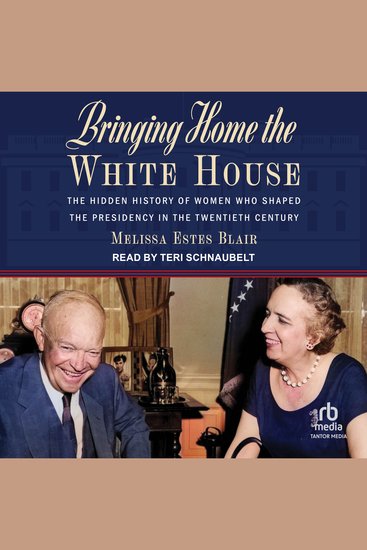
  • Bringing Home the White House - The Hidden History of Women Who Shaped the Presidency in the Twentieth Century - cover

    Bringing Home the White House -...

    Melissa Estes Blair

    • 0
    • 0
    • 0
    In Bringing Home the White House, Melissa Estes Blair introduces us to five fascinating yet unheralded women who were at the heart of campaigns to elect and reelect some of our most beloved presidents. By examining the roles of these political strategists in affecting the outcome of presidential elections, Blair sheds light on their historical importance and the relevance of their individual influence. 


    In the middle decades of the twentieth century both major political parties had Women's Divisions. The leaders of these divisions—five women who held the job from 1932 until 1958—organized tens of thousands of women all over the country, turning them into the "saleswomen for the party" by providing them with talking points, fliers, and other material they needed to strike up political conversations with their friends and neighbors. The leaders of the Women's Divisions also produced a huge portion of the media used by the campaigns—over 90 percent of all print material in the 1930s—and were close advisors of the presidents of both parties. 


    In spite of their importance, these women and their work have been left out of the narratives of midcentury America. In telling the story of these women, Blair reveals the ways that women were central to American politics from the depths of the Great Depression to the height of the Cold War.
    Zum Buch
  • A Rare Recording of Henry Cabot Lodge - cover

    A Rare Recording of Henry Cabot...

    Henry Cabot Lodge

    • 0
    • 0
    • 0
    Henry Cabot Lodge (May 12, 1850 - November 9, 1924) was an American Republican politician, historian, and statesman from Massachusetts. He served in the United States Senate from 1893 to 1924 and is best known for his positions on foreign policy. The following recording documents his successful crusade against Woodrow Wilson's Treaty of Versailles and ensured that the United States never joined the League of Nations and his reservations against that treaty influenced the structure of the modern United Nations.
    Zum Buch
  • Time for the world to learn from Africa - cover

    Time for the world to learn from...

    Ruth Finnegan

    • 0
    • 0
    • 0
    It is a common notion that Africa has, and indeed ought to have, learned much from the west. This is not wrong; all cultures rightly learn from each other. But less is said of what there is to learn from Africa: from her stories, myths, music, proverbs, insights - and more. Here an acclaimed African scholar steps into the gap with a prize winning account that uncovers something of the great legacy of African thought and practice in ways that will astonish many. Written with verve and authority and directed above all to students and sixth formers, this book will also delight and often surprise those who know something of Africa as well as those hitherto ignorant. 
     Ruth Finnegan OBE FBA is Emeritus Professor The Open University, Foreign Associate of the Finnish Literature Bureau, and International Fellow of the American Folklore Society. An anthropologist and multi-award author, she has published extensively, chiefly on Africa, musical practice, and English urban life. Recent books include How is Language?, Fiji's Music: Where Did It Come From?, her edited Entrancement: The Consciousness of Dreaming, Music and The World, and several prize-winning Africa-influenced novels, including The Black Inked Pearl and Voyage of Pearl of the Seas.
    Zum Buch
  • Nature - cover

    Nature

    Ralph Waldo Emerson

    • 0
    • 0
    • 0
    "Nature" is an essay written by Ralph Waldo Emerson, first published in 1836. In this essay, Emerson explores the idea of nature as a source of inspiration and knowledge for human beings. 
    Emerson argues that nature is a reflection of the divine and that by immersing oneself in nature, one can attain a deeper understanding of the world and oneself. He encourages individuals to embrace the beauty of nature and to seek solace in its tranquility. 
    Emerson also criticizes society's emphasis on material possessions and commercialism, arguing that it distracts individuals from the natural world and their own spiritual growth. He believes that by returning to nature, individuals can rediscover their true selves and find fulfillment in simplicity. 
    Overall, "Nature" is a celebration of the natural world and a call to return to a simpler, more authentic way of living. It continues to be a seminal work in the American transcendentalist movement and has inspired generations of readers to explore the beauty and wonder of the natural world
    Zum Buch
  • The Origins of Elected Strongmen - How Personalist Parties Destroy Democracy from Within - cover

    The Origins of Elected Strongmen...

    Joseph Wright, Erica Frantz,...

    • 0
    • 0
    • 0
    Since the end of World War II, democracies typically fell apart by coup d'état or through force. Today, however, they are increasingly eroding at the hands of democratically elected incumbents, who seize control by slowly chipping away at democratic institutions. To better understand these developments, this book examines the role of personalist political parties, or parties that exist primarily to further their leader's career as opposed to promote a specific policy platform. Using original data capturing levels of personalism in the parties of democratically elected leaders from 1991 to 2020, The Origins of Elected Strongmen shows that the rise of personalist parties around the globe is facilitating the decline of democracy. 


    Personalist parties lack both the incentive and capacity to push back against a leader's efforts to expand executive power. As such, leaders backed by personalist parties are more likely to succeed in their efforts to dismantle institutional constraints on their rule. Such attacks on state institutions, in turn, reverberate throughout society, deepening political polarization and weakening supporters' commitment to democratic norms of behavior. In these ways, ruling party personalism erodes horizontal and vertical constraints on a leader, ultimately degrading democracy and raising the risk of democratic failure.
    Zum Buch