Begleiten Sie uns auf eine literarische Weltreise!
Buch zum Bücherregal hinzufügen
Grey
Einen neuen Kommentar schreiben Default profile 50px
Grey
Jetzt das ganze Buch im Abo oder die ersten Seiten gratis lesen!
All characters reduced
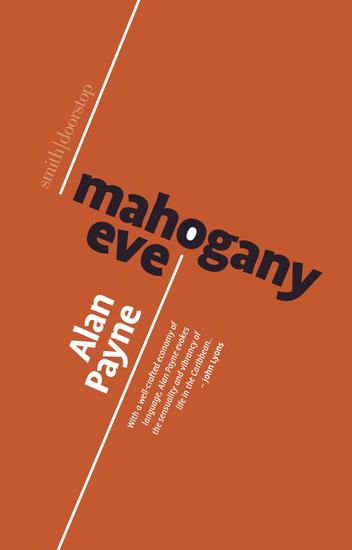
Mahogany Eve - cover

Mahogany Eve

Alan Payne

Verlag: The Poetry Business

  • 0
  • 0
  • 0

Beschreibung

An exotic and ambitious collection in which deceptively simple structures are built to carry an impressive weight of interest and reference. – Andrew Motion
The guardian spirit of this book is a mahogany sculpture called Eve, part of the permanent collection in the Graves Art Gallery in Sheffield. She's looking over her shoulder. Her gaze takes in journeys across the Atlantic, beaches in the Caribbean, a boarding school in Yorkshire, departures and arrivals, home- comings, a grandmother buried in Port of Spain, two brothers on the Orinoco, Hindu gods and goddesses, runaways, castaways, slaves, a cartographer who never leaves his room, mothers and sons, fathers and sons, and a goat pulling a bishop on a sledge…
Alan Payne's poems are rooted in the Caribbean, evoking a sense of separation and loss, and touch on the contradictions and betrayals of colonialism.
Shortlisted for the 2025 Derek Walcott Prize
Verfügbar seit: 01.05.2024.
Drucklänge: 36 Seiten.
Weitere Bücher, die Sie mögen werden

  • The Owl Critic - cover

    The Owl Critic

    James Thomas Fields

    • 0
    • 0
    • 0
    LibriVox volunteers bring you 23 recordings of The Owl Critic by James T. Fields. This was the Fortnightly Poetry project for April 3, 2011.James Thomas Fields (December 31, 1817 – April 24, 1881) was an American publisher, editor, and poet. At the age of 14, Fields took a job at the Old Corner Bookstore in Boston. His first published poetry was included in the Portsmouth Journal in 1837 but he drew more attention when, on September 13, 1838, he delivered his "Anniversary Poem" to the Boston Mercantile Library Association. (summary from Wikipedia)
    Zum Buch
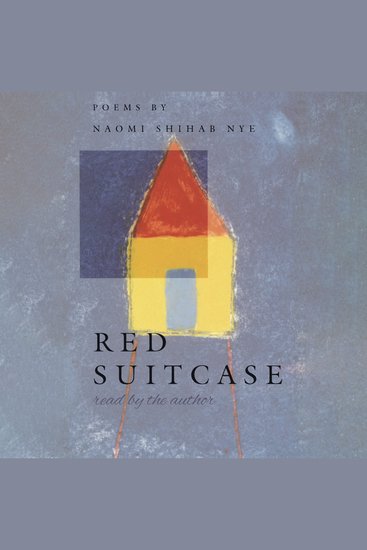
  • Red Suitcase - cover

    Red Suitcase

    Naomi Shihab Nye

    • 0
    • 0
    • 0
    Poet, teacher, essayist, anthologist, songwriter and singer, Naomi Shihab Nye is one of the country's most acclaimed writers. Her voice is generous; her vision true; her subjects ordinary people, and ordinary situations which, when rendered through her language, become remarkable. In this, her fourth full collection of poetry, we see with new eyes-a grandmother's scarf, an alarm clock, a man carrying his son on his shoulders. 
     Narrated by the author.Valentine for Ernest MannYou can’t order a poem like you order a taco.Walk up to the counter and say, "I’ll take two"and expect it to handed back to youon a shiny plate.Still, I like you spirit.Anyone who says, "Here’s my address,write me a poem," deserves something in reply.So I’ll tell a secret instead:poems hide. In the bottoms of our shoes,they are sleeping. They are the shadowsdrifting across our ceilings the momentbefore we wake up. What we have to dois live in a way that lets us find them.Once I knew a man who gave his wifetwo skunks for a valentine.He couldn’t understand why she was crying."I thought they had such beautiful eyes."And he was serious. He was a serious manwho lived in a serious way. Nothing was uglyjust because the world said so. He reallyliked those skunks. So, he re-invented themas valentines and they became beautiful.At least, to him. And the poems that had been hidingin the eyes of skunks for centuriescrawled out and curled up at his feet.Maybe if we re-invent whatever our lives give uswe find poems. Check your garage, the odd sockin your drawer, the person you almost like, but not quite.And let me know.
    Zum Buch
  • Frank’s Wing - Poems - cover

    Frank’s Wing - Poems

    Jacob McArthur Mooney

    • 0
    • 0
    • 0
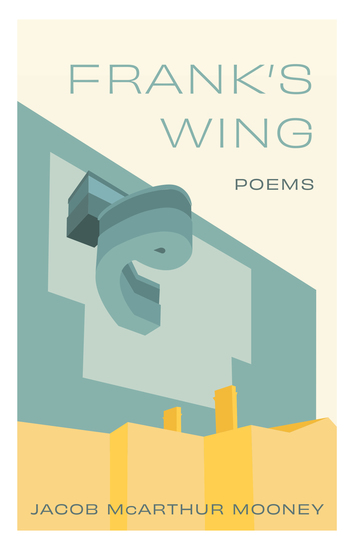
    “… my relationship with most art living or lost / is the same as yours: we will pass it by” bemoans the last poem in Jacob McArthur Mooney’s latest collection. Written as a sequence of “ghost ekphrastics” (poems inspired by works of art that neither the poet nor most living people have ever seen), Frank’s Wing constructs a whole world of lost or destroyed artifacts that have been rearticulated and resurrected, brought back to life by a fictional property baron as a dying gift to Toronto’s Art Gallery of Ontario.
    		 
    From “decadent” modern paintings torched by Nazis, to lost films, to never-performed performance art, the abiding premise of the book is that art invites mourning: not because it is mournful, but because it is vast. It taunts the plans of mortals while “a week / of kids’ videos and lip syncs / siphon through the internet each second.” Bordering ideas about FOMO and mortality are considerations of destruction itself, as the book recalls loss events predicted by both the considered works’ historical contexts and the frailties of their makers. Concerned with consuming art as much as with making it, Frank’s Wing examines the positions made available to the art-consumer: owner, overhearer, interrogator, and potentially, both destroyer and the thing that art destroys.
    Zum Buch
  • Before You Say Anything - cover

    Before You Say Anything

    Carys D. Coburn

    • 0
    • 0
    • 0
    Imagine no one loves you and you have to leave home with nothing. Where would you go? Would you feel free? Are you free at all if your 'choices' hurt? 
    A play that questions how everyone can be safe at the same time, Before You Say Anything is a time-travelling set of interweaving stories exploring injustice, freedom and bravery.
    Created by Carys D. Coburn with MALAPROP Theatre, it was first staged at the 2020 Dublin Fringe Festival.
    MALAPROP Theatre is an award-winning collective of Irish theatremakers, who seek to challenge, delight and speak to the world we live in (even when imagining different ones).
    Zum Buch
  • Short Poetry Collection 072 - cover

    Short Poetry Collection 072

    Various

    • 0
    • 0
    • 0
    This is a collection of poems read by LibriVox volunteers for the month of October 2008.
    Zum Buch
  • Eumenides - cover

    Eumenides

    Aeschylus

    • 0
    • 0
    • 0
    The final play of the Oresteia, called The Eumenides (Εὐμενίδες, Eumenídes), illustrates how the sequence of events in the trilogy ends up in the development of social order or a proper judicial system in Athenian society. 
    In this play, Orestes is hunted down and tormented by the Furies, a trio of goddesses known to be the instruments of justice, who are also referred to as the "Gracious Ones" (Eumenides). They relentlessly pursue Orestes for the killing of his mother. However, through the intervention of Apollo, Orestes is able to escape them for a brief moment while they are asleep and head to Athens under the protection of Hermes. Seeing the Furies asleep, Clytemnestra's ghost comes to wake them up to obtain justice on her son Orestes for killing her.
    Zum Buch