¡Acompáñanos a viajar por el mundo de los libros!
Añadir este libro a la estantería
Grey
Escribe un nuevo comentario Default profile 50px
Grey
Suscríbete para leer el libro completo o lee las primeras páginas gratis.
All characters reduced
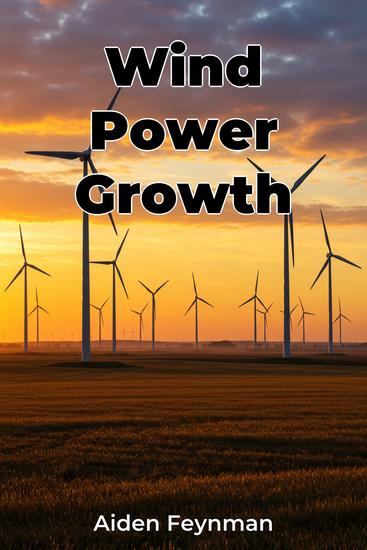
Wind Power Growth - cover

Wind Power Growth

Aiden Feynman

Traductor A AI

Editorial: Publifye

  • 0
  • 0
  • 0

Sinopsis

Wind Power Growth explores the remarkable transformation of wind energy from a niche technology to a major force in the global energy landscape. It meticulously examines the factors driving this expansion, focusing on technological advancements, economic incentives, and supportive energy policy. One intriguing fact is the dramatic reduction in the levelized cost of wind energy, making it increasingly competitive with fossil fuels. The book also highlights how renewable energy mandates have created stable markets, fostering significant growth in wind power capacity worldwide.

 
The book charts the evolution of wind turbine technology, from basic engineering concepts to sophisticated grid integration, providing a comprehensive overview of how turbines convert kinetic energy into electricity. It examines the economic aspects, including investment patterns and job creation, and analyzes global policy frameworks, showcasing both successes and challenges.

 
The book progresses from fundamental concepts to an in-depth analysis of technological advancements, economic factors, and policy implementations, ultimately discussing the future role of wind power in achieving global climate goals.
Disponible desde: 26/02/2025.
Longitud de impresión: 84 páginas.

Otros libros que te pueden interesar

  • Trauma Stewardship - An Everyday Guide to Caring for Self While Caring for Others - cover

    Trauma Stewardship - An Everyday...

    Anónimo

    • 0
    • 0
    • 0
    This beloved bestseller-over 180,000 copies sold-has helped caregivers worldwide keep themselves emotionally, psychologically, spiritually, and physically healthy in the face of the sometimes overwhelming traumas they confront every day. 
     
    A longtime trauma worker, Laura van Dernoot Lipsky offers a deep and empathetic survey of the often-unrecognized toll taken on those working to make the world a better place. We may feel tired, cynical, or numb or like we can never do enough. These, and other symptoms, affect us individually and collectively, sapping the energy and effectiveness we so desperately need if we are to benefit humankind, other living things, and the planet itself. 
     
    In Trauma Stewardship, we are called to meet these challenges in an intentional way. Lipsky offers a variety of simple and profound practices, drawn from modern psychology and a range of spiritual traditions, that enable us to look carefully at our reactions and motivations and discover new sources of energy and renewal. She includes interviews with successful trauma stewards from different walks of life and even uses New Yorker cartoons to illustrate her points. 
     
    "We can do meaningful work in a way that works for us and for those we serve," Lipsky writes. "Taking care of ourselves while taking care of others allows us to contribute to our societies with such impact that we will leave a legacy informed by our deepest wisdom and greatest gifts instead of burdened by our struggles and despair."
    Ver libro
  • Thinking Small and Large - How Microbes Made and Can Save Our World - cover

    Thinking Small and Large - How...

    Peter Forbes

    • 0
    • 0
    • 1
    The environmental crisis will not be solved by battery technology. We are looking for answers in the wrong places.


    Life began with the hydrogenation of CO2, and this is the process we must return to in order to heal the planet. Ground-breaking ongoing research into bacterial processes means our knowledge of bacterial processes is ever-expanding, and we can harness this new knowledge to develop a parallel carbon economy using engineered bacteria for fuel, food, and materials. This would enable rewilding on a vast scale, with the small land footprint of bacterial technologies solving the current conflict in land use between farming and fuel and materials production.


    In this fascinating and illuminating book, Peter Forbes shines a light on this crucial technology and offers a tantalising glimpse at what is possible. To solve the big problems, sometimes you have to think small.
    Ver libro
  • The Ethics of Artificial Intelligence - New Frontiers - cover

    The Ethics of Artificial...

    Craig Dames

    • 0
    • 0
    • 0
    Artificial Intelligence (AI) is a transformative technology that has evolved from theoretical concepts into practical applications in various sectors. At its core, AI refers to the simulation of human intelligence in machines, enabling them to perform tasks such as learning, reasoning, and problem-solving. These machines are programmed to analyze data, recognize patterns, and make decisions with little or no human intervention. While AI is often associated with futuristic visions of robots and autonomous systems, it is already an integral part of our daily lives, from voice assistants like Siri to recommendation algorithms used by platforms like Netflix and Amazon. 
    The history of AI dates back to ancient times, with early concepts of artificial beings found in mythology and philosophical musings. However, the field of AI as we know it began to take shape in the mid-20th century, with the work of pioneers such as Alan Turing, who proposed the idea of a machine that could simulate any human intelligence. In 1956, the term "Artificial Intelligence" was coined at the Dartmouth Conference, marking the formal beginning of AI research. Since then, AI has gone through cycles of optimism, disappointment, and resurgence, fueled by advances in computer science, mathematics, and data availability. 
    Today, AI is classified into different categories, with two primary types being narrow AI and general AI. Narrow AI refers to systems designed to handle specific tasks, such as facial recognition, language translation, or playing chess. These systems excel in their designated tasks but are limited in their ability to perform functions outside of their programming. In contrast, general AI, still a theoretical concept, refers to machines that possess the capability to understand and reason across a wide range of tasks, much like humans. While narrow AI is already commonplace, general AI remains a subject of intense research and debate within the scientific community.
    Ver libro
  • We're Overdosed - cover

    We're Overdosed

    Barry I. Gold

    • 0
    • 0
    • 0
    We're Overdosed looks at the history of opium and the drug's spread throughout the world. It traces the origin of morphine from opium, the subsequent synthesis of opioids, and the birth of the global pharmaceutical industry. From Barry I. Gold's point of view as a scientist, he offers thoughts about gaining control of prescription opioids through Federal legislation. With the tragic epidemic of deaths from overdose, chiefly from illicit sources, he shares how the U.S. could lead in eradicating world trade of illicit drugs. The story also looks forward and asks how new treatments offer hope in treating addiction.
    Ver libro
  • The Fifth History of Man - cover

    The Fifth History of Man

    MD John Bershof

    • 0
    • 0
    • 0
    In the spirit of medieval writer Chaucer, all human activity lies within the artist’s scope, the History of Man Series uses medicine as a jumping off point to explore precisely that, all history, all science, all human activity since the beginning of time. The jumping off style of writing takes the reader, the listener into worlds unknown, always returning to base, only to jump off again. History of Man are stories and tales of nearly everything. 
    The Fifth History of Man has a few parting shots at viruses but mostly continues with the world of parasites, from tick disease that tick us off, Old Lyme, Connecticut and Lyme disease, toxoplasmosis, Crazy Cat Lady and her clowder of cats, then on into a discussion of the avatar of parasites: malaria. Our travels will venture down into the valley: Valley Girls, Valspeak, Valley Fever, fungus and fungal infections. We’ll jump into the biology of evolution, Darwin, Huxley and the great debates, the geology of earthquakes, volcanos, the Ring of Fire, and Johnny Cash, and then through the homos: Homo habilis, Homo erectus, and Homo sapiens, and once the dust cleared how the opposable thumbs, walking erect, and bigger brains left one man standing, one woman, too. No discussion of human history can leave out the G.O.A.T. of French history, heck, of European history; the man, the legend, Napoleon Bonaparte, loved and admired by everyone, even his enemies. Our path will take us into war & military, World War I versus the 1918 Swine Flu, some Russian history and how Stalin got Lenin wrong.
    Ver libro
  • The Ethics of Technology - Moral Challengers - cover

    The Ethics of Technology - Moral...

    Craig Dames

    • 0
    • 0
    • 0
    In an age where technology permeates nearly every aspect of our lives, understanding the ethical foundations behind its development and use has never been more critical. Tech ethics, at its core, explores the moral principles that guide our decisions regarding the design, implementation, and impact of technology. As digital tools become increasingly powerful and integrated into society, they bring with them profound questions about responsibility, fairness, and the human consequences of innovation. 
    The roots of technology ethics can be traced back to classical moral philosophy. Thinkers like Aristotle, Kant, and Mill laid the groundwork for how we approach right and wrong, justice, and duty. These age-old theories—virtue ethics, deontology, and utilitarianism—are still highly relevant in today's tech-driven world. For instance, when we ask whether a self-driving car should prioritize the life of a passenger over a pedestrian, we are invoking these very moral frameworks to guide the decision-making process. In this way, ethical theory provides a lens through which we can evaluate the choices we make as developers, users, and regulators of technology. 
    Modern concerns surrounding tech ethics often revolve around issues that were unimaginable even a few decades ago. Digital privacy, algorithmic bias, and autonomous systems challenge us to reinterpret traditional moral values in new contexts. This requires a dynamic understanding of ethics—one that can evolve alongside technological change. Unlike in the past, where tools were relatively neutral and required human operation, today's technologies often act with a degree of independence, raising the stakes of their ethical implications. Machines that learn, adapt, and decide are not just tools; they become agents of action whose behavior must be morally accountable.
    Ver libro