Rejoignez-nous pour un voyage dans le monde des livres!
Ajouter ce livre à l'électronique
Grey
Ecrivez un nouveau commentaire Default profile 50px
Grey
Abonnez-vous pour lire le livre complet ou lisez les premières pages gratuitement!
All characters reduced
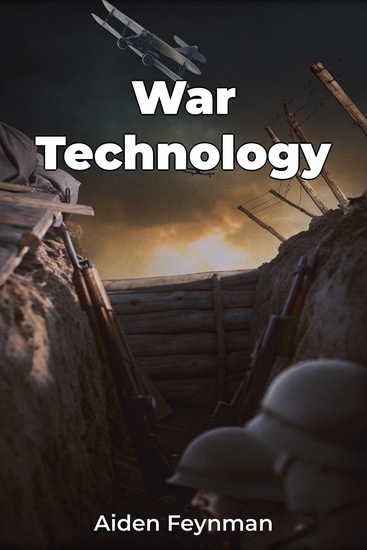
War Technology - cover

War Technology

Aiden Feynman

Traducteur A AI

Maison d'édition: Publifye

  • 0
  • 0
  • 0

Synopsis

War Technology explores the intricate relationship between technological innovation and military history, revealing how advancements have consistently reshaped warfare. It examines the evolution of weaponry, from gunpowder's initial impact to the rise of artificial intelligence, emphasizing that technological superiority alone doesn't guarantee victory. The book uniquely highlights how human ingenuity and strategic thinking adapt to and often mitigate the impact of new weapons, showcasing that the human element remains crucial in warfare.This study emphasizes the interplay between military technology and societal change, analyzing the development and deployment of specific technologies in war. For instance, the industrial revolution spawned machine guns and armored vehicles, drastically influencing military strategy. It progresses chronologically, beginning with gunpowder's revolutionary impact on siege warfare, then moves through the industrial revolution, and dedicates significant attention to 20th and 21st-century developments like nuclear weapons and cyber warfare.
Disponible depuis: 17/02/2025.
Longueur d'impression: 72 pages.

D'autres livres qui pourraient vous intéresser

  • Maybe We Were Stars - cover

    Maybe We Were Stars

    António Paulo Martins

    • 0
    • 0
    • 0
    This audiobook is narrated by an AI Voice.   
    Maybe We Were Stars is not a book of answers. It is a quiet journey through time, memory, and the fragile space between what we see and what we understand. 
    Each chapter moves through reflections on light, existence, and the strange beauty of being human — how we remember, how we fade, and how even what is lost can still shine. 
    Narrated with a contemplative voice that feels both distant and near, this audiobook carries the same poetic rhythm and wonder that shaped the written edition. 
    If you have ever felt out of place in your own timeline, if you have ever looked at the stars and wondered whether they were looking back, this is for you. 
    Gentle, haunting, and full of quiet hope, Maybe We Were Stars invites you to pause, to listen, and to remember that even fading light never truly disappears. 
    Written and edited by António Paulo Pugliese Martins. 
    Audio created using ElevenLabs AI narration.
    Voir livre
  • The Cost of Conviction - How Our Deepest Values Lead Us Astray - cover

    The Cost of Conviction - How Our...

    Steven Sloman

    • 0
    • 0
    • 0
    When you are faced with a decision, do you consider the best outcome, or do you consider your deepest values about which actions are appropriate? The Cost of Conviction contrasts these two primary strategies for making decisions: consequentialism, the former, or prioritizing one's sacred values, the latter. Steven Sloman argues that, while both modes of decision making are necessary tools for a good decision maker, people err by deploying sacred values more often than they should, especially when it comes to sociopolitical issues. In this book, Sloman provides a new understanding of today's societal ills and grounds that understanding in science. 


    The book begins by covering the philosophical and conceptual background of the two decision-making strategies, then takes a deep dive into the psychology of decision making. Drawing on historical and current examples of the use of the two strategies, the author provides a thorough overview of the psychology of decision making, including work on judgment, conscious and unconscious decision-making processes, the roles of emotion, and even an analysis of habit and addiction. 


    With its unique emphasis on sacred values, The Cost of Conviction is an eye-opening must-listen for all decision makers, especially those who wish to understand judgment, social decision making, and leadership.
    Voir livre
  • The Social Rhythm Therapy Workbook for Bipolar Disorder - Stabilize Your Circadian Rhythms to Reduce Stress Manage Moods and Prevent Future Episodes - cover

    The Social Rhythm Therapy...

    MD Holly A. Swartz

    • 0
    • 0
    • 0
    If you have bipolar disorder, you may be especially vulnerable to changes in circadian rhythms. If you've ever had low energy during the day, but couldn't sleep at night, you've experienced a dysregulated body clock. You've also likely experienced the myriad negative physical and mental consequences of out-of-sync circadian rhythms. So, how do you stabilize this biologic clock and your mood? 


    In The Social Rhythm Therapy Skills Workbook for Bipolar Disorder, bipolar and mood disorder expert Holly Swartz offers a fresh approach to help you reset your body clock, overcome shifts in mood, and find relief from your bipolar symptoms. This groundbreaking workbook is filled with tools and actionable skills for creating a consistent schedule for sleeping, eating, and interacting with others. 


    You'll also learn how to combat the effects of social media scrolling. Finally, you'll discover how to anticipate and plan for potentially rhythm-disrupting events. 


    Our biologic clocks are running virtually nonstop, controlling an amazing array of processes. If you're ready to take charge of your circadian rhythms and set yourself up for a better mood and relief from bipolar symptoms, pick up this guide.
    Voir livre
  • A Bit of a Writer - Brendan Behan's Complete Collected Short Prose - cover

    A Bit of a Writer - Brendan...

    Brendan Behan

    • 0
    • 0
    • 0
    Brendan Behan wrote over one hundred articles for Irish newspapers between 1951 and 1956 as he rose to international fame, with most of them written in a weekly column in the Irish Press. The articles reveal a serious writer capable of great comic set pieces and amusing yarns as well as thoughtful reflections on cultural and historical issues. They reflect his passion for working-class Dublin life and the history and folklore of the city, as well as his travels in Ireland and Europe.
    
    
    This edition gathers all the articles and essays that Behan published in newspapers from 1951 to his death in 1964. Selections of Behan's articles have been published since his death (Hold Your Hour and Have Another, 1965; After the Wake, 1981; The Dubbalin Man, 1997). However, there has been no complete edition of Behan's prose, and no edition has provided a detailed biographical and literary introduction, explanatory notes and suggestions for further reading. This volume is intended for publication during the centenary celebrations of Behan's birth in 2023, with his birthday being 9 February.
    Voir livre
  • Emotional Energy in Business - cover

    Emotional Energy in Business

    Warren Hilton

    • 0
    • 0
    • 0
    "Emotional Energy in Business" by Warren Hilton explores the potent influence of emotions on professional achievements. It dissects how emotional energy drives decisions, leadership, and interactions. With actionable insights, the book navigates emotional management, fostering improved relationships, communication, and overall efficacy in the corporate sphere. Read in English, unabridged.
    Voir livre
  • The Age of Imperialism - How Colonial Powers Expanded Their Influence Globally - cover

    The Age of Imperialism - How...

    Arlo Holders

    • 0
    • 0
    • 0
    Imperialism, as a historical phenomenon, represents the policy or practice by which nations extend their influence and dominance over other territories. This expansion can occur through direct conquest, economic control, political manipulation, or cultural influence. The roots of imperialism stretch back to ancient empires such as Rome, Persia, and China, but the modern era of imperialism, often referred to as the “Age of Imperialism,” emerged in the 19th and early 20th centuries. This period was characterized by unprecedented territorial acquisitions, fueled by technological advances, economic ambitions, and shifting global power dynamics. 
    At its core, imperialism was driven by a combination of motives that included economic gain, political power, and a belief in cultural superiority. Industrialization played a pivotal role in shaping these ambitions, as European powers sought raw materials to fuel their growing industries and markets to sell their manufactured goods. The technological advancements of the Industrial Revolution, such as steamships, railways, and advanced weaponry, gave European nations a significant edge in their quest to dominate foreign lands. 
    Political and military motivations also underpinned the imperialist agenda. Nations viewed overseas colonies as symbols of prestige and power, integral to maintaining their position in a competitive global hierarchy. Strategic locations were secured to control vital trade routes, ensuring access to global markets and protecting national interests. This race for dominance often led to conflicts among colonial powers, as each sought to outmaneuver the other in gaining influence over untapped regions.
    Voir livre