Begleiten Sie uns auf eine literarische Weltreise!
Buch zum Bücherregal hinzufügen
Grey
Einen neuen Kommentar schreiben Default profile 50px
Grey
Jetzt das ganze Buch im Abo oder die ersten Seiten gratis lesen!
All characters reduced
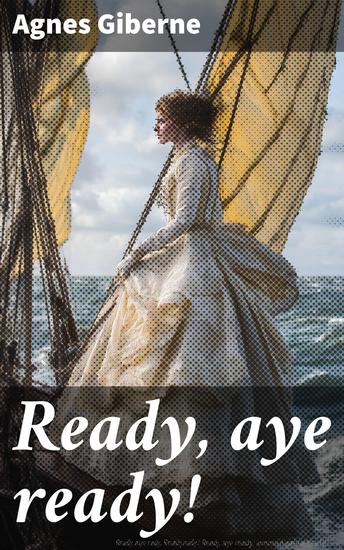
Ready aye ready! - cover

Ready aye ready!

Agnes Giberne

Verlag: Good Press

  • 0
  • 0
  • 0

Beschreibung

In "Ready, aye ready!", Agnes Giberne crafts a compelling narrative that intertwines the themes of adventure and moral fortitude, set against the backdrop of the Victorian era's fascination with exploration and the sea. Utilizing a vivid and engaging prose style, Giberne imbues her characters with vitality, navigating complex relationships and societal expectations while plunging them into perilous maritime circumstances. The novel not only entertains but also serves as a reflection on duty, courage, and the human spirit's resilience in the face of adversity, embodying the hallmark characteristics of late 19th-century literature. Agnes Giberne was an innovative writer who emerged amidst the cultural shifts of her time, strongly influenced by her childhood experiences and a penchant for scientific inquiry. Her deep knowledge of astronomy and natural history, coupled with a keen understanding of her protagonists' internal struggles, propelled her to write stories that resonate with both adventure and philosophical introspection. Giberne's life experiences, including her travels and her roles as a teacher and writer, inform the rich tapestry of her storytelling and her enduring belief in the potential for personal bravery and moral integrity. "Ready, aye ready!" is a must-read for enthusiasts of adventure fiction, as well as those who appreciate character-driven narratives that evoke the complexities of human emotions. Giberne's eloquent prose and relatable themes create an enduring allure for modern readers seeking inspiration in tales of courage and friendship amidst the vastness of the ocean.
Verfügbar seit: 02.03.2025.
Drucklänge: 120 Seiten.

Weitere Bücher, die Sie mögen werden

  • A Tale of Two Cities - cover

    A Tale of Two Cities

    Charles Dickens

    • 0
    • 0
    • 0
    "It was the best of times, it was the worst of times…"
    
    Set against the backdrop of the French Revolution, A Tale of Two Cities is a sweeping historical epic of love, sacrifice, and redemption in a world torn by chaos and change.
    
    From the bustling streets of London to the shadowy alleys of Paris, Charles Dickens masterfully weaves the lives of a cast of unforgettable characters—among them, the selfless and noble Sydney Carton, the virtuous Lucie Manette, and the wrongfully imprisoned Charles Darnay. As revolution brews in France and political tensions rise, their fates intertwine in ways that challenge the limits of loyalty, courage, and the human spirit.
    
    A powerful exploration of justice, resurrection, and the cost of tyranny, A Tale of Two Cities remains one of the most celebrated and widely read novels in the world. With its dramatic plot, vivid historical detail, and haunting conclusion, it continues to resonate with modern readers as a timeless tale of struggle and hope.
    
    A story of contrasts—between peace and violence, love and hatred, freedom and oppression—this is Dickens at his most poetic, urgent, and unforgettable.
    
    Rediscover the classic that has inspired generations and captured hearts across centuries.
    Zum Buch
  • Rilla of Ingleside - cover

    Rilla of Ingleside

    Lucy Montgomery

    • 0
    • 0
    • 0
    A poignant coming-of-age story set against the backdrop of World War I. It follows Rilla Blythe, the youngest of the Anne Shirley-inspired Blythe family, as she navigates adolescence during turbulent times. Initially carefree, Rilla matures rapidly amidst wartime challenges, including her brothers’ enlistment and the strain on her tight-knit community. Through heartbreak and hope, she discovers inner strength, love, and resilience. Montgomery beautifully intertwines personal growth with the broader impact of war, creating a touching tale of courage, sacrifice, and enduring optimism.
    Zum Buch
  • The Piazza Tales - cover

    The Piazza Tales

    Herman Melville

    • 0
    • 0
    • 0
    The Piazza Tales is a collection of six short stories by American writer Herman Melville, published by Dix & Edwards in the United States in May 1856 and in Britain in June. Except for the newly written title story, "The Piazza," all of the stories had appeared in Putnam's Monthly between 1853 and 1855. The collection includes what has long been regarded as three of Melville's most important achievements in the genre of short fiction, "Bartleby, the Scrivener", "Benito Cereno", and "The Encantadas", his sketches of the Galápagos Islands. (Billy Budd, arguably his greatest piece of short fiction, would remain unpublished in his lifetime.)
    Melville had originally intended to entitle the volume Benito Cereno and Other Sketches, but settled on the definitive title after he had written the introductory story. The book received largely favorable reviews, with reviewers especially praising "The Encantadas" but did not sell well enough to get Melville out of his financial straits, probably because short fiction for magazines had little appeal to bookbuyers. From after Melville's rediscovery to the end of the twentieth century, the short works that attracted the most critical attention were "Bartleby," "Benito Cereno" and "The Encantadas," with "The Piazza" a little behind those.
    Zum Buch
  • Candide - cover

    Candide

    Voltaire

    • 0
    • 0
    • 0
    Candide is characterised by its sarcastic tone, as well as by its erratic, fantastical and fast-moving plot. A picaresque novel with a story similar to that of a more serious bildungsroman, it parodies many adventure and romance clichés, the struggles of which are caricatured in a tone that is mordantly matter-of-fact. Still, the events discussed are often based on historical happenings, such as the Seven Years' War and the 1755 Lisbon earthquake. As philosophers of Voltaire's day contended with the problem of evil, so too does Candide in this short novel, albeit more directly and humorously.    Voltaire ridicules religion, theologians, governments, armies, philosophies, and philosophers through allegory; most conspicuously, he assaults Leibniz and his optimism. Voltaire's men and women point his case against optimism by starting high and falling low. A modern could not go about it after this fashion. He would not plunge his people into an unfamiliar misery. He would just keep them in the misery they were born to. But such an account of Voltaire's procedure is as misleading as the plaster cast of a dance.    Look at his procedure again. Mademoiselle Cunégonde, the illustrious Westphalian, sprung from a family that could prove seventy-one quarterings, descends and descends until we find her earning her keep by washing dishes in the Propontis. The aged faithful attendant, victim of a hundred acts of rape by negro pirates, remembers that she is the daughter of a pope, and that in honor of her approaching marriage with a Prince of Massa-Carrara all Italy wrote sonnets of which not one was passable. We do not need to know French literature before Voltaire in order to feel, although the lurking parody may escape us, that he is poking fun at us and at himself. His laughter at his own methods grows more unmistakable at the last, when he caricatures them by casually assembling six fallen monarchs in an inn at Venice.    A modern assailant of optimism would arm himself with social pity. There is no social pity in "Candide." Voltaire, whose light touch on familiar institutions opens them and reveals their absurdity, likes to remind us that the slaughter and pillage and murder which Candide witnessed among the Bulgarians was perfectly regular, having been conducted according to the laws and usages of war. Had Voltaire lived today he would have done to poverty what he did to war. Pitying the poor, he would have shown us poverty as a ridiculous anachronism, and both the ridicule and the pity would have expressed his indignation.
    Zum Buch
  • The Devil's Drunken Horse - cover

    The Devil's Drunken Horse

    Alexander Afanasyev

    • 0
    • 0
    • 0
    Witches, devils, the undead—all kinds of supernatural beings haunt the folk tales of Russia. In this story, a grief-stricken young man seeks to outwit the Devil in order to save his father’s soul. Listen to this spooky story today. It’s Russian folklore told in English.  
    Zum Buch
  • Rappaccini’s Daughter and Other Stories - cover

    Rappaccini’s Daughter and Other...

    Nathaniel Hawthorne

    • 0
    • 0
    • 0
    Step into a world of mystery, intrigue, and dark enchantment with this captivating collection by Nathaniel Hawthorne. Immerse yourself in timeless tales that have inspired everything from songs to Batman villains. Let me entice you with the allure of each story: 
     
    “The Great Carbuncle”: Venture into the wilderness in search of a legendary gem that glows with otherworldly brilliance. Will its discovery bring fortune or peril? 
     
    “The Great Stone Face”: Uncover the enigma of a colossal rock formation that eerily resembles a noble countenance. Is it a mere geological wonder, or does it hold a deeper secret? 
     
    “Dr. Heidegger’s Experiment”: Join the eccentric Dr. Heidegger as he conducts a peculiar scientific trial. Aging, rejuvenation, and moral dilemmas collide in this thought-provoking narrative. 
     
    “Rappaccini’s Daughter”: Enter the lush and locked gardens of Dr. Rappaccini, where beauty and danger intertwine. Beatrice, his captivating daughter, is both a blessing and a curse. Her fate is entwined with forbidden knowledge and forbidden love.
    Zum Buch