Begleiten Sie uns auf eine literarische Weltreise!
Buch zum Bücherregal hinzufügen
Grey
Einen neuen Kommentar schreiben Default profile 50px
Grey
Jetzt das ganze Buch im Abo oder die ersten Seiten gratis lesen!
All characters reduced
The Secret Adversary - A Tommy and Tuppence Espionage Thriller by Agatha Christie - cover

The Secret Adversary - A Tommy and Tuppence Espionage Thriller by Agatha Christie

Agatha Christie, Zenith Golden Quill

Verlag: Zenith Golden Quill

  • 0
  • 0
  • 0

Beschreibung

A missing woman. A cryptic document. A post-war conspiracy. Enter Tommy and Tuppence—two unlikely sleuths in their thrilling debut.

In The Secret Adversary, Agatha Christie launches her beloved detective duo in a fast-paced, espionage-laced mystery. Set in post–World War I Britain, this gripping tale follows childhood friends Tommy Beresford and Prudence "Tuppence" Cowley as they stumble into a government secret, a shadowy villain, and a race to stop an international conspiracy.

Blending wit, danger, and romance, this classic mystery offers a refreshing alternative to Christie's Poirot and Miss Marple stories—perfect for readers who love action, suspense, and a touch of humor.

📘 This Edition Features:
✔ The complete, unabridged original text
✔ Kindle-friendly formatting with an interactive TOC
✔ Ideal for Christie fans, mystery lovers, and classic spy fiction readers

💬 What Readers Say:
"Smart, sharp, and wonderfully fun."
"Tuppence is a force of nature—this is Christie at her most adventurous."
"Perfect for fans of vintage thrillers and amateur detectives."

📥 Download The Secret Adversary today and witness the beginning of Agatha Christie's most charming crime-solving duo.
Verfügbar seit: 05.05.2025.
Drucklänge: 316 Seiten.

Weitere Bücher, die Sie mögen werden

  • The Valley of Fear - cover

    The Valley of Fear

    Sir Arthur Conan Doyle

    • 0
    • 0
    • 0
    Inspector MacDonald of Scotland Yard arrives to 221B Baker Street with a case: a Mr. John Douglas has been found murdered at a remote English manor.  
    As Holmes and Dr. Watson investigate, they uncover strange clues pointing to a shadowy secret society and a dark history that stretches across the Atlantic—all the way to a mining town in America. As the case deepens, so does the danger, testing the limits of both their wit and mettle.  
    The fourth and final of the Sherlock Holmes novels written by Sir Arthur Conan Doyle, The Valley of Fear was first serialized in Strand Magazine from September 1914 to May 1915.
    Zum Buch
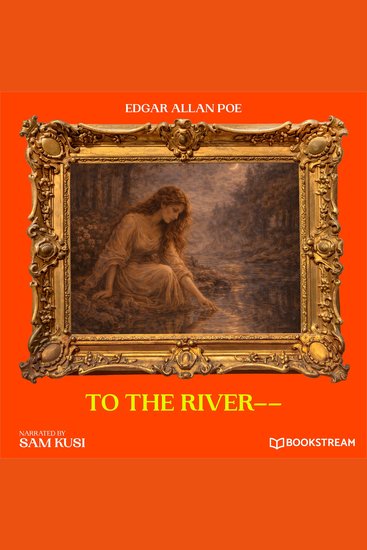
  • To the River-- - cover

    To the River--

    Edgar Allan Poe

    • 0
    • 0
    • 0
    To the River––: Edgar Allan Poe was an American writer, poet, editor, and literary critic who is best known for his poetry and short stories.
    
    Fair river! in thy bright, clear flow
    Of crystal, wandering water,
    Thou art an emblem of the glow
    Of beauty—the unhidden heart—
    The playful maziness of art
    In old Alberto’s daughter;
    Zum Buch
  • A Blaze - cover

    A Blaze

    Katherine Mansfield

    • 0
    • 0
    • 0
    A Blaze is a short story by Katherine Mansfield: “Max, you silly devil, you’ll break your neck if you go careering down the slide that way. Drop it, and come to the Club House with me and get some coffee.” - “I’ve had enough for to-day. I’m damp all through. There, give us a cigarette, Victor, old man. When are you going home?”
    Zum Buch
  • Don Quixote - cover

    Don Quixote

    Miguel de Cervantes

    • 0
    • 0
    • 0
    Miguel de Cervantes Saavedra was born September 29, 1547, was a Spanish writer widely regarded as the greatest writer in the Spanish language and one of the world's pre-eminent novelists. He is best known for his novel Don Quixote, a work often cited as both the first modern novel and one of the pinnacles of world literature. Much of his life was spent in poverty and obscurity, many of its details are disputed or unknown, and the bulk of his surviving work was produced in the three years preceding his death. Despite this, his influence and literary contribution are reflected by the fact that Spanish is often referred to as "the language of Cervantes".[12] An incident in the story of Don Quixote (1870), by English painter Robert Hillingford, depicts a scene from Cervantes' magnum opus. In 1569, Cervantes was forced to leave Spain and moved to Rome, where he worked in the household of a cardinal. In 1570, he enlisted in a Spanish Navy infantry regiment and was badly wounded at the Battle of Lepanto in October 1571. He served as a soldier until 1575 when he was captured by Barbary pirates; after five years in captivity, he was ransomed and returned to Madrid. His first significant novel, titled La Galatea, was published in 1585, but he continued to work as a purchasing agent, then later a government tax collector. Part One of Don Quixote was published in 1605, Part Two in 1615. Other works include the 12 Exemplary Novels a long poem, Journey to Parnassus); and Eight Plays and Eight Entr'actes. The Travails of Persiles and Sigismunda, was published posthumously in 1616.
    Zum Buch
  • A Cullenden of Virginia - From their pens to your ears genius in every story - cover

    A Cullenden of Virginia - From...

    Thomas Wolf

    • 0
    • 0
    • 0
    Thomas Clayton Wolfe was born at the family home, 92 Woodfin Street, in Asheville, North Carolina on October 3rd, 1900.  
    Aged 15, Wolfe began his studies at the University of North Carolina at Chapel Hill (UNC) where he enrolled in a playwriting course. Wolfe graduated in 1920 and enrolled at the Graduate School for Arts and Sciences at Harvard. Here he studied playwriting under the tutelage of George Pierce Baker. In 1922 he received his master's degree from Harvard.  
    Wolfe now began the transition from studying to commercial playwright. He went to New York in November, 1923 trying to sell his plays to Broadway.  The Theatre Guild came close to producing Welcome to Our City but in the end declined.  Wolfe now believed his style of writing was more suited to fiction.  Grasping the opportunity this afforded him he sailed to England in October 1924 to write and from there on to France, Italy and Switzerland. 
    In 1926 Wolfe began writing a novel, O Lost. This would eventually become Look Homeward, Angel. It was based on his years in Asheville. The original manuscript of O Lost was over 1100 pages. Maxwell Perkins, one of the great book editors of the age, worked at his publishers, Scribner’s and he began to focus the book, cutting and re-shaping it to center it on the character of Eugene.   
    The novel was published in 1929. It was a success.   
    Wolfe now committed the next 4 years to writing a multi-volume epic entitled The October Fair.  At Scribner’s Perkins once more decided to edit it down to a single volume; Of Time and the River.  It was even more successful than his first. It was hailed as the literary event of 1935 and cemented his reputation as one of America’s foremost novelists.  
    In 1938, after submitting his new opus, which ran to an incredible one million words, to his new editor, Edward Aswell, Wolfe left to tour the West, a part of the country he had never before visited. Whilst travelling Wolfe became ill with pneumonia and spent three weeks in a Seattle hospital. Complications arose. The prognosis was serious.  He was diagnosed with miliary tuberculosis of the brain. 
    On September 6th, he was sent to Baltimore's Johns Hopkins Hospital for treatment. The ensuing operation revealed that the disease had overrun the entire right side of his brain.  
    Thomas Clayton Wolfe never regained consciousness and died shortly before his 38th birthday on September 15th, 1938.
    Zum Buch
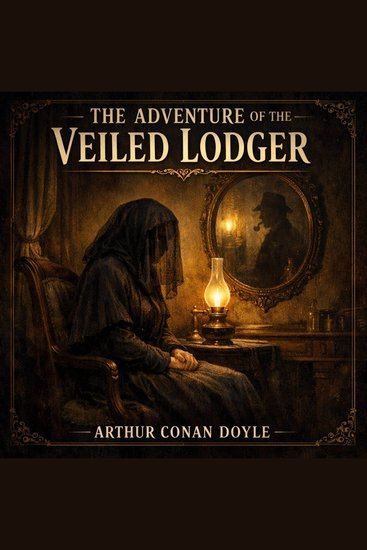
  • The Adventure of the Veiled Lodger - cover

    The Adventure of the Veiled Lodger

    Arthur Conan Doyle

    • 0
    • 0
    • 0
    A haunting Sherlock Holmes mystery that blends secrecy, compassion, and chilling revelation. The Adventure of the Veiled Lodger follows Dr. Watson as he recounts one of Holmes’s most unsettling cases: a woman who hides her disfigured face behind a constant veil and lives in isolation, burdened by a terrible past. As Holmes uncovers the truth behind her self-imposed imprisonment, the story shifts from conventional detective work to a powerful meditation on justice, mercy, and the human cost of violence. Atmospheric, psychologically rich, and deeply humane, this late Holmes tale showcases Arthur Conan Doyle at his most restrained and emotionally resonant—essential reading for fans of classic mystery and literary suspense.
    Zum Buch