
Rejoignez-nous pour un voyage dans le monde des livres!
Ajouter ce livre à l'électronique
Grey
Ecrivez un nouveau commentaire Default profile 50px
Grey
Abonnez-vous pour lire le livre complet ou lisez les premières pages gratuitement!
All characters reduced
Justice in the Feed:How Social Media Amplifies Reparations Movements and Reimagines Collective Memory - cover

Justice in the Feed:How Social Media Amplifies Reparations Movements and Reimagines Collective Memory

Adrian Holloway

Maison d'édition: BookRix

  • 0
  • 0
  • 0

Synopsis

In the digital age, justice campaigns don’t just march in the streets—they trend online. Justice in the Feed explores how hashtags, viral movements, and digital platforms are reshaping the conversation on reparations and historical justice.With a professional tone tailored for students and educators, this book examines how grassroots voices leverage social media to expand awareness, challenge dominant narratives, and push reparations into the global spotlight. It traces the interplay between online activism and historical memory, showing both the possibilities and pitfalls of digital discourse.Far from surface-level commentary, the book equips readers with the tools to understand how digital spaces transform political conversations and mobilize change. It offers a framework for analyzing the power of online platforms as instruments of justice while remaining critical of their limitations.If you want to understand how activism, technology, and history converge in the fight for reparations, this is your essential guide.
Disponible depuis: 09/09/2025.

D'autres livres qui pourraient vous intéresser

  • Grieving the Death of a Mother - cover

    Grieving the Death of a Mother

    Harold Ivan Smith

    • 0
    • 0
    • 0
    A mother's death can make a shambles of schedules, priorities, agendas, commitments, and, sometimes, even our most important relationships. A mother's last breath inevitably changes us. Drawing on his own experience of loss, as well as those of others, Harold Ivan Smith guides listeners through their grief, from the process of dying through the acts of remembering and honoring a mother after her death.
    Voir livre
  • Ancient Empires - A History of Etruscans and Phoenicians - cover

    Ancient Empires - A History of...

    Kelly Mass

    • 0
    • 0
    • 0
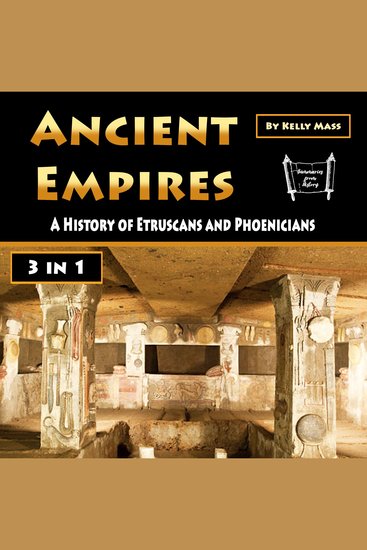
    This bundle consists of 3 short books, which are about the following subjects: 
    Subject 1: Nineveh was an age-old Assyrian city in Upper Mesopotamia, near Mosul in modern-day northern Iraq. It was the capital and biggest city of the Neo-Assyrian Empire, and the world's biggest city for some decades, and is on the eastern bank of the Tigris River. It's now a prevalent name for the portion of Mosul that's on the Tigris' eastern bank, and it is also the name of the nation's Nineveh Governorate. 
    It was the world's largest city for about fifty years till it was sacked by a union of its previous subject tribes, including but not limited to the Babylonians, Medes, Persians, Scythians, and Cimmerians, in the year 612 BC, following a severe period of civil dispute in Assyria.  
    Subject 2: The term "Phoenicians" describes the people living in Phoenicia, a sometimes-forgotten civilization that was age-old and remarkable. Let's check out the tradition, the history, and the specifics of Phoenicia. 
    Phoenicia was a thalassocratic (a state with mostly maritime worlds) society that thrived in the eastern Mediterranean's Levant area, mainly in modern-day Lebanon. It was fixated the coast of Lebanon, with some seaside parts of modern-day Syria and Galilee included for good procedure, varying as far north as Arwad and as far south as Acre and perhaps Gaza. 
    Subject 3: At its peak, the Etruscan society of age-old Italy covered circa what's now Tuscany, western Umbria, and northern Lazio, and areas of what's now the Po Valley, Emilia-Romagna, south-eastern Lombardy, southern Veneto, and small parts of Campania. 
    The first proof of an Etruscan society might be traced back to around 900 BC.
    Voir livre
  • Embracing the Void - Rethinking the Origin of the Sacred - cover

    Embracing the Void - Rethinking...

    Richard Boothby

    • 0
    • 0
    • 0
    A radical reinterpretation of the origin of religion through a psychoanalytic theorization of the unknown 


    Renowned psychoanalytic philosopher Richard Boothby puts forward a novel theory of religion inspired by Jacques Lacan's theory of das Ding, the disquieting, inaccessible dimension of fellow human beings. This notion of an unfathomable excess, originally encountered in the figure of the mother, led Lacan to break with Freud's formulation of the Oedipus complex and underlies Lacan's distinctive conception of unconscious dynamics. Leaning on this account, Boothby shows how our sense of the sacred arises from our relation to what we do not know. 


    Embracing the Void lays out the range of Freud's attempts at a psychoanalytic theory of religion and then sketches the rough contours of Lacan's contrasting approach. From there, Boothby offers the theoretical tools for interpreting the religious impulse and analyzes key religious traditions, from ancient Greek polytheism to Judaism and Christianity, and from Hinduism and Buddhism to Islam, finally turning to modern capitalist culture and the seductive deity that dominates it—money. Lucid, accessible, and compelling, the book provides a cogent intervention in one of the psychoanalytic tradition's most contentious topics and offers a new approach to our understanding of religion.
    Voir livre
  • Unraveling the Secrets to Nations' Success and Collapse - "Unlock the secrets of nations' rise and fall with immersive audio lessons for your listening pleasure!" - cover

    Unraveling the Secrets to...

    Cyrus Treadway

    • 0
    • 0
    • 0
    Unraveling the Secrets to Nations' Success and Collapse 
    ⭐⭐ Simplified Guide & Explanations Included ⭐⭐ 
    Are you eager to enhance your career while mastering the knowledge needed to understand how nations thrive and fail? 
    Looking for an all-encompassing resource that covers everything you need to grasp the intricacies of successful societies and the pitfalls that lead to their downfall? 
    Your quest ends here! 
    This guide acts as your ultimate resource for diving deep into the principles of prosperous nations, honing your analytical skills, and engaging with practical exercises. With this guide in hand, you're set for success. 
    Updated for the 2024-2025 framework of success and collapse analysis. 
    Key features of this enriched guide: 
    - In-depth insights regarding the foundations of thriving societies and the factors contributing to their failures. 
    - Comprehensive explanations of the underlying concepts related to societal success and collapse. 
    - Effective strategies for analyzing and preparing for discussions on these crucial topics. 
    Our guide stands out through its thorough exploration, which is vital for your understanding and analysis of civilizational dynamics. Concepts are explored in detail, ensuring clarity and depth. 
    Crafted with a logical structure and accessible language, our guide to understanding the secrets of nations ensures smooth transitions throughout the material. Say goodbye to complicated jargon and embrace clear, precise, and technically sound content. 
    So, why delay? Click the BUY NOW button, secure your guide, and embark on your journey to mastering the secrets of nations' success and collapse!
    Voir livre
  • Avatar The Incarnations Of Godhead - The Wisdom Of Bhaktivedanta Swami - cover

    Avatar The Incarnations Of...

    Radha Krsna Das

    • 0
    • 0
    • 0
    “Whenever there is a decline of religion and a rise of irreligion, I incarnate myself. To protect the good, to destroy the wicked, and to re-establish religious principles, I appear in every age.” 
    "In order to deliver the pious and to annihilate the miscreants, as well as to reestablish the principles of religion, I advent Myself millennium after millennium." Sri Krishna  
     
    The incarnations of Godhead are a recurrent theme in Vedic history. Vishnu exists outside the material realm as the creator, and within every being as the Supersoul. He also enters this world as an avatar, ‘one who descends’, to restore balance whenever his presence is needed. There are said to be more incarnations of Godhead than waves on the ocean. The avatars of Vishnu are of particular interest because He takes progressively more developed forms, from the fish, tortoise, and boar to half-animal, half-man, and finally human form. That God should incarnate as an animal, even a supernatural one, shows animals have an important role to play in God’s eyes. They are living expressions of the spirit and presence of God. Here are the subtle secret teachings of A. C. Bhaktivedanta Swami the master of George Harrison and so many more. These ancient yogic mysteries were taught only to Maharaji's most advanced disciples and were thought to be all but lost these many years. Coming now from a nearly 50-year devotee of Srila Prabhupada here is a singular opportunity to enter into the true mystical presence of the divine incarnations of the absolute. 
     
    The Vedas are a 5000-year-old esoteric, intriguing, mystical body of work that carries within it the seed of divine, transcendental knowledge. We live in a world wherein yoga now reigns supreme as the preferred, go-to method of modern spiritual realization, and this unique, exclusive, audio presentation which paves the way for a clearer, more meaningful understanding of these divine sacred
    Voir livre
  • Border Control - The Global Struggle to Manage Immigration and Security - cover

    Border Control - The Global...

    Marcus Klein

    • 0
    • 0
    • 0
    Border control, at its core, is a delicate balance between maintaining national security and upholding human rights, between enforcing laws and fostering economic opportunities. As global mobility increases through migration, trade, and technology, managing borders has evolved into a complex issue that transcends national boundaries. It’s no longer just a matter of controlling who enters and exits a country; it’s about managing flows of people, goods, information, and even ideas in ways that protect citizens while also adhering to international law. 
      
    The importance of border control is particularly evident in the context of rising global challenges, such as terrorism, organized crime, and pandemics. These threats have pushed governments to implement stringent measures to secure their territories. However, such measures often come at the expense of migrants seeking refuge from war, poverty, and persecution. The political and humanitarian debates around immigration and border control have intensified in recent years, with many countries grappling with how to secure their borders without violating the rights of vulnerable populations. 
    Complicating this issue further is the reality of globalization. While the free flow of goods, services, and information has been the cornerstone of global trade and cooperation, it has also made it easier for individuals to move across borders—both legally and illegally. This has led to increased challenges for border agencies, who are now tasked with identifying and managing the movement of millions of people each year. Additionally, technological advancements, while offering new tools for surveillance and control, also raise concerns about privacy, data security, and the ethics of surveillance practices.
    Voir livre