Begleiten Sie uns auf eine literarische Weltreise!
Buch zum Bücherregal hinzufügen
Grey
Einen neuen Kommentar schreiben Default profile 50px
Grey
Jetzt das ganze Buch im Abo oder die ersten Seiten gratis lesen!
All characters reduced
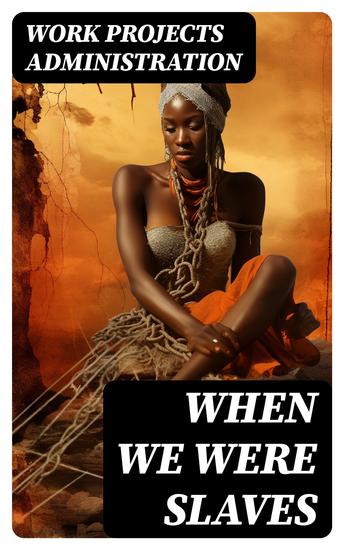
When We Were Slaves - Hundreds of Recorded Interviews Life Stories and Testimonies of Former Slaves in the South - cover

When We Were Slaves - Hundreds of Recorded Interviews Life Stories and Testimonies of Former Slaves in the South

Work Projects Administration

Verlag: DigiCat

  • 0
  • 0
  • 0

Beschreibung

When We Were Slaves is a profound and evocative testament to the experiences of African American slaves, crafted by the Work Projects Administration (WPA). This compilation gathers firsthand narratives that brim with emotional depth, contextualizing the historical trauma within the socio-political landscape of America. The literary style is both documentary and poetic, allowing the voices of the past to resonate with a contemporary audience, while meticulously reflecting the oral traditions that shaped African American storytelling. This work serves not only as a historical record but also as a conduit for understanding the complexities of identity, resilience, and cultural heritage in a society struggling to rectify its past. The WPA, established during the Great Depression, aimed to provide employment and document the rich tapestry of American history, including the lives of enslaved individuals. This endeavor emerged from a recognized need to preserve these narratives, ensuring that the lessons of slavery would not be forgotten. The WPA's commitment to social justice and historical truth emerges clearly in their mission, drawing on the urgency of capturing these critical stories before they faded into obscurity. This book is essential reading for anyone interested in the legacies of slavery, African American history, or cultural studies. It invites readers to confront uncomfortable truths while fostering a deeper understanding of the enduring impact of slavery in American society. Each narrative stands as a poignant reminder of the resilience of humanity against unimaginable odds, making it a vital addition to the canon of American literature.
Verfügbar seit: 16.11.2023.
Drucklänge: 7859 Seiten.

Weitere Bücher, die Sie mögen werden

  • Empire of Everything - cover

    Empire of Everything

    Santiago Machain

    • 0
    • 0
    • 0
    What if Alexander the Great didn't die at thirty-two? Empire of Everything continues the alternate history saga where the most legendary conqueror of all time survives his fever in Babylon—and reinvents the world. As his armies press deeper into Asia, a new challenge emerges: not how to conquer the world, but how to hold it together. From philosophical revolutions and diplomatic crises to religious upheaval and personal sacrifice, Alexander's empire stretches not just across continents, but across ideas, identities, and generations. 
    In this sweeping second volume, Alexander must shift from warrior to ruler, from symbol to system. The boy who wanted to be Achilles becomes the man who must govern millions. But with peace comes politics, and with legacy comes doubt. Can an empire built on ambition survive without conquest? Or will the shadow of the crown consume everything he has built?
    Zum Buch
  • Express yourself & heal your inner child Coaching Session & Meditations No more guilt & shame - inner child healing be your childlike self open creative portal soul integration speaking up - cover

    Express yourself & heal your...

    LoveAndBloom

    • 0
    • 0
    • 0
    When you were a child, you are not afraid to express your emotions & creativity. You do not afraid to speak up and sing “awfully” or draw “ugly pictures”. As time passes by, limiting thoughts beliefs, and childhood traumas may hinder your ability to express yourself and be creative. 
    The inner child is an expression of your inner creative self. No matter how old you are, the little inner child resides in your heart. He or she wants to play and have fun. There is no limitation, shame, or guilt to expressing your creativity and emotions. 
    In this course, we willRelease any guilt in expressing yourselfHeal your shameDeeply accept who you areIntegrate all parts of yourselfConnect to your inner childUnleash your creative selfAffirm your loving qualitiesRaise your self-esteemAnd much more 
    It is time for you to start loving yourself to express your deepest lovable self
    Zum Buch
  • Stalin's Harvest of Despair - 1932-1933 - cover

    Stalin's Harvest of Despair -...

    Sarah Willards

    • 0
    • 0
    • 0
    In the aftermath of the Russian Revolution, the Soviet Union emerged as a bold experiment in socialist governance. The promise of equality, worker empowerment, and rapid industrial advancement stirred hope among the masses, particularly in a country long plagued by aristocratic rule and widespread poverty. Following Vladimir Lenin’s death in 1924, the Soviet Union stood at a crossroads. Competing visions of the nation's future vied for dominance, but it was Joseph Stalin who would seize the reins of power and chart a course that would forever change the fate of the Soviet people. 
    Stalin was not initially seen as Lenin's most likely successor. Quiet and often underestimated, he used his position as General Secretary to quietly build alliances, marginalize rivals, and install loyalists in key positions. Through political maneuvering and calculated ruthlessness, he eliminated opposition, including figures like Leon Trotsky, who posed significant ideological challenges to his authority. By the end of the 1920s, Stalin had effectively become the uncontested leader of the Soviet Union. 
    With Stalin’s rise came a dramatic shift in the nation’s priorities. While Lenin’s New Economic Policy had allowed for a degree of private enterprise and economic flexibility, Stalin viewed such policies as a betrayal of Marxist principles. He replaced them with a command economy, aiming to accelerate industrialization and bring agriculture under state control. This transition was not merely economic—it was deeply ideological. Stalin envisioned a centralized Soviet state capable of projecting power, crushing resistance, and transforming society through sheer force of will.
    Zum Buch
  • The Uranium Club - Unearthing Lost Relics of the Nazi Nuclear Program - cover

    The Uranium Club - Unearthing...

    Miriam E. Hiebert, Timothy W. Koeth

    • 0
    • 0
    • 0
    Tim Koeth peered into the crumpled brown paper lunch bag; inside was a surprisingly heavy black metal cube. He recognized the mysterious object instantly—he had one just like it sitting on his desk at home. It was uranium metal, taken from the nuclear reactor that Nazi scientists had tried—and failed—to build at the end of World War II. This unexpected gift, wrapped in a piece of paper inscribed with a few cryptic but crucial lines, would launch Koeth, a nuclear physicist and professor, and his colleague Miriam Hiebert, a cultural heritage scientist, on an odyssey to trace the tale of these cubes—two of the original 664 on which the Third Reich had pinned their nuclear ambitions. 


    From Werner Heisenberg and Germany's nuclear program to the Curies, the first family of nuclear physics, to the Allied Alsos Mission's infiltration of Germany to capture Nazi science to the renegade geologists of Murray Hill scouring the globe for uranium, the cubes are lodestars that illuminate a little-known—and hugely consequential—chapter of history. 


    The cubes are physical testimony to the stories of the German failure, and the successful American program that launched the world into the modern nuclear age, and the lessons for modern science that the contrast in these two programs has to offer.
    Zum Buch
  • Secrets to Transforming Education for All - "Unlock the secrets to transformative education for all with immersive audio lessons that inspire success!" - cover

    Secrets to Transforming...

    Caius Merrick

    • 0
    • 0
    • 0
    Secrets to Transforming Education for All 
    ⭐⭐ A Simplified Guide & Explanations Included ⭐⭐ 
    Are you eager to advance your career and solidify your knowledge by successfully navigating the Challenge Perspectives Exam 2025? 
    Looking for a comprehensive resource that encompasses everything you need to excel in the Challenge Perspectives Exam 2025? 
    Your quest ends here! 
    This guide is your ultimate companion for enriching your understanding, applying your skills, and engaging in practical exercises. With it, you're poised for success. 
    Updated for the Challenge Perspectives Exam 2025 Structure. 
    Key features of this enhanced guide: 
    - In-depth insights into the Challenge Perspectives Exam 2025 Certification 
    - Comprehensive explanations of transformative educational concepts 
    - Effective strategies for preparation and problem-solving 
    Our guide stands out through extensive coverage, crucial for your success. Concepts are not merely touched upon; they are thoroughly explored with precision.  
    Structured for clarity and simplicity, our Challenge Perspectives Exam Guide 2025 ensures seamless transitions between topics. Say goodbye to complex jargon and embrace clear, concise, and technically accurate content.  
    So, why delay? Click the BUY NOW button, secure your guide, and embark on your journey towards success in the Challenge Perspectives Exam 2025! 
    Unlock the secrets to transforming education for all and ignite change through profound understanding!
    Zum Buch
  • Structuring Inequality - How Schooling Housing and Tax Policies Shaped Metropolitan Development and Education - cover

    Structuring Inequality - How...

    Tracy L. Steffes

    • 0
    • 0
    • 0
    How inequality was forged, fought over, and forgotten through public policy in metropolitan Chicago. As in many American metropolitan areas, inequality in Chicagoland is visible in its neighborhoods. These inequalities are not inevitable, however. They have been constructed and deepened by public policies around housing, schooling, taxation, and local governance, including hidden state government policies.In Structuring Inequality, historian Tracy L. Steffes shows how metropolitan inequality in Chicagoland was structured, contested, and naturalized over time even as reformers tried to change it through school desegregation, affordable housing, and property tax reform. While these efforts had modest successes in the city and the suburbs, reformers faced significant resistance and counter-mobilization from affluent suburbanites, real estate developers, and other defenders of the status quo who defended inequality and reshaped the policy conversation about it. Grounded in comprehensive archival research and policy analysis, Structuring Inequality examines the history of Chicagoland’s established systems of inequality and provides perspective on the inequality we live with today.
    Zum Buch