Rejoignez-nous pour un voyage dans le monde des livres!
Ajouter ce livre à l'électronique
Grey
Ecrivez un nouveau commentaire Default profile 50px
Grey
Abonnez-vous pour lire le livre complet ou lisez les premières pages gratuitement!
All characters reduced
The Testimonies of Slaves - Hundreds of Recorded Interviews and Life Stories of Former Slaves in the South - cover

The Testimonies of Slaves - Hundreds of Recorded Interviews and Life Stories of Former Slaves in the South

Administration Work Projects

Maison d'édition: DigiCat

  • 0
  • 0
  • 0

Synopsis

The Testimonies of Slaves, a landmark contribution from the Work Projects Administration (WPA), compiles firsthand accounts of African American slaves, illuminating the complexities of their lives and experiences. This profound collection features a rich tapestry of narratives that reflect a multitude of voices, providing a window into the psychological and social dimensions of slavery. The literary style is marked by a raw authenticity that is both haunting and poignant, resonating with the emotional weight of individual testimonies. Set against the backdrop of the Great Depression, this work serves to document an often-overlooked aspect of American history, offering a critical commentary on the legacy of slavery and its enduring impacts on contemporary society. The Work Projects Administration, established during President Franklin D. Roosevelt's New Deal, aimed to provide jobs and preserve cultural heritage. The compilation of these testimonies was driven by a desire to capture the truths of enslaved lives, as many of the witnesses and narrators were aging and fading into memory. This concerted effort reflects a broader cultural movement during the 1930s to recognize and reclaim African American history, emphasizing the importance of primary sources in understanding complex historical realities. I highly recommend The Testimonies of Slaves to scholars, students, and anyone interested in American history, social justice, or African American literature. By providing a platform for marginalized voices, this work not only educates but also urges critical reflection on the narratives that shape our understanding of the past. Engaging with this collection will deepen your appreciation for the resilience of the human spirit amidst the trials of oppression.
Disponible depuis: 15/11/2023.
Longueur d'impression: 7859 pages.


D'autres livres qui pourraient vous intéresser

  • Summary of Sonke Ahrens's How To Take Smart Notes - cover

    Summary of Sonke Ahrens's How To...

    Falcon Press

    • 0
    • 0
    • 0
    Buy now to get the main key ideas from Sonke Ahrens's How To Take Smart Notes 
      
    Efficient and excellent writing relies on one crucial pillar: note-taking. This skill is often underdeveloped or totally missing in writers, whether they are professionals or students. In How to Take Smart Notes (2017), Sönke Ahrens details the slip-box note-taking method known as the Zettelkasten. This technique, adapted to both written and digital notes, shifts the focus from memorization and searching for notes to developing ideas through the note-taking and writing process, which becomes part of the thought process. The slip-box system allows writers to easily store and retrieve relevant notes while enhancing their creativity in finding topics to tackle.
    Voir livre
  • Anglo-Ashanti Wars The: The History and Legacy of the Conflicts Between the British and the Ashanti Empire in Africa - cover

    Anglo-Ashanti Wars The: The...

    Editors Charles River

    • 0
    • 0
    • 0
    By the mid-19th century, other European powers became interested not only in the exploration of Africa but the exploitation of it, especially once the German Empire unified after the Franco-Prussian War. This began a rush, spearheaded mainly by European commercial interests in the form of chartered companies, to penetrate the African interior and woo its leadership with guns, trinkets and alcohol, and having thus obtained their marks or seals upon spurious treaties, begin establishing boundaries of future European colonies. The ease with which this was achieved was due to the fact that, at that point, traditional African leadership was disunited, and the people had just staggered back from centuries of concussion inflicted by the slave trade. Thus, to usurp authority, to intimidate an already broken society, and to play one leader against the other was a diplomatic task so simple, much of Africa would come under European influence in a short time.  
    	Of course, there were exceptions to this rule, and for almost a century, the British in West Africa were faced with a powerful and stubborn African opponent: the Ashanti Empire. The Ashanti were formed by alliance and the conquest of the Akan people in the rainforest zone between the West African coast and the Sahel country to the north. 
    	The Ashanti fought the British in five wars over the nineteenth century, and they were the only West African people inflicting more than one defeat on the British. War in tropical West Africa was different from most of the rest of the world. The prevalence of endemic diseases like malaria typically killed half of the Europeans posted there per year; it was called “The White Man’s Grave” for a reason. A second factor was the presence of the tsetse fly that carried a disease able to kill horses quickly. Military expeditions were left to move entirely on foot - there were no carts, no wagons, no pack animals, and no cavalry. 
    Voir livre
  • Moral Compass The: Navigating Right and Wrong in Modern Times - cover

    Moral Compass The: Navigating...

    Henry J. Howes

    • 0
    • 0
    • 0
    Description: The Moral Compass: Navigating Right and Wrong in Modern Times 
    In today's fast-paced and complex world, the line between right and wrong often blurs, presenting individuals with ethical dilemmas that challenge their values. The Moral Compass: Navigating Right and Wrong in Modern Times explores the intricate dynamics of morality, offering a guide to understanding and addressing these challenges with integrity and purpose. 
    This book delves into the philosophical foundations of morality, the impact of societal and cultural shifts on ethical behavior, and practical strategies for making sound decisions. With a focus on real-world examples and contemporary issues, it provides readers with the tools to navigate moral complexities in both personal and professional settings. 
    Key themes include:The evolution of morality in the modern era.The influence of technology, globalization, and cultural diversity on ethical standards.Practical frameworks for resolving ethical conflicts.The role of empathy, self-reflection, and personal responsibility in moral decision-making. 
    The Moral Compass inspires readers to reflect on their values, embrace critical thinking, and foster a deeper understanding of right and wrong in a world that often tests the limits of morality.
    Voir livre
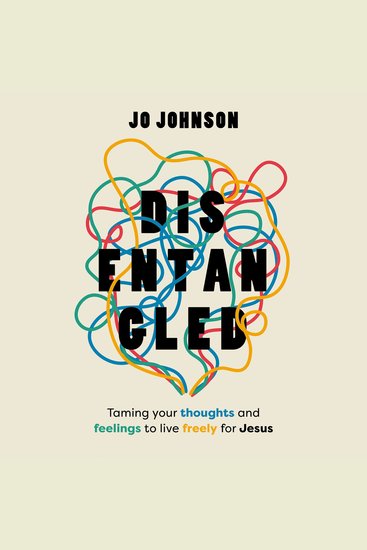
  • Disentangled - Taming Your Thoughts and Feelings to Live Freely for Jesus - cover

    Disentangled - Taming Your...

    Jo hnson

    • 0
    • 0
    • 0
    Pair biblical insight and psychological tools to better manage your thoughts and emotions as you seek to become more like Christ.Apply biblical insights using tools from modern psychology to manage your thoughts and emotions.Jesus calls Christians to live for him, but it’s hard! A tangle of distracting thoughts and painful emotions can trip us up and stop us from being the people we long to be.Christian neuropsychologist Jo Johnson pairs biblical insight with the tools of psychology to offer a freeing way forward. Through her positive, practical, down-to-earth perspective, you will:Better understand your inner lifeLearn to manage your thoughts, memories, desires, and emotionsCombat overthinking and gain emotional resilienceTake charge of your behavior by applying psychological tools and techniquesBe encouraged to look to Jesus and rely on the help of the Spirit every dayDriven by the desire to become more like Christ, this book takes your inner struggles seriously while offering the hope of the gospel.You will be encouraged to throw off everything that hinders and the sin that so easily entangles, fixing your eyes on Jesus as you run the race (Hebrews 12:1)!Each chapter concludes with action steps and prompts to worship.
    Voir livre
  • Indigenous Spirituality and Global Wisdom - Discover how Indigenous spirituality reveals the timeless truths shared by all great religions - cover

    Indigenous Spirituality and...

    Mayur Katariya

    • 0
    • 0
    • 0
    What if the key to a more connected and mindful life lies in ancient wisdom, we've overlooked?  
    This audiobook explores the spiritual traditions of Indigenous Australians, with a focus on the practice of Dadirri—a deep form of listening and contemplation.  
    It also examines parallels between Indigenous spirituality and other global wisdom traditions, such as Zen Buddhism, Vedic traditions, and Christian mysticism. By the end of the book, learners will develop a deeper understanding of Indigenous spirituality, its holistic worldview, and how these practices can be integrated into their personal and spiritual lives.  
    This is not just a journey into history—it may transform the way you approach your own spiritual and personal growth.  
    This is a lesson in why the wisdom of Indigenous cultures remains profoundly relevant today, for all of us.
    Voir livre
  • How Antigravity Built the Pyramids - The Mysterious Technology of Ancient Superstructures - cover

    How Antigravity Built the...

    Nick Redfern

    • 0
    • 0
    • 0
    Discover the Lost Secrets of the Ancients and the Time When Stones Floated High over Egypt   Throughout history, folklore, and mystery, tales have circulated of massive stones being moved through the air effortlessly by sound. Bizarre? Well, yes, it is. That doesn’t take away the fact that sound was, and still remains, the key to the construction of the pyramids of Egypt, Stonehenge, the stone figures of Easter Island, and the massive stones at Baalbek, Lebanon. Were they the work of ancient humans or of equally ancient extraterrestrials?How Antigravity Built the Pyramids delves into specific stories and theories: A 9th-century story of a mysterious papyrus with the power to move large stones at the Giza Necropolis  The Mayan story of the construction of the Pyramid of the Magician said to be overseen by a small humanoid who could whistle large stones into place  Native American stories of ancient priests being able to make stones light to move easily    Author Nick Redfern argues it was not literally music and whistling that somehow raised large stones, but both have one thing in common: sound. Acoustics. Almost certainly, acoustic levitation was at the heart of these incredible feats. The truth of the science behind acoustic levitation was lost and forgotten for ages with little more left than fanciful tales of music, whistles, a curious papyrus, and strange metal rods that could achieve incredible feats in the air. Today, we are finally starting to get a grasp on this incredible technology, a technology that may have been the work of ancient humans, aliens from faraway worlds—or, perhaps, a combination of the two.
    Voir livre