Begleiten Sie uns auf eine literarische Weltreise!
Buch zum Bücherregal hinzufügen
Grey
Einen neuen Kommentar schreiben Default profile 50px
Grey
Jetzt das ganze Buch im Abo oder die ersten Seiten gratis lesen!
All characters reduced
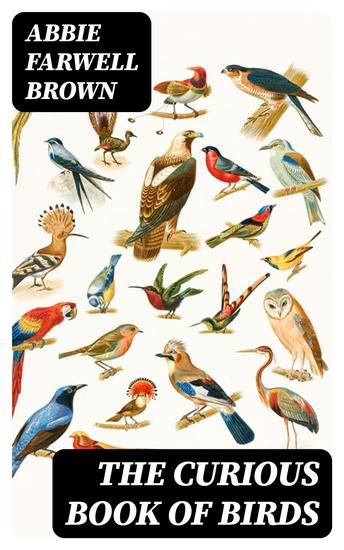
The Curious Book of Birds - cover

The Curious Book of Birds

Abbie Farwell Brown

Verlag: DigiCat

  • 0
  • 0
  • 0

Beschreibung

In "The Curious Book of Birds," Abbie Farwell Brown intricately weaves narratives that explore the enchanting world of avian life, employing a charming and whimsical literary style reminiscent of early 20th-century children's literature. Each chapter is a delightful exploration of various bird species, blending factual ornithological insights with fanciful storytelling that captivates the imagination. Brown's work stands out within the context of a burgeoning interest in natural history during her time, appealing to both young readers and adults alike by fostering an appreciation for nature's marvels through lyrical prose and vivid illustrations. Abbie Farwell Brown was a prominent American author, born in 1871, whose passion for nature often found expression through her writing. Educated in a literary environment, she was steeped in the cultural movements of her era, including the growing fascination with the natural sciences. Her own experiences in outdoor exploration, along with her efforts in environmental education, profoundly influenced her desire to inspire a sense of wonder about the natural world in her readers. I wholeheartedly recommend "The Curious Book of Birds" to anyone who cherishes literature that ignites curiosity and nurtures a love for the environment. Brown's impeccable storytelling and insightful observations not only entertain but also educate, making this book a delightful addition to the library of any nature enthusiast or aspiring young reader.
Verfügbar seit: 16.09.2022.
Drucklänge: 100 Seiten.
Weitere Bücher, die Sie mögen werden

  • The Veiled Universe - Exploring the Invisible Forces of Space - cover

    The Veiled Universe - Exploring...

    Dirk Fallon

    • 0
    • 0
    • 0
    Dark matter is one of the most elusive and mysterious components of the universe. Though it cannot be directly observed through traditional means such as light, it is believed to make up about 27% of the universe's total mass and energy content. This strange substance does not emit, absorb, or reflect light, making it invisible to our telescopes and detectors. Its existence is inferred primarily through its gravitational effects on visible matter, such as galaxies and galaxy clusters. Without dark matter, the movement of galaxies would not make sense based on the gravitational pull of visible matter alone. 
    The concept of dark matter was first proposed in the early 20th century. In 1933, Swiss astronomer Fritz Zwicky observed that the galaxies within the Coma galaxy cluster were moving faster than expected based on the visible matter alone. He suggested that there must be some unseen mass, which he called “dark matter,” providing the additional gravitational pull needed to keep the galaxies from flying apart. Since then, astronomers have found similar evidence in other galaxy clusters, and the hypothesis of dark matter has become a cornerstone of modern cosmology. 
    Despite the compelling evidence for dark matter, its exact nature remains unknown. Various theories have been proposed, with the most widely accepted one suggesting that dark matter consists of weakly interacting massive particles, or WIMPs. These hypothetical particles would interact through gravity and possibly the weak nuclear force, but not through electromagnetic forces, which would explain why they do not emit light. However, despite decades of searching, no direct detection of WIMPs has been made. This has led to the consideration of alternative explanations, such as axions, sterile neutrinos, and other exotic particles.
    Zum Buch
  • The Moral Circle - Who Matters What Matters and Why - cover

    The Moral Circle - Who Matters...

    Jeff Sebo

    • 0
    • 0
    • 0
    Today, human exceptionalism is the norm. Despite occasional nods to animal welfare, we prioritize humanity, often neglecting the welfare of a vast number of beings. As a result, we use hundreds of billions of vertebrates and trillions of invertebrates every year for a variety of purposes, often unnecessarily. We also plan to use animals, AI systems, and other nonhumans at even higher levels in the future. Yet as the dominant species, humanity has a responsibility to ask: Which nonhumans matter, how much do they matter, and what do we owe them in a world reshaped by human activity and technology? 


    In The Moral Circle, philosopher Jeff Sebo challenges us to include all potentially significant beings in our moral community, with transformative implications for our lives and societies. 


    This book explores provocative case studies such as lawsuits over captive elephants and debates over factory-farmed insects, and compels us to consider future ethical quandaries, such as whether to send microbes to new planets, and whether to create virtual worlds filled with digital minds. Taking an expansive view of human responsibility, Sebo argues that building a positive future requires the shedding of human exceptionalism and radically rethinking our place in the world.
    Zum Buch
  • Medical Biochemistry - The Chemical Basis of Health and Disease - cover

    Medical Biochemistry - The...

    Ava Westwood

    • 0
    • 0
    • 0
    Medical biochemistry is a field that sits at the intersection of chemistry, biology, and medicine, exploring the chemical processes and substances that govern the functioning of living organisms. It plays a vital role in understanding the molecular basis of health and disease, providing essential insights into how cells, tissues, and organs interact and function. This branch of biochemistry is not only concerned with the fundamental biochemistry of life but also with how biochemical mechanisms influence disease development, progression, and treatment. By examining the chemical foundations of biological systems, medical biochemistry helps bridge the gap between basic science and clinical practice. 
    The scope of medical biochemistry is vast, encompassing a variety of topics including metabolism, enzymology, molecular genetics, and cell signaling. At the core of this discipline is the study of how nutrients and biomolecules such as proteins, lipids, carbohydrates, and nucleic acids are involved in cellular function. Understanding how the body uses these molecules for energy, structure, and regulation is essential for comprehending how metabolic disorders, genetic conditions, and cancers arise. Additionally, the molecular mechanisms of drug action and response are grounded in biochemistry, making it an essential field for the development of therapeutic interventions. 
    Medical biochemistry also serves as a key tool in diagnostics. Through the identification of biomarkers, which are specific biochemical indicators of disease states, clinicians are able to detect and monitor various health conditions, including metabolic disorders, cardiovascular diseases, and cancers. Advances in technology, such as the development of genetic testing, enzyme assays, and high-throughput screening methods, have expanded the ability to identify and analyze these biomarkers, thereby enhancing the precision of medical diagnoses.
    Zum Buch
  • Mountainish - cover

    Mountainish

    Zsuzsanna Gahse

    • 0
    • 0
    • 0
    A narrator and her dog are criss-crossing the Swiss Alps. She travels with friends who share her interest in food, languages and their topographical contexts. They collect colours, even look for colourlessness, and develop the idea of a walk-in diary, a vain attempt to archive their observations.
    Gradually, other mountains appear in their observations and memories, as do the mountains of literature and art. Mountains may be sites of fear and awe, of narrow-mindedness, racism and ever-looming collapse; Alpine lodges may be places of hospitality, retreat and unexpected encounters; of nature under threat.
    In 515 notes, Zsuzsanna Gahse unfolds a finely woven interplay between her six characters while giving us a vivid panorama of mountain worlds, a multi-layered typology of all things mountainish.
    Zum Buch
  • secret to releasing repressed memories and childhood trauma The - A guided meditation - DST Hypno with Stu Newman - cover

    secret to releasing repressed...

    Stuart Newman

    • 0
    • 0
    • 0
    If you are looking for a way to release repressed memories and childhood trauma, then DST Hypno with Stu Newman is the perfect solution.  
    This innovative technique combines hypnosis and psychotherapy in order to help people access their subconscious mind.  
    With this method, you can uncover long-forgotten memories that may be holding back your emotional wellbeing or even preventing you from living life to its fullest potential.  
    Unlike other forms of therapy, this approach does not require any medication or invasive treatments; instead it works by guiding individuals through an inner journey towards self-discovery and healing.  
    The results are often profound as many users report feeling more relaxed and empowered after just one session with Stu Newman!  
    So if you want to experience true freedom from the past - try out DST Hypno today!
    Zum Buch
  • Ultimate Azure Data Engineering - Build Robust Data Engineering Systems on Azure with SQL ETL Data Modeling and Power BI for Business Insights and Crack Azure Certifications - cover

    Ultimate Azure Data Engineering...

    Ashish Agarwal

    • 0
    • 1
    • 0
    Discover the world of data engineering in an on-premises setting versus the Azure cloud
    
    Book Description
    Embark on a comprehensive journey into Azure data engineering with “Ultimate Azure Data Engineering”. Starting with foundational topics like SQL and relational database concepts, you'll progress to comparing data engineering practices in Azure versus on-premises environments. Next, you will dive deep into Azure cloud fundamentals, learning how to effectively manage heterogeneous data sources and implement robust Extract, Transform, Load (ETL) concepts using Azure Data Factory, mastering the orchestration of data workflows and pipeline automation. 
    The book then moves to explore advanced database design strategies and discover best practices for optimizing data performance and ensuring stringent data security measures. You will learn to visualize data insights using Power BI and apply these skills to real-world scenarios. 
    Whether you're aiming to excel in your current role or preparing for Azure data engineering certifications, this book equips you with practical knowledge and hands-on expertise to thrive in the dynamic field of Azure data engineering. 
    Table of Contents
    
    1. Introduction to Data Engineering
    2. Understanding SQL and RDBMS Concepts
    3. Data Engineering: Azure Versus On-Premises
    4. Azure Cloud Concepts
    5. Working with Heterogenous Data Sources
    6. ETL Concepts
    7. Database Design and Modeling
    8. Performance Best Practices and Data Security
    9. Data Visualization and Application in Real World
    10. Data Engineering Certification Guide   
    Index
    Zum Buch