Rejoignez-nous pour un voyage dans le monde des livres!
Ajouter ce livre à l'électronique
Grey
Ecrivez un nouveau commentaire Default profile 50px
Grey
Abonnez-vous pour lire le livre complet ou lisez les premières pages gratuitement!
All characters reduced
Running Water - cover

Running Water

A. E. W. Mason

Maison d'édition: Classica Libris

  • 0
  • 0
  • 0

Synopsis

The Brenva Glacier at Mont Blanc has always been a legend among mountaineers. When the talented John Lattery sets out one day to cross this sea of ice, no one thinks that it will be his last expedition. But, when Lattery fails to return, his long time friend, Captain Chayne, is sent to search for the missing explorer. As his party engages in a heroic search and rescue mission, Chayne makes a sickening discovery.
Disponible depuis: 05/02/2019.

D'autres livres qui pourraient vous intéresser

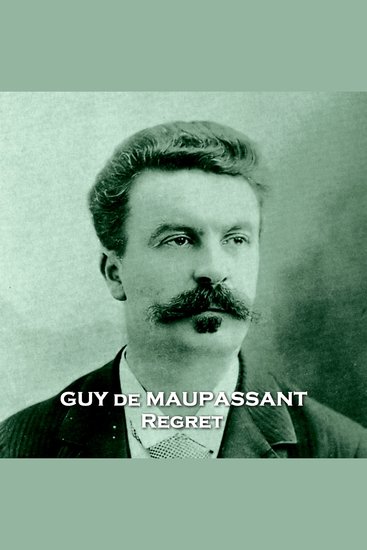
  • Regret - From their pens to your ears genius in every story - cover

    Regret - From their pens to your...

    Guy de Maupassant

    • 0
    • 0
    • 0
    Henri René Albert Guy de Maupassant was born on August 5th, 1850 near Dieppe in France.  
    Maupassant’s early life was badly torn when at age 11 (his younger brother Hervé was then five) his mother, Laure, a headstrong and independent-minded woman, risked social disgrace in order to obtain a legal separation from her husband. 
    After the separation, Laure kept custody of her two boys. With the father now forcibly absent, Laure became the most influential and important figure in the young boy's life.   
    Maupassant’s education was such that he rebelled against religion and other societal norms but a developing friendship with Gustave Flaubert began to turn his mind towards creativity and writing. 
    After graduation he volunteered for the Franco-Prussian war. With its end he moved to Paris to work as a clerk in the Navy Department.  Gustave Flaubert now took him under his wing.  Acting as a literary guardian to him, he guided the eager Maupassant to debuts in journalism and literature.  For Maupassant these were exciting times and the awakening of his creative talents and ambitions. 
    In 1880 he published what is considered his first great work, ‘Boule de Suif’, (translated as as ‘Dumpling’, ‘Butterball’, ‘Ball of Fat’, or ‘Ball of Lard’) which met with a success that was both instant and overwhelming.  Flaubert at once acknowledged that it was ‘a masterpiece that will endure.’ Maupassant had used his talents and experiences in the war to create something unique.  
    This decade from 1880 to 1891 was to be the most pivotal of his career.  With an audience now made available by the success of ‘Boule de Suif’ Maupassant organised himself to work methodically and relentlessly to produce between two and four volumes of work a year.  The melding of his talents and business sense and the continual hunger of sources for his works made him wealthy. 
    In his later years he developed a desire for solitude, an obsession for self-preservation, and a fear of death as well as a paranoia of persecution caused by the syphilis he had contracted in his youth.  
    On January 2nd, 1892, Maupassant tried to commit suicide by cutting his throat.  Unsuccessful he was committed to the private asylum of Esprit Blanche at Passy, in Paris.  It was here on July 6th, 1893 that Henri René Albert Guy de Maupassant died at the age of only 42.
    Voir livre
  • The Cricket on the Hearth - cover

    The Cricket on the Hearth

    Charles Dickens

    • 0
    • 0
    • 0
    A timeless holiday classic, The Cricket on the Hearth by Charles Dickens is a heartwarming tale of love, family, and redemption. Set in a cozy Victorian home, the story follows John Peerybingle and his wife Dot, whose simple yet contented lives are disrupted by a series of misunderstandings, mysterious arrivals, and surprising revelations. A seemingly ordinary cricket, chirping beside their hearth, becomes a symbol of warmth, hope, and the unseen forces that guide us through hardship. 
    As secrets unravel and mistaken identities come to light, Dickens masterfully weaves a touching narrative filled with festive spirit, romance, and moral lessons. Blending humor, sentimentality, and social commentary, this novella captures the magic of Christmas and the enduring power of love and kindness. 
    A delightful tale filled with memorable characters and heartfelt moments, The Cricket on the Hearth remains a cherished holiday tradition and a testament to Dickens’ ability to craft stories that resonate across generations.
    Voir livre
  • The Legend of Sleepy Hollow - The iconic gothic tale of the headless horseman that is still widely known today despite being written over 200 years ago - cover

    The Legend of Sleepy Hollow -...

    Washington Irving

    • 0
    • 0
    • 0
    Washington Irving was born on 3rd April, 1783, the youngest of 11, in New York. 
      
    Irving found his real interests away from school in literature and the theatre.  An outbreak of yellow fever at 15 moved him away from Manhattan and into the surrounding countryside providing valuable settings for later works such as ‘The Legend of Sleepy Hollow’. 
     
    By 19 Irving was writing regularly to the New York Morning Chronicle, commenting on the theatrical and social scenes.  When his health began to fail, he was sent on the Grand Tour of Europe.  Bizarrely he ignored most of the great sights on offer to concentrate on developing his social and conversational powers.  His health, though, did improve.  
     
    In 1806, back in New York to study law, he scraped a pass at the bar and then founded with several others the literary magazine Salmagundi. Irving nicknamed the city ‘Gotham City’, a name still in use today.  Moderately successful, the magazine spread Irving’s reputation beyond New York. 
     
    In 1809 while mourning the death of his teenage fiancée Irving finished his first significant book, ‘A History of New-York from the Beginning of the World to the End of the Dutch Dynsasty, by Diedrich Knickerbocker’.  It satirised local history, local historians and politics.  It received great critical acclaim. 
     
    Unfortunately his family’s established trading company was now facing great upheavals and Irving was dispatched to England to try to sort it out.  After two years he could see no way out but bankruptcy.  This left him in England with no real employment prospects, and so he returned to writing.  
     
    He sent some short stories back to New York to be published as ‘The Sketch Book of Geoffrey Crayon, Gent’.  The first part included ‘Rip Van Winkle’ and was extremely successful.  The sixth part contained ‘The Legend of Sleepy Hollow’.  
     
    Beset by literary piracy, with no copyright law at the time, he set about publishing legitimate copies in England to outwit the bootleggers.  From now on Irving published concurrently in America and England in order to render piracy obsolete.  
     
    In August 1824, he published ‘Tales of a Traveller’, which included the famed ‘The Devil and Tom Walker’.  
     
    In 1826, the American Minister to Spain, invited him to Madrid where he could examine the many historical documents that he had access to.  Irving reveled in both the size of the libraries he was granted access to and their rich quality.  Historical works flowed from his pen further enhancing his reputation and fortune.   
     
    Following the completion of ‘Tales of the Alhambra’ in 1832, Irving returned to America after 17 years abroad. He was now a figurehead of American literature and dispensed advice to Edgar Allan Poe amongst others.  Irving also became an advocate for American copyright legislation.  
     
    A later appointment as Minister to Spain in 1842 left him disheartened at the antics of the various political factions he encountered.  It also afforded him no time to write as he had hoped.  
     
    On his return home he began an ‘Author’s Revised Edition’ of his works agreeing an unprecedented deal for 12 per cent of the retail profits.  
     
    Washington Irving died of a heart attack at his ‘Sunnyside’ home on the 28th November 1859 at the age of 76, a few months after completing his five volume George Washington biography, in whose honour he had been named.  
     
    ‘The Legend of Sleepy Hollow’ is a story almost everyone has encountered.  An enormous success at the time it is now an undeniable American Spooky classic.
    Voir livre

  • The Lost World - An Uncharted Amazonian Plateau A Prehistoric Secret The Greatest Adventure in the History of Science - cover

    The Lost World - An Uncharted...

    Yvonne Schaefer

    • 0
    • 0
    • 0
    Is there any room left in the world for true romance and daring heroics? 
    Young journalist Edward Malone is desperate to prove his worth to the woman he loves. When he begs his editor for the most dangerous assignment available, he is sent to interview the notorious, irascible, and fiercely imposing Professor George Edward Challenger. The Professor has just returned from an isolated plateau deep in the uncharted Amazon basin with claims that defy all modern science: prehistoric life still walks the earth. 
    Met with mockery and outrage by the scientific establishment of London, Challenger dares his detractors to see the truth for themselves. Joined by a cynical rival professor, a fearless big-game hunter, and the eager young Malone, the expedition sets sail for the treacherous jungles of South America. 
    Will they uncover the greatest biological miracle of the twentieth century, or vanish forever into the jaws of a primordial nightmare? Step into a world where time stands still, dinosaurs rule, and every shadow conceals a heart-pounding threat in this masterful tale of exploration and survival.
    Voir livre
  • 10 Great Russian Short Stories - Nikolai Gogol Fyodor Dostoevsky Leo Tolstoy Anton Chekhov Ivan Turgenev Leonid Andreyev - cover

    10 Great Russian Short Stories -...

    Nikolai Gogol, Fyodor...

    • 0
    • 0
    • 0
    This audiobook includes 10 Great Russian Short Stories:
    The Mantle by Nikolai Gogol
    Mumu by Ivan Turgenev 
    First love by Ivan Turgenev 
    An Avenger by Anton Chekhov
    Darkness by Anton Chekhov 
    The Death of Ivan Illyich by Leo Tolstoy
    Notes from the Underground by Fyodor Dostoevsky
    The Little Angel by Leonid Andreyev
    The Dream of a Ridiculous Man by Fyodor Dostoyevsky
    A Troublesome Visitor by Anton Chekhov
    Voir livre
  • War and Peace (Book Thirteen: 1812) - cover

    War and Peace (Book Thirteen: 1812)

    Leo Tolstoy

    • 0
    • 0
    • 0
    War and Peace is a literary work mixed with chapters on history and philosophy by the Russian author Leo Tolstoy. It was first published serially, then published in its entirety in 1869. It is regarded as one of Tolstoy's finest literary achievements and remains an internationally praised classic of world literature.
    Book 13: 1812: Man’s mind cannot grasp the causes of events in their completeness, but the desire to find those causes is implanted in man’s soul. And without considering the multiplicity and complexity of the conditions any one of which taken separately may seem to be the cause, he snatches at the first approximation to a cause that seems to him intelligible and says: “This is the cause!
    Voir livre