Unisciti a noi in un viaggio nel mondo dei libri!
Aggiungi questo libro allo scaffale
Grey
Scrivi un nuovo commento Default profile 50px
Grey
Iscriviti per leggere l'intero libro o leggi le prime pagine gratuitamente!
All characters reduced
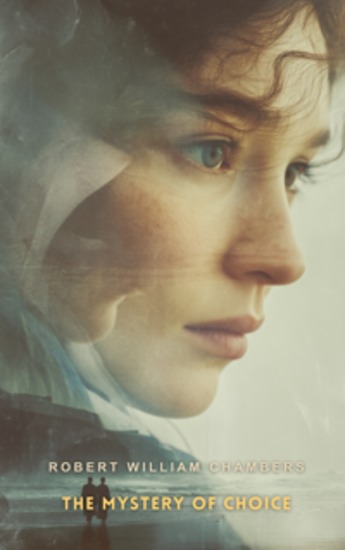
The Mystery of Choice - cover

The Mystery of Choice

Robert William Chambers

Casa editrice: Interactive Media

  • 0
  • 0
  • 0

Sinossi

In this haunting collection of interconnected tales set along the Breton coast, strange disappearances, eerie coincidences, and enigmatic figures blur the line between reality and the supernatural. As travelers and locals confront unsettling events, each story reveals how choice, fate, and hidden desires shape their lives. Mystery deepens in mist-shrouded landscapes where danger and revelation wait in silence.
Disponibile da: 25/01/2026.
Lunghezza di stampa: 208 pagine.

Altri libri che potrebbero interessarti

  • Taras Bulba (Unabridged) - cover

    Taras Bulba (Unabridged)

    Nikolai Gogol

    • 0
    • 0
    • 0
    Taras Bulba is a romanticized historical novella by Nikolai Gogol. It describes the life of an old Zaporozhian Cossack, Taras Bulba, and his two sons, Andriy and Ostap. The sons study at the Kiev Academy and then return home, whereupon the three men set out on a journey to the Zaporizhian Sich (the Zaporizhian Cossack headquarters, located in southern Ukraine), where they join other Cossacks and go to war against Poland
    Mostra libro
  • A Journey of Little Profit - From their pens to your ears genius in every story - cover

    A Journey of Little Profit -...

    John Buchan

    • 0
    • 0
    • 0
    The Scottish novelist John Buchan enjoyed a remarkable career as politician, historian and Governor General. He was born John Buchan on 26th August 1875 and later added 1st Baron Tweedsmuir PC GCMG GCVO CH to his name.  
    Buchan studied at Hutchesons’ Grammar School, Glasgow and at seventeen won a scholarship to the University of Glasgow to study classics. There he began to write poetry. In 1895 he transferred to Oxford to continue his study of Classics and in 1896 ‘Sir Quixote of the Moors’ was published followed by the non-fiction ‘Scholar-Gipsies’. His prolific literary output now hardly faltered. 
    He graduated in 1900 and became the private secretary to Alfred Milner, the High Commissioner for Southern Africa and other colonies. Buchan found the same inspiration in the African landscape as he had in the Scottish Borders, and would later set many works here. Returning to London he became a partner in a publishing house, and garnered an editorial role at The Spectator. He also completed his law studies. He was called to the bar in 1901 but never practiced.  
    On 15th July 1907 Buchan married Susan Charlotte Grosvenor, the cousin of the Duke of Westminster. In 1910 he wrote ‘Prester John’, the first of a series set in South Africa.  
    In 1911 Buchan entered politics as a Unionist candidate in the Scottish Borders advocating the support of free trade, women’s suffrage, national insurance, and reducing the power of the House of Lords.  
    The Great War saw Buchan writing for the War Propaganda Bureau and as Times correspondent in France. In 1915, he published ‘The Thirty-Nine Steps’, his most famous book and a follow-up Richard Hannay novel, ‘Greenmantle’, in 1916.  
    In 1916 Buchan enlisted in the Intelligence Corps which included writing speeches for Sir Douglas Haig. By 1917 he was Director of Information under Lord Beaverbrook. Buchan called it “the toughest job he ever took on”. He somehow found time to assist in a history of the war magazine. This was later published in 24 volumes: Nelson’s History of the War. 
    After the war his writing focused on historical studies. In 1927 Buchan became the Unionist Party Member of Parliament for the Combined Scottish Universities. In a speech to Parliament he said “I believe every Scotsman should be a Scottish nationalist. If it could be proved that a Scottish parliament were desirable… Scotsmen should support it.”  
    Over the next decade he continued to distinguish himself politically and in literature.  On the 1st June 1935 he became 1st Baron Tweedsmuir of Elsfield in the County of Oxford.  
    He was now also given the position of Governor General in Canada and resolved to travel all over Canada to gain a better insight of the country. Having crossed both length and breadth he saw the cultural shift between areas and their common ground and helped bring about a clear national Canadian identity. 
    On the 6th February 1940 he collapsed from a stroke and sustained a very serious head injury in falling. Two rounds of surgery to stabilise his condition were unsuccessful and Buchan died on the 11th February. After a state funeral in Ottawa his ashes were returned to his estate in Oxfordshire.
    Mostra libro
  • Call of the Wild The - Audiobook - cover

    Call of the Wild The - Audiobook

    Jack London, Classic Audiobooks,...

    • 0
    • 0
    • 0
    The Call of the Wild is a gripping adventure story about a domestic dog named Buck, who is stolen from his comfortable life in California and thrust into the brutal world of the Alaskan wilderness. As he is passed from one harsh master to another, Buck is forced to awaken his primal instincts in order to survive. Eventually, he embraces the wild entirely, answering the ancient call that echoes in his blood.This novel is both a thrilling survival story and a meditation on the forces of nature, the struggle between civilization and instinct, and the journey toward freedom and self-discovery. Jack London captures the raw power of the wilderness and the untamed spirit that lives within all creatures.
    Mostra libro
  • Jane Eyre - cover

    Jane Eyre

    Jane Eyre

    • 0
    • 0
    • 0
    "Jane Eyre" is a novel written by Charlotte Bronte and first published in 1847. It is a Bildungsroman that follows the life of the titular character, Jane Eyre, from her childhood in an abusive household to her years as a governess and, ultimately, to her love for Mr. Rochester, the brooding master of Thornfield Hall. The novel is known for its themes of religion, morality, women's independence, and social criticism, and it incorporates elements of social realism, melodrama, and gothic horror.
    Mostra libro
  • Poor Folk - cover

    Poor Folk

    Fyodor Dostoevsky

    • 0
    • 0
    • 0
    "We are poor people, we are simple people, but we have hearts and souls too."
    
    Before the psychological labyrinths of Crime and Punishment, a young Dostoevsky captured the world's attention with this exquisite epistolary novel. Through a series of increasingly desperate letters, we witness the relationship between Makar Devushkin, a lowly, aging copy clerk, and Varvara Dobroselova, a fragile young seamstress. Living in squalid rooms across a dismal St. Petersburg courtyard, they exchange words of comfort, shared bread, and the flickering hope of a better life. Poor Folk is a searingly intimate portrait of the "little man" struggling to maintain his humanity in a society that views him as nothing more than a smudge on a ledger.
    
    The Birth of Psychological Realism: Dostoevsky takes the traditional "sentimental" epistolary form and infuses it with a brutal, modern realism. He elevates the clerk—a figure usually mocked in Russian literature—to a tragic hero. Makar's obsession with his social standing and his desperate attempts to appear "respectable" even as he starves reveal the deep psychological scars of class inequality.
    
    A Tragedy of Self-Sacrifice: As their financial situation deteriorates, the letters become a battleground between love and survival. Makar's selfless devotion to Varvara leads him to ruin, while Varvara is forced to make a heart-shattering choice between the man who loves her and the safety of a wealthy, predatory suitor. It is a story that proves the greatest tragedies are often the quietest ones, occurring behind closed doors in the poorest corners of the city.
    
    Witness the soul of a genius in its first bloom. Purchase "Poor Folk" today and experience the novel that changed Russian literature forever.
    Mostra libro
  • Selected Short Stories of Rabindranath Tagore - Alive and Dead Suva The First Look Hoimantee Letter from Your Wife and The Anonymous Lady - cover

    Selected Short Stories of...

    Rabindranath Tagore, Translator:...

    • 0
    • 0
    • 0
    This is a collection of translations of six short stories of Nobel Laureate Rabindranath Tagore.  These six short stories are selected from his book ‘Galpaguchha’.  The stories are, 'Alive and Dead' (Jeebita o Mreeta), 'Suva', 'The First Look' (Shuvadrishti), 'Hoimantee', ‘Letter from Your Wife' (Streer Patra) and 'The Anonymous Lady' (Aparichita). I have selected these stories, because first of all I enjoyed reading these stories and secondly all these six stories are concerned about the position of women in the family and in the society at that time, that is, during the late nineteenth century and early twentieth century.   
    These stories depict the vulnerability of women, their lack of control over their marriage and life as a whole.  Show a glimpse of life of another time and of another culture. The line of thinking may seem much different from today’s life, but in many parts of the world still there are some people who like to suppress the rights of women in the name of religion or culture. So, these stories are still relevant.  
    Excerpts from Alive and Dead, Kadambinee cannot tolerate any more, she says sharply, ‘Oh, please, I didn’t die, did not die!  How will I make you understand that I didn’t die? Let me show you that I am alive.’ 
    From Hoimantee, ‘My life was so full to the brim on all sides, that I could not notice any gap anywhere.  Suddenly, I witnessed a large void of hopelessness so near me!  I couldn’t understand how and with what I would fill up this void.’ 
    From Letter from Your Wife, Mreenal, ‘I can never understand the logic behind that it’s okay not to please me, but it’s not okay to make you unhappy.’
    Mostra libro