Join us on a literary world trip!
Add this book to bookshelf
Grey
Write a new comment Default profile 50px
Grey
Subscribe to read the full book or read the first pages for free!
All characters reduced
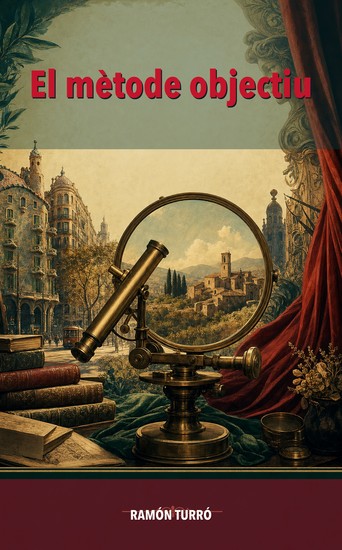
El metode objectiu - cover

El metode objectiu

Ramon Turro

Publisher: Caelwick Press

  • 0
  • 0
  • 0

Summary

"El mètode objectiu" by Ramón Turró is a philosophical treatise written in the early 20th century. The book delves into the relationship between psychological phenomena and their physiological underpinnings, emphasizing the need to understand the interplay between these realms through objective methods. Turró argues against purely introspective approaches to psychology, making a case for a more integrated view that recognizes the importance of empirical evidence in understanding mental processes. The opening of the book presents a discussion on the merits and limitations of introspective psychology. Turró critiques the common practices of psychologists who rely solely on observations of the mind's workings without considering the underlying physiological conditions that give rise to them. He draws on various philosophical and scientific perspectives, engaging with the ideas of figures like W. James and H. Ebbinghaus to illustrate the necessity of establishing causal relations between psychological and physiological states. Through this examination, he sets the stage for a more comprehensive understanding of the mental processes that define human experience. This Catalan-language digital edition is prepared with active navigation, clean typography, a custom cover and a reading file stripped of source-site notices, donation text and unnecessary external links.
Available since: 06/17/2026.
Print length: 61 pages.

Other books that might interest you

  • Els habitants de la lluna - cover

    Els habitants de la lluna

    Joseph Morato

    • 0
    • 0
    • 0
    "Els habitants de la lluna" by Joseph Morató is a fictional work written in the early 20th century. The novel introduces an ensemble of characters in a quaint village named Planells, particularly exploring the lives of the prominent figure, Rafel Vilar, known as Barrabola, and his complicated relationship with his wife, Carme. The social dynamics among the villagers, infused with humor and occasional drama, suggest an overarching theme of friendship, love, and the struggles inherent in community life. The opening of the story sets a detailed scene in which a group of individuals gathers for a meeting of the "Habitants de la Lluna" in a dimly lit room, their discussions veering into light-hearted debates about their internal governance—particularly, the timing for their nightly gatherings. Notably, characters like Terratrèmol and Fresques engage in lively exchanges, while hints of underlying tensions and personality quirks suggest a rich tapestry of relationships. Transitioning from their amusing debates, the narrative shifts focus to Barrabola, whose longing for Carme contributes to his internal turmoil. As a storm brews, a vivid glimpse into Barrabola's emotional state unfolds, promising engaging developments in his pursuit of love and acceptance amidst the amusingly chaotic backdrop of village life. This Catalan-language digital edition is prepared with active navigation, clean typography, a custom cover and a reading file stripped of source-site notices, donation text and unnecessary external links.
    Show book
  • El casalot abandonat - cover

    El casalot abandonat

    Anna Katharine Green

    • 0
    • 0
    • 0
    Estat de Nova York, segle XVIII. Plena revolució dels Estats Units. A través del diari d'una hostalera, la senyora Truax, descobrim un crim que trigarà anys a resoldre's. Els Urquhart, una jove parella de casats, arriben al seu hostal amb un paquet sospitós i insisteixen a quedar-se a la cambra més antiga; l'endemà marxen de manera sobtada. Setze anys més tard, un nou hoste revela informació crucial sobre aquella nit misteriosa. 
    
    Anna Katharine Green va ser una de les autores més populars del canvi de segle. A les seves novel·les hi conviuen el romanticisme de la novel·la victoriana i la versemblança judicial de la novel·la detectivesca. A El casalot abandonat, la seva incursió en el gènere gòtic, combina anotacions a un diari i cartes per crear una trama intricada plena d'intrigues, passions i enganys.
    Show book
  • La plaça del Diamant - cover

    La plaça del Diamant

    Mercè Rodoreda

    • 1
    • 1
    • 0
    "Distingida amiga: Arribo al despatx mort de son, per culpa de vostè. M'he passat la nit en blanc llegint la seva novel·la, sense poder deixar-la. Feia molt de temps que cap llibre no m'havia tret el son d'aquesta manera. Trobo aquesta novel·la simplement formidable. És la seva obra mestra." (Carta de Joan Sales a Mercè Rodoreda, 1961)"Totes aquestes pàgines, poètiques i patètiques, sense un gra de sentimentalisme, m'han emocionat profundament, i les últimes m'han deixat sense alè. Sembla mentida que amb elements tan simples es pugui arribar a una tensió tan extraordinària, a estones inaguantable. Se m'ha nuat el coll tres o quatre vegades, hi ha pàgines d'una veritat que esborrona. Aquest equilibri perfecte entre el dramatisme, la poesia i la banalitat, molt poca gent el deu haver aconseguit. I t'ho dic, no després de llegir una novel·la policíaca, sinó després d'acabar —immediatament després d'acabar— Els posseïts de Dostoievski." (Carta d'Armand Obiols a Mercè Rodoreda, 1960)"Pocas personas saben fuera de Cataluña quién era esa mujer invisible que escribía en un catalán espléndido unas novelas hermosas y duras como no se encuentran muchas en las letras actuales. Una de ellas —La plaza del Diamante— es, a mi juicio, la más bella que se ha publicado en España después de la Guerra Civil. Mi deslumbramiento fue apenas comparable al que me había causado la primera lectura de Pedro Páramo, de Juan Rulfo, aunque los dos libros no tienen en común sino la transparencia de su belleza." (Gabriel García Márquez, 1983)
    Show book
  • Vilaniu: Novela de costums del nostre temps - cover

    Vilaniu: Novela de costums del...

    Narcis Oller

    • 0
    • 0
    • 0
    "Vilaniu: Novela de costums del nostre temps" by Narcís Oller is a novel written in the late 19th century. The book appears to center on the life and society of a provincial Catalan town, focusing in particular on the prominent Galcerán family, their associates, and the customs and social dynamics of Vilaniu. The main characters introduced include Don Pau Galcerán, his wife Isabel, her father the General, their children, and their friend Don Ramon Merly, with Albert, Don Ramon's son, presented as a sensitive young man facing a future shaped by family and societal expectations. The novel delves into themes of tradition, social ambition, family ties, and the tensions between rural and urban life. The opening of the novel provides a vivid and lively depiction of Vilaniu as it prepares for its biggest annual festival, with the entire town bustling in anticipation and inundated by visiting outsiders. Through bustling street scenes, preparations in homes and public spaces, conversations among travelers, and the arrival of the influential Galcerán family, the reader is introduced to the social hierarchy and intricate personal relationships that define village life. Special emphasis is placed on the tensions and hopes surrounding Albert's return home from his studies in Barcelona, revealing his inner struggle with returning to small-town routines and expectations. These introductory pages establish the novel's dual focus—on both community rituals and deeply personal dilemmas—laying the groundwork for a narrative rich in local color and psychological insight. This Catalan-language digital edition is prepared with active navigation, clean typography, a custom cover and a reading file stripped of source-site notices, donation text and unnecessary external links.
    Show book
  • El despertar i altres relats - cover

    El despertar i altres relats

    Kate Chopin

    • 0
    • 1
    • 0
    El despertar, considerada una de les novel·les precursores de la gran literatura del sud dels Estats Units, és el relat central d'aquest recull i narra la història d'Edna Pontellier, una dona de classe burgesa que du una vida còmoda i respectable a la Nova Orleans del segle XIX, dedicada al marit, els fills i els actes socials. Però darrere d'aquesta façana aparentment plàcida s'hi amaga una dona decidida a ser lliure i independent i, quan una passió amorosa l'arrossega a un món ple de sensacions noves, olors torbadores i passejades plenes de possibilitats, no dubta a deixar-se endur. Quan es va publicar l'any 1899, aquesta història sobre el despertar sexual i espiritual d'una dona va ser titllada de sòrdida i immoral, i Chopin va caure en l'ostracisme literari. Però la varietat dels contes mostra l'enorme talent narratiu de l'escriptora, que va ambientar els seus relats i novel·les a la Louisiana rural i va plantejar temes d'absoluta modernitat, com les distincions arbitràries de classe, la institució del matrimoni, l'adulteri o la desigualtat entre homes i dones.
    Show book
  • El Tresor del Vell Cavaller - cover

    El Tresor del Vell Cavaller

    Erckmann- Erckmann-Chatrian

    • 0
    • 0
    • 0
    "El Tresor del Vell Cavaller" by Erckmann-Chatrian is a novel written in the late 19th century. This story revolves around the main character, Nicklausse, a humble coachman who dreams of finding a treasure based on a vision he experiences one night. The narrative explores themes of hope, ambition, and the quest for fortune amidst a backdrop of superstitions and the complexities of life in a small town. The opening of the novel introduces us to Mr. Furbach, a respectable bookseller in Munich, who is disturbed by strange noises from the attic of his house. The source is revealed to be Nicklausse, who wakes up filled with urgency after dreaming of a treasure hidden in an old castle. Nicklausse explains his vision to Mr. Furbach, who is doubtful but curious about the young man's fervor and determination. As he expresses his desire to leave his job and seek the treasure, the book sets the stage for a journey filled with anticipation and the uncertainty of what lies ahead, both in Nicklausse's fate and the potential discovery of riches. This Catalan-language digital edition is prepared with active navigation, clean typography, a custom cover and a reading file stripped of source-site notices, donation text and unnecessary external links.
    Show book