Join us on a literary world trip!
Add this book to bookshelf
Grey
Write a new comment Default profile 50px
Grey
Subscribe to read the full book or read the first pages for free!
All characters reduced
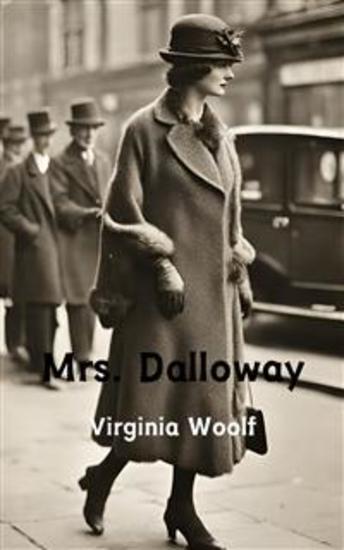
Mrs Dalloway (Annotated) - cover

Mrs Dalloway (Annotated)

Virginia Woolf

Publisher: Jason Nollan

  • 0
  • 0
  • 0

Summary

"Mrs. Dalloway," a literary masterpiece by Virginia Woolf, is a captivating exploration of a single day in the life of Clarissa Dalloway, an elegant and sophisticated woman living in post-World War I London. Published in 1925, this novel is a tour de force of modernist literature, offering readers a profound and intimate glimpse into the intricacies of human thought, emotion, and society.
The novel unfolds over the course of a day as Clarissa prepares for an evening party she is hosting. However, this seemingly simple premise serves as a canvas for Woolf's groundbreaking narrative techniques. The story is not presented in a linear fashion but rather through a series of interconnected perspectives, capturing the inner lives of various characters. Woolf masterfully employs the stream-of-consciousness technique, allowing readers to delve into the minds of the characters and experience the ebb and flow of their thoughts in real-time.

At the heart of "Mrs. Dalloway" is Clarissa Dalloway herself, a character of depth and complexity. As she moves through the bustling streets of London, preparing for her soirée, readers witness the subtle nuances of her reflections on life, love, and the passage of time. Woolf's portrayal of Clarissa is both empathetic and incisive, as she navigates the societal expectations placed upon her and grapples with the choices she has made.

Woolf's depiction of London becomes a character in its own right, a vibrant and ever-changing backdrop that mirrors the flux of emotions experienced by the novel's protagonists. The city pulses with life, and as Clarissa moves through its streets, readers encounter a vivid tapestry of urban existence, from the bustling shops to the quiet corners where moments of introspection unfold.

The supporting cast of characters adds layers of richness to the narrative. Septimus Warren Smith, a shell-shocked veteran, provides a poignant counterpoint to Clarissa's reflections, highlighting the profound impact of war on the human psyche. The intersections of these diverse perspectives create a mosaic of experiences, revealing the interconnectedness of lives and the shared humanity that transcends individual struggles.

"Mrs. Dalloway" is not merely a novel; it is a symphony of words, a kaleidoscope of emotions, and a profound meditation on the human condition. Woolf's prose is lyrical and evocative, immersing readers in a sensory experience that transcends the boundaries of conventional storytelling. Each sentence is a brushstroke, contributing to the larger canvas of the novel's themes – the fleeting nature of time, the complexity of identity, and the delicate dance between the individual and society.

As readers accompany Clarissa on her journey, they become witnesses to the intricacies of existence, the beauty of fleeting moments, and the eternal quest for meaning. Woolf's narrative prowess invites readers to engage with the novel on a deeply personal level, prompting introspection and reflection on their own lives.

In the tapestry of literary achievements, "Mrs. Dalloway" stands as a testament to Virginia Woolf's genius. It is a novel that transcends its time, offering a timeless exploration of the human experience. To read "Mrs. Dalloway" is to embark on a transformative journey through the corridors of consciousness, where the ordinary becomes extraordinary, and the mundane is elevated to the sublime. This is a novel that lingers in the mind, inviting readers to revisit its pages and discover new layers of meaning with each encounter—a true literary classic that continues to resonate and captivate generations of readers.
Available since: 01/07/2024.

Other books that might interest you

  • Anna Karenina (Part 4) - cover

    Anna Karenina (Part 4)

    Leo Tolstoy

    • 0
    • 0
    • 0
    Part 4: When Anna and Vronsky continue seeing each other, Karenin consults with a lawyer about obtaining a divorce. During the time period, a divorce in Russia could only be requested by the innocent party in an affair and required either that the guilty party confessed or that the guilty party be discovered in the act of adultery. Karenin forces Anna to hand over some of Vronsky's love letters, which the lawyer deems insufficient as proof of the affair. Stiva and Dolly argue against Karenin's drive for a divorce.
    Anna Karenina is a novel by the Russian author Leo Tolstoy, first published in book form in 1878. Many writers consider Anna Karenina the greatest work of literature ever, and Tolstoy himself called it his first true novel. It was initially released in serial installments from 1873 to 1877 in the periodical The Russian Messenger.
    Show book
  • Villette - cover

    Villette

    Charlotte Brontë

    • 0
    • 0
    • 0
    A solitary journey. A search for belonging. A woman determined to create her own destiny.
    
    Villette is a profound and deeply psychological novel by Charlotte Brontë, exploring themes of independence, identity, love, and personal struggle.
    
    The story follows Lucy Snowe, a reserved and thoughtful young woman who leaves England to seek a new life in the fictional city of Villette. There, she works as a teacher and navigates unfamiliar surroundings, complex relationships, and the challenges of building a future on her own terms.
    
    Through Lucy's introspective voice, Brontë presents a powerful examination of loneliness, ambition, emotional strength, and the desire for meaningful connection.
    
    Known for its psychological depth and sophisticated portrayal of a woman's inner life, Villette remains one of the most admired works of Victorian literature.
    Show book
  • A Wireless Message - From their pens to your ears genius in every story - cover

    A Wireless Message - From their...

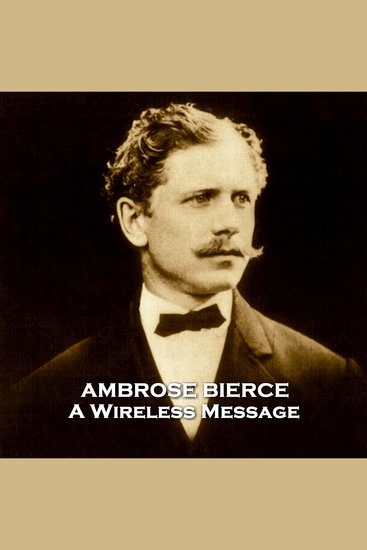
    Ambrose Bierce

    • 0
    • 0
    • 0
    Ambrose Gwinnett Bierce was born on 24th June 1842 at Horse Cave Creek in Meigs County, Ohio. His parents were poor but they introduced him to literature at an early age, instilling in him a deep appreciation of books, the written word and the elegance of language.  
    Growing up in Koscuisko County, Indiana poverty and religion were defining features of his childhood, and he would later describe his parents as “unwashed savages” and fanatically religious, showing him little affection but always quick to punish. He came to resent religion, and his introduction to literature appears to be their only positive effect. 
    At age 15 Bierce left home to become a printer’s devil, mixing ink and fetching type at The Northern Indian, a small Ohio paper. Falsely accused of theft he returned to his farm and spent time sending out work in the hopes of being published. 
    His Uncle Lucius advised he be sent to the Kentucky Military Institute. A year later he was commissioned as an Officer.  As the Civil War started Bierce enlisted in the 9th Indiana Infantry Regiment.  
    In April 1862 Bierce fought at the Battle of Shiloh, an experience which, though terrifying, became the source of several short stories. Two years later he sustained a serious head wound and was off duty for several months. He was discharged in early 1865.  
    A later expedition to inspect military outposts across the Great Plains took him all the way to San Francisco. He remained there to become involved with publishing and editing and to marry, Mary Ellen on Christmas Day 1871.  They had a child, Day, the following year.  
    In 1872 the family moved to England for 3 years where he wrote for Fun magazine. His son, Leigh, was born, and first book, ‘The Fiend’s Delight’, was published.  
    They returned to San Francisco and to work for a number of papers where he gained admiration for his crime reporting. In 1887 he began a column at the William Randolph Hearst’s San Francisco Examiner.  
    Bierce’s marriage fell apart when he discovered compromising letters to his wife from a secret admirer. The following year, 1889 his son Day committed suicide, depressed by romantic rejection. 
    In 1891 Bierce wrote and published the collection of 26 short stories which included ‘An Occurrence at Owl Creek Bridge’.  Success and further works including poetry followed.  
    Bierce with Hearst’s resources helped uncover a financial plot by a railroad to turn 130 million dollars of loans into a handout. Confronted by the railroad and asked to name his price Bierce answered “my price is $130 million dollars. If, when you are ready to pay, I happen to be out of town, you may hand it over to my friend, the Treasurer of the United States”.  
    He now began his first foray as a fabulist, publishing ‘Fantastic Fables’ in 1899.  But tragedy again struck two years later when his second son Leigh died of pneumonia relating to his alcoholism.  
    He continued to write short stories and poetry and also published ‘The Devil’s Dictionary’.  
    At the age of 71, in 1913 Bierce departed from Washington, D.C., for a tour of the battlefields where he had fought during the civil war. At the city of Chihuahua he wrote his last known communication, a letter to a friend. It’s closing words were “as to me, I leave here tomorrow for an unknown destination,” Ambrose Bierce then vanished without trace.
    Show book
  • The Awakening & Other Stories - cover

    The Awakening & Other Stories

    Kate Chopin

    • 0
    • 0
    • 0
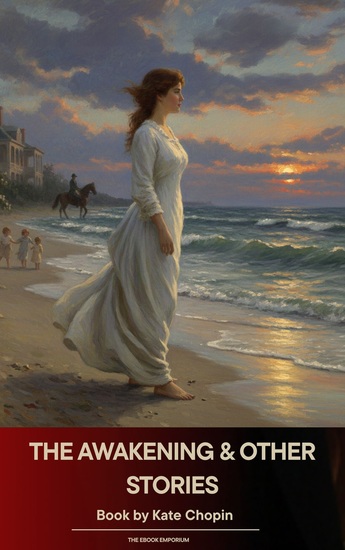
    "The voice of the sea is seductive; never ceasing, whispering, clamoring, murmuring, inviting the soul to wander."
    
    In the stifling heat of a Grand Isle summer, Edna Pontellier begins to realize that she is "seeing the world as one looks at a picture, without being part of it." The Awakening follows Edna's journey as she casts off the expectations of her role as a "mother-woman" in 19th-century New Orleans. What starts as a spiritual restlessness evolves into a total rebellion against the social and domestic cages of her era. Alongside Chopin's famous short stories—like the tragic "Désirée's Baby" and the shocking "The Story of an Hour"—this collection examines the high cost of freedom and the complexity of the human heart with a psychological depth that was decades ahead of its time.
    
    Chopin's writing is famously atmospheric. She uses the imagery of the Gulf Coast—the rhythmic waves, the scent of jasmine, and the oppressive heat—to mirror Edna's internal state. The sea, in particular, acts as a powerful symbol of both liberation and danger, representing the vast, uncharted territory of Edna's own soul.
    
    The novel presents a fascinating character study through three different women: Edna (the seeker), Adèle Ratignolle (the idealized "mother-woman"), and Mademoiselle Reisz (the independent, albeit lonely, artist). Their interactions create a brilliant dialogue about the limited paths available to women at the turn of the century.
    
    When first published, The Awakening was met with such scandal that it effectively ended Chopin's career. Today, it is celebrated as a masterpiece of the "New Woman" movement. It remains a poignant, beautiful, and hauntingly relevant look at the struggle to balance personal fulfillment with social responsibility.
    
    Experience the birth of modern identity. Purchase "The Awakening & Other Stories" today.
    Show book
  • Proverb Stories - Tales Written to Fit Old Sayings - cover

    Proverb Stories - Tales Written...

    Louisa May Alcott

    • 0
    • 0
    • 0
    Stories written to fit old sayings: handsome is as handsome does, a stitch in time, better late than never. Alcott produced them for magazines during the years she was supporting her whole family with her pen. The morals are stated in the titles, which frees the stories to be about something else — usually money, and how little of it a woman could earn.
    Show book
  • Bambi - A Comedy of a Poet's Education - cover

    Bambi - A Comedy of a Poet's...

    Marjorie Benton Cooke

    • 0
    • 0
    • 0
    Francesca Parkhurst, called Bambi, keeps house for her absent-minded professor father and decides to marry Jarvis Jocelyn, a penniless young playwright whom no manager will produce. Then she sets about making him famous without his noticing, while quietly making a name of her own as a writer of the stories the magazines want. Marjorie Benton Cooke wrote comedies about capable women, and Bambi, with her managing ways and her soft heart, is the most capable of them.
    Show book