Join us on a literary world trip!
Add this book to bookshelf
Grey
Write a new comment Default profile 50px
Grey
Subscribe to read the full book or read the first pages for free!
All characters reduced
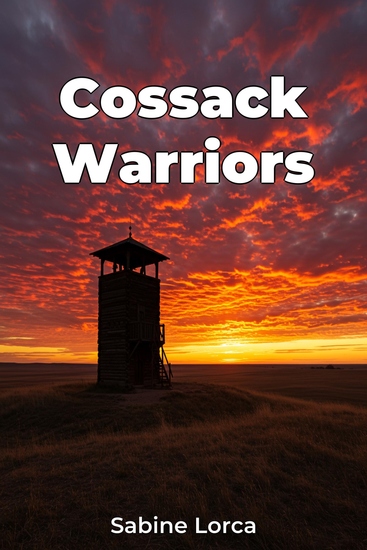
Cossack Warriors - cover

Cossack Warriors

Sabine Lorca

Translator A AI

Publisher: Publifye

  • 0
  • 0
  • 0

Summary

Cossack Warriors explores the history of the Cossacks, a unique group of steppe peoples who significantly impacted Russian military history and Eastern European affairs. The book examines their evolution from frontier dwellers to a formidable military force within the Russian Empire, highlighting their complex relationship with Tsarist Russia. It emphasizes their struggle for autonomy and self-governance while serving as border guards and shock troops.

 
The study reveals that the Cossacks were not simply warriors but a dynamic society shaped by both internal aspirations and external pressures. The book analyzes their participation in numerous regional conflicts, including wars against the Ottoman Empire and internal rebellions, showcasing their often contradictory roles.

 
The approach integrates military history, social anthropology, and political science to provide a comprehensive understanding of the Cossack phenomenon. Beginning with the origins and social structure of the Cossacks, the book progresses through key historical periods, examining their involvement in major wars and their intricate relations with Russian authorities. It dedicates chapters to analyzing their autonomy and the instrumentalization of Cossack identity by Russian governments.

 
Concluding with an assessment of their enduring legacy in modern Russia and Ukraine, the book offers a balanced and nuanced perspective suitable for both academic researchers and general readers interested in world history and military history.
Available since: 03/20/2025.
Print length: 57 pages.
Other books that might interest you

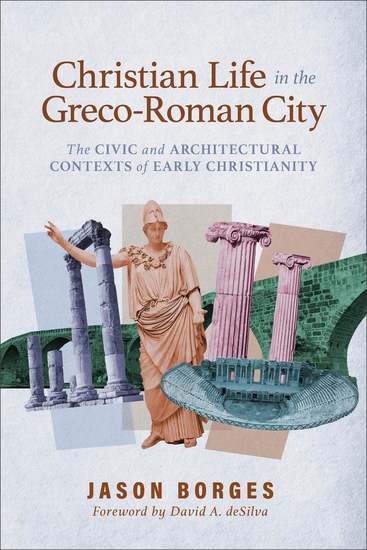
  • Christian Life in the Greco-Roman City - The Civic and Architectural Contexts of Early Christianity - cover

    Christian Life in the...

    Jason Borges

    • 0
    • 0
    • 0
    Explore the Archaeological Evidence Behind Early Christianity in Ancient Roman Cities 
     
    In this fascinating book, Jason Borges offers an original and engaging analysis of life in the Greco-Roman city as seen through its public spaces: 
     
    ● agoras 
    ● temples 
    ● baths 
    ● prisons 
    ● theaters 
    ● libraries 
    ● cemeteries 
     
    Drawing on primary sources and archeological evidence, he explores how these seven key civic structures shaped the lives, writings, and theology of early Christians. 
     
    From lively agoras to magnificent temples and luxurious baths, civic buildings were more than just physical settings for everyday life; they were spaces imbued with social and political meaning. Informed by the author's research and his experience leading tours to ancient sites, this book explores how early Christians interacted with and understood their urban environment. The result is fresh insight into the cultural background of the New Testament and other early Christian writings. 
     
    Each chapter explains a specific structure, provides an extant example, and discusses its significance for reading the New Testament. The book includes black and white images, informative diagrams, and a foreword by David A. deSilva. 
     
    This helpful supplementary textbook illuminates the architectural and civic background of the New Testament and early Christianity so that readers can better understand the writings and theology of early Christians.
    Show book
  • Brockwood Park 1975 - Public Talk 4 - Can we ever perceive truth? - cover

    Brockwood Park 1975 - Public...

    J. Krishnamurti

    • 0
    • 0
    • 0
    Can We Ever Perceive Truth?Public Talk • Brockwood Park, 1975In this searching public talk, J. Krishnamurti investigates whether the human mind can ever perceive truth directly.He examines how perception is shaped by knowledge, belief, experience, prejudice and the images created by thought. When the observer looks through the accumulated memories of the past, can anything be seen as it actually is?Krishnamurti asks whether truth can be approached through analysis, authority or intellectual understanding, or whether it can be discovered only when the mind is completely attentive, silent and free from distortion.A profound enquiry into perception, consciousness, thought and the possibility of seeing reality without illusion.
    Show book
  • Women in Ancient Mesopotamia: The History of the Lives and Social Roles of Mesopotamian Women - cover

    Women in Ancient Mesopotamia:...

    Charles River Editors

    • 0
    • 0
    • 0
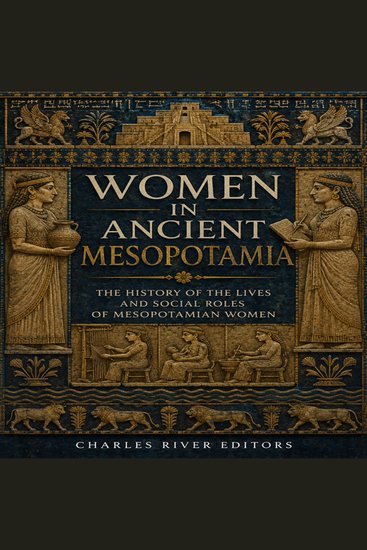
    Mesopotamia, the land between the rivers, occupied the floodplain of the Tigris and the Euphrates in what is now Iraq. It was not a single state or a single group, but a succession of them, spread across 3,000 years. The Sumerians built the first cities there in the 4th millennium B.C. at Uruk, Ur, and Lagash, and they invented writing, a wedge-shaped cuneiform script pressed into clay, around 3300 B.C. The Akkadians under Sargon built the first major empire in the 24th century B.C. The Babylonians under Hammurabi codified the most famous of ancient law collections in the 18th century B.C., and the Assyrians built a vast and brutal military empire in the north in the 1st millennium B.C. The Sumerians, Akkadians, Babylonians, and Assyrians all had different civilizational characteristics, and the position of women in those societies was not the same among all of them, and those differences could be quite distinct.  
    	What unites the whole, and what makes the history of women possible to study at all, is the clay. The Mesopotamians wrote on tablets of damp clay that hardened and survived, and they wrote in staggering quantity, not only through royal inscriptions and religious hymns, but also the ordinary paperwork of daily life, contracts, receipts, loans, marriage settlements, wills, court records, and private letters. Hundreds of thousands of these tablets survive, and a great many of them concern women, from the business letters of Assyrian merchant wives to the property contracts of Babylonian priestesses, the will of a Sumerian widow, the marriage law of Babylon, and the correspondence of a queen of Mari. The documentary record of Mesopotamian women is one of the richest the ancient world left, and it allows historians to see them not only as the idealized figures of art and myth but as litigants, lenders, weavers, and traders going about their lives.
    Show book
  • An Appeal in Favor of that Class of Americans Called Africans - cover

    An Appeal in Favor of that Class...

    Lydia Maria Child

    • 0
    • 0
    • 0
    An Appeal in Favor of that Class of Americans Called Africans by Lydia Maria Child is a powerful and influential work of moral and political argument that confronts the institution of slavery in the United States with clarity, compassion, and intellectual force.
    
    Written during a period of intense national debate, the book presents a carefully reasoned case against slavery, drawing on ethical principles, historical evidence, and humanitarian concern. Child addresses the social, economic, and moral consequences of racial oppression, urging readers to recognize the humanity and dignity of those who were enslaved.
    
    Rather than relying on abstract rhetoric alone, the work combines factual discussion with emotional appeal, making it both persuasive and accessible to a broad audience. Child's writing reflects her commitment to justice and equality, as well as her belief in the power of literature to inspire social change.
    
    An Appeal in Favor of that Class of Americans Called Africans remains a landmark text in American abolitionist literature. It continues to be studied for its historical importance, its contribution to human rights discourse, and its role in shaping early arguments for racial equality and social reform.
    Show book
  • The Art of Saying No - How to Reclaim Your Time Protect Your Energy and Set Boundaries Without Guilt - cover

    The Art of Saying No - How to...

    Mason Keller

    • 0
    • 0
    • 0
    Do you constantly find yourself saying yes when you want to say no? Do you feel drained, overcommitted, and taken for granted? It’s time to take back control. 
    The Art of Saying No is your essential guide to reclaiming your time, protecting your energy, and setting boundaries without guilt. This book teaches you why saying no is not selfish—it is a necessary act of self-respect and intentional living. 
    Inside, you will discover practical strategies to:Refuse requests with confidence and clarityOvercome guilt, fear, and people-pleasing tendenciesHandle pushback from colleagues, family, and friendsProtect your personal and professional timeFocus your energy on what truly matters 
    Through actionable steps, real-life examples, and simple exercises, you will learn how to stand your ground, preserve your well-being, and live life on your terms. Saying no is not about rejecting others—it’s about saying yes to yourself, your priorities, and your freedom. 
    Whether you struggle with work overload, social pressure, or simply want more control over your life, The Art of Saying No provides the tools you need to create a life that is intentional, balanced, and full of energy. 
    Take the first step toward freedom, clarity, and empowerment. Learn the art of saying no—and discover the power of saying yes to what truly matters.
    Show book
  • College for Free Today - Discover Different Ways You Can Go to College For Free Learn About Scholarships Financial Aids and Many More! - cover

    College for Free Today -...

    Jon Ghadery

    • 0
    • 0
    • 0
    College for Free Today: Discover Different Ways You Can Go to College For Free. Learn About Scholarships, Financial Aids and Many More! 
    When I worked in the financial aid department of one career based college I would sit down face to face with potential students and their families. I have seen first hand, time and time again, while a private college education can cost tens of thousands of dollars, anyone with a little ingenuity and a lot of self motivation and confidence can get their college education at a drastically reduced price and in many cases even for free. 
    This audiobook will teach you different ways and strategies on how you can get a college education virtually free. Learn how different scholarships and aids work and how you can apply for them. 
    This audiobook will cover the following topics: 
    - The First Twelve Years 
    - Fast Web and Other Scholarship Websites 
    - More Scholarship Websites 
    - Maintain Your Financial Aid By Being a Dedicated Student 
    - Reap the Benefits of College Work Study and Student Worker Programs 
    - Free Education As a Company Benefit 
    - After Graduation 
    - Free College is Possible If You Think Outside the Box 
    - Partial List of Career-Focused College 
    - And many more! 
    There are literally thousands of philanthropic organizations as well as private parties who are ready and willing to give financial aid to students who show even the slightest degree of commitment and drive. To learn more, scroll up and click “add to cart” now!
    Show book