Unisciti a noi in un viaggio nel mondo dei libri!
Aggiungi questo libro allo scaffale
Grey
Scrivi un nuovo commento Default profile 50px
Grey
Iscriviti per leggere l'intero libro o leggi le prime pagine gratuitamente!
All characters reduced
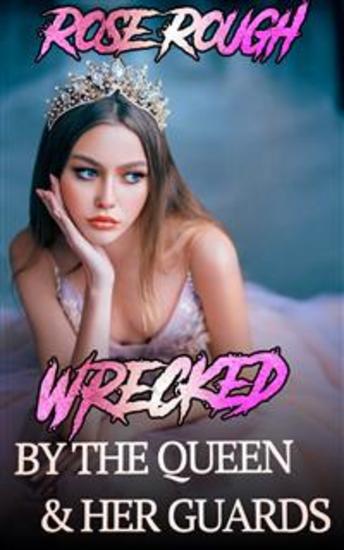
Wrecked by the Queen & Her Guards - cover

Wrecked by the Queen & Her Guards

Rose Rough

Casa editrice: Rose Rough

  • 0
  • 0
  • 0

Sinossi

When Cecilia steals a loaf of bread, she is thrown into the dungeon and made to satisfy the prison guards. But she soon decides that she likes it, and needs more. She is brought before the Queen herself, who makes Cecilia into her personal s**t and then lets the guards have free use of Cecilia too! It's a royal love fest! God save the Queen! 
Disponibile da: 19/09/2022.

Altri libri che potrebbero interessarti

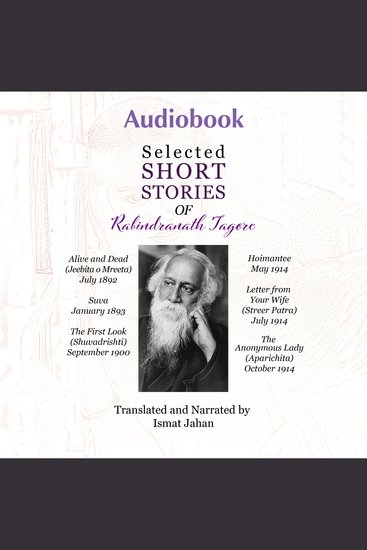
  • Selected Short Stories of Rabindranath Tagore - Alive and Dead Suva The First Look Hoimantee Letter from Your Wife and The Anonymous Lady - cover

    Selected Short Stories of...

    Rabindranath Tagore, Translator:...

    • 0
    • 0
    • 0
    This is a collection of translations of six short stories of Nobel Laureate Rabindranath Tagore.  These six short stories are selected from his book ‘Galpaguchha’.  The stories are, 'Alive and Dead' (Jeebita o Mreeta), 'Suva', 'The First Look' (Shuvadrishti), 'Hoimantee', ‘Letter from Your Wife' (Streer Patra) and 'The Anonymous Lady' (Aparichita). I have selected these stories, because first of all I enjoyed reading these stories and secondly all these six stories are concerned about the position of women in the family and in the society at that time, that is, during the late nineteenth century and early twentieth century.   
    These stories depict the vulnerability of women, their lack of control over their marriage and life as a whole.  Show a glimpse of life of another time and of another culture. The line of thinking may seem much different from today’s life, but in many parts of the world still there are some people who like to suppress the rights of women in the name of religion or culture. So, these stories are still relevant.  
    Excerpts from Alive and Dead, Kadambinee cannot tolerate any more, she says sharply, ‘Oh, please, I didn’t die, did not die!  How will I make you understand that I didn’t die? Let me show you that I am alive.’ 
    From Hoimantee, ‘My life was so full to the brim on all sides, that I could not notice any gap anywhere.  Suddenly, I witnessed a large void of hopelessness so near me!  I couldn’t understand how and with what I would fill up this void.’ 
    From Letter from Your Wife, Mreenal, ‘I can never understand the logic behind that it’s okay not to please me, but it’s not okay to make you unhappy.’
    Mostra libro
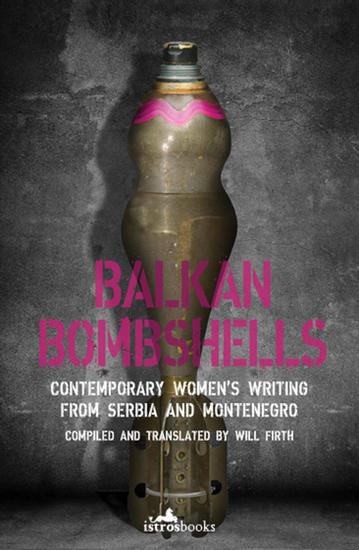
  • Balkan Bombshells - Contemporary Women's Writing from Serbia and Montenegro - cover

    Balkan Bombshells - Contemporary...

    Will Firth

    • 0
    • 0
    • 0
    A collection to whet the appetite of anyone wishing to learn more about a region rich in history, folklore and (her)stories. Telling it like a woman does not mean literature for women only: it provides an insight into half of humanity, a window onto the lives of citizens who work, love and develop their inner lives. This collection brings together the voices of a wide selection of prize-winning and established authors:
    Balkan Bombshells brings together established Serbian and Montenegrin writers like Svetlana Slapšak, Jelena Lengold (winner of the EU Prize for Literature 2013), Dana Todorović and Olja Kneżević (author of Catherine the Great and the Small, Istros 2020), together with a select group of up-coming writers: Marijana Čanak (1982, Serbia): "Awakened" (Probuđena) follows the early years of a girl from a very simple background, who discovers she has extrasensory powers. A gruesome fascination with biology allows her to attend high school, where she ends up sewing a voodoo doll to take revenge on a molesting teacher. Marijana Dolić (1990, Bosnia-Herzegovina & Serbia): "Notes from the attic" (Zapisi iz potkrovlja), originally diary entries, are intense mediatations on faith, love and hope – poignant testimony to a struggle to cope in difficult times. Ana Miloš (1992, Serbia): "Peace" (Mir) portrays a woman struggling with disparate feelings after her only child dies. She has long since broken up with the child's father. She enjoys finally having time for herself, but she has to confront accusations of people around her that she is heartless. Once a mother, always a mother? Katarina Mitrović (1991, Serbia):"Small death" (Mala smrt). We are introduced to a fearful young woman who is far from happy with life, and we follow her on a summer holiday by the Adriatic, where a halfhearted romantic adventure takes a scary turn. Andrea Popov Miletić (1985, Serbia):|: excerpt from the novel Young pioneers, we are seaweed (Pioniri maleni, mi smo morska trava; 2019). This stand-alone excerpt is a poetic flashback to her childhood in the province of Vojvodina in the Yugoslav era, to holidays by the Mediterranean, and to feelings of belonging and home. Lena Ruth Stefanović (1970, Sebria/ Montenegro): "Zhenya" is a fragment from her 2016 novel Daughter of the Childless Man (Šćer onoga bez đece), is an entertaining meta-story about an ordinary woman in the late Soviet Union, whom the author decides to grant a new lease of life, so Zhenya studies languages, becomes a mondain writer and moves with her new husband to Montenegro, where the author loses track of her.
    Mostra libro

  • Sis' Becky's Pickaninny - cover

    Sis' Becky's Pickaninny

    Charles W. Chesnutt

    • 0
    • 0
    • 0
    The short story "Sis' Becky's Pickaninny" of "The Conjure Woman" now follows John as he reproaches McAdoo for all of his superstitious beliefs and how they lack foundation, commenting that these traditions are the reason why Southern Black people are destined for a life of continued acquiescence and little prosperity. This opinion stemmed from McAdoo's assertion that carrying a rabbit foot leads to good luck. John is concerned for Annie's health, since the main reason they moved to the countryside was to improve her health due to her current bouts of depression and anxiety. With this knowledge, McAdoo then relates the story of a young boy who was separated from his mother and orphaned due to a series of events, which could have all been avoided if the mother had simply carried a rabbit's foot. As the story goes, according to McAdoo, Sis' Becky's husband dies, upon which her master trades her in for a horse. Thus leaving her child, named Mose, orphaned and who grows sick, Aunt Peggy goes on to turn him into a mockingbird from time to time so that he can visit his mother. As part of her plan, Aunt Peggy lames the horse for which Sis Becky was traded, ultimately influencing Becky's master to trade her back, and reuniting her with her son once more. McAdoo claims that none of these events would have happened if Sis Becky would have had a rabbit foot with her, a moral that Annie once again understands. Over time, John notices that Annie grows to feel better, which he attributes to her simply surpassing her melancholy. One day, Annie asks John to grab her handkerchief from her blue dress, and as he goes to grab the handkerchief, John discovers a rabbit foot that McAdoo had placed in her room, which can be related to Annie's quick recovery from her ails.
    Mostra libro
  • Metzengerstein - cover

    Metzengerstein

    Edgar Allan Poe

    • 0
    • 0
    • 0
    Step into the dark and foreboding world of Edgar Allan Poe’s Metzengerstein, a gothic tale filled with vengeance, mystery, and the supernatural. In this chilling story, an age-old feud between two powerful families takes a terrifying turn as a young Baron becomes obsessed with a spectral horse and a series of ominous events begins to unfold. As fire, revenge, and fate collide, the line between reality and the supernatural blurs in a tale that only Poe could craft. 
    Narrated by Christopher Mireider, this audiobook captures the haunting and suspenseful essence of Poe’s writing. Mireider’s voice brings the tension and dread of the story to life, immersing listeners in the eerie and atmospheric world of Metzengerstein. His performance adds depth to Poe’s masterful storytelling, making for an unforgettable listening experience. 
    Perfect for fans of gothic literature and classic horror, Metzengerstein delves into the themes of doom, obsession, and the unrelenting power of fate. Prepare to be captivated by this dark tale that showcases Poe’s unparalleled ability to evoke fear and wonder in equal measure.
    Mostra libro
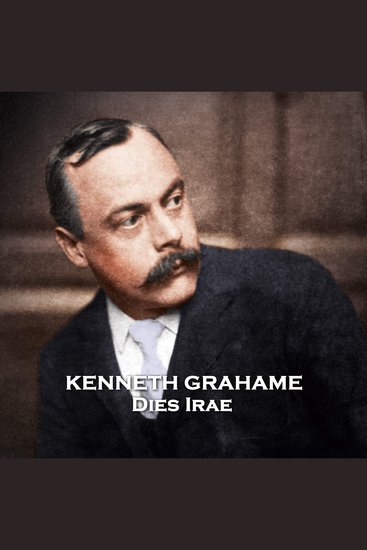
  • Dies Irae - From their pens to your ears genius in every story - cover

    Dies Irae - From their pens to...

    Kenneth Grahame

    • 0
    • 0
    • 0
    Kenneth Grahame was born on 8th March 1859 in Edinburgh. 
    At age 5 his mother succumbed to puerperal fever.  His father, who had a drinking problem, now sent his 4 children to live with their grandmother at her large house in Cookham, Berkshire. Here the children lived in large open grounds next to the river.  These early experiences would in later years, be retold in his writing through a myriad of characters. 
    Grahame loved being a pupil at St Edward's School, Oxford and wanted to enroll at the university there but his guardian demurred on account of the cost. 
    Instead, a banking career was chosen for him, starting in 1879 at the Bank of England, where he rose steadily to the rank of its Secretary until retiring, with a pension, in 1908 due to ill health. 
    Alongside his commercial career Grahame had written and published various stories and essays in several periodicals. Some were anthologized as ‘Pagan Papers’ in 1893, and two years later ‘The Golden Age’ and later still ‘Dream Days’ and its masterpiece ‘The Reluctant Dragon’ became part of many home libraries.  His ability to view life through the lens of a young and curious child was superb, enabling the reader to easily identify with the character.   
    Grahame married Elspeth Thomson in 1899 and they had one child; Alastair, born semi-blind and plagued by health problems.  In a heart-rending tragedy he would later take his own life whilst attending Oxford University in 1920.   
    In 1908 Grahame reworked many of the bedtime stories he had fashioned for his son into the enduring favourite; ‘The Wind in the Willows’, describing the heart-warming adventures of Mr Toad and his friends.   
    Kenneth Grahame died in Pangbourne, Berkshire, on 6th July 1932.
    Mostra libro
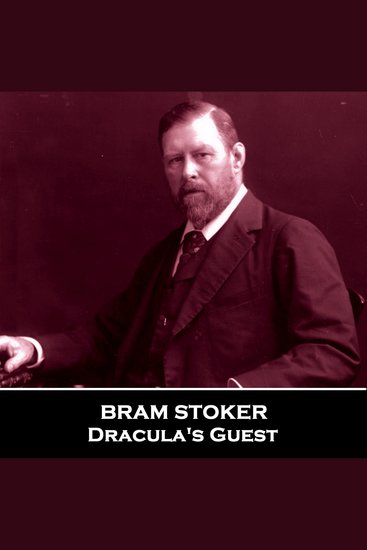
  • Dracula's Guest - From their pens to your ears genius in every story - cover

    Dracula's Guest - From their...

    Bram Stoker

    • 0
    • 0
    • 0
    Abraham Stoker was born in Dublin, Ireland on the 8th of November 1847, the third of seven children.  
    His early years were plagued with such ill-health that he was unable to start school until the age of seven.  He turned the long periods of recovery into an opportunity for thinking and said “I was naturally thoughtful, and the leisure of long illness gave opportunity for many thoughts which were fruitful according to their kind in later years”.  
    Strikingly at Trinity College, Dublin his health had returned with such vigour that he was named their University Athlete whilst also achieving a BA in Mathematics with honours.  
    At this time his interest in theatre became a job offer to be the Dublin Evening Mail’s theatre critic, co-owned by Sheridan Le Fanu.  He now began to also write short stories and in 1872 ‘The Crystal Cup’ was published.  An interest in art developed and he co-founded the Dublin Sketching Club.  
    In 1878 came marriage to Florence Balcombe.  She had formerly been courted by Stoker’s acquaintance, Oscar Wilde.  The marriage produced one child.   
    Stoker had some years before reviewed Henry Irving’s Hamlet and had dined with him.  That friendship now resulted in a proposal from Irving to move to London and to manage his Lyceum Theatre.  His numerous commercial innovations ensured both he and the theatre thrived.  Irving would also often take Stoker with him when he toured abroad. 
    Despite this busy life Stoker continued to write and these works paved the way for his most famous creation, published in 1897, ‘Dracula’.  It is rightly recognised as one of the greatest horror novels of all time and although not the first with a theme of Vampires, it is undoubtedly the most well-known. 
    Stoker also wrote poetry and many excellent short stories and continued to write novels and other works throughout his career. 
    Politically Stoker supported Home Rule, though only by peaceful means.  He was also keen on following scientific trends particularly in medicine. 
    In 1902 his tenure at the Lyceum Theatre ended and although he continued to write his health was deteriorating, mainly due to a series of debilitating strokes. 
    Bram Stoker died on the 20th April 1912, in Pimlico, London.  He was 64.
    Mostra libro