Unisciti a noi in un viaggio nel mondo dei libri!
Aggiungi questo libro allo scaffale
Grey
Scrivi un nuovo commento Default profile 50px
Grey
Iscriviti per leggere l'intero libro o leggi le prime pagine gratuitamente!
All characters reduced
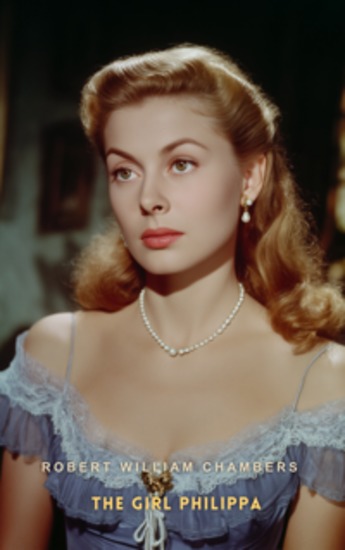
The Girl Philippa - cover

The Girl Philippa

Robert William Chambers

Casa editrice: Interactive Media

  • 0
  • 0
  • 0

Sinossi

In this lively romance of intrigue and independence, Philippa, a spirited young woman with artistic ambitions, becomes entangled in social scandal and hidden dangers after crossing paths with a principled diplomat. As secrets surface and reputations tremble, she must rely on her wit and courage to navigate ambition, loyalty, and unexpected love, ultimately discovering her own power and destiny.
Disponibile da: 20/11/2025.
Lunghezza di stampa: 478 pagine.

Altri libri che potrebbero interessarti

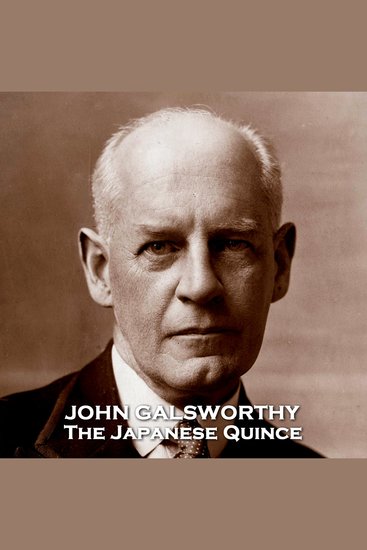
  • The Japanese Quince - From their pens to your ears genius in every story - cover

    The Japanese Quince - From their...

    John Galsworthy

    • 0
    • 0
    • 0
    John Galsworthy was born on the 14th August 1867 on the family estate, Parkfield, in Kingston-upon-Thames.  His family’s wealth came from the shipping industry 
    At age nine he began his education at Saugeen, a Bournemouth preparatory school, before moving to Harrow school in 1881, distinguishing himself as an athlete.  
    Galsworthy attended New College, Oxford to read law and left with a second-class degree with honours in 1889. The bar called him in 1890 but Galsworthy decided he would rather run the family’s shipping business. This also meant travelling to destinations such as Vancouver, South Africa and Australia. 
    In 1895 Galsworthy began a decade long affair with Ada Nemesis Pearson Cooper, the wife of his first cousin. It was only when, in 1905, she divorced and married Galsworthy that their affair became known. 
    His literary career began in 1897 with a short story volume, ‘From the Four Winds’, with the pseudonym John Sinjohn as were three further works. Under his own name, in 1904, came ‘The Island Pharisees’, a novel of social observation, seasoned with flashes of satire and propaganda. He also switched from small, independent publishers to the larger Heinemann and to whom he remained for the duration of his career. 
    1906 saw first major play, ‘The Silver Box’, and the novel ‘The Man of Property’. Each to considerable acclaim. The latter was the first in ‘The Forsyte Saga’ trilogy written between 1906 and 1921. It dealt with the questions of status, class and materialism through Soames Forsyte, who is acutely aware of his ‘new money’ status. Jealous of his wife, his machinations drive her into the arms of another. Soames engages in a terrible revenge with terrible consequences.  
    His social agenda was enlightened particularly in his condemnation over the use of solitary confinement in prisons, his attacks on theatrical censorship and campaigning for animal rights. 
    Galsworthy, having been passed over for active service, spent much of the First World War working as an orderly in a field hospital in France. 
    Despite his it was only in 1920 that he had his first blockbuster play ‘The Skin Game’, a melodrama dealing with ethics, property and class.  
    In 1920 ‘In Chancery’ also arrived with further discourse on the marital disharmony between Soames Forsyte and his wife.  
    The appreciation of his work gradually shifted from plays to novels, particularly through his detailing English social difference, tension and pretension with the Forsytes.  A second trilogy, ‘A Modern Comedy’, followed, examining his love for his daughter Fleur and the English commercial upper-middle class, its ideologies and Soames’ poisonous materialism.  
    Having rejected a knighthood in 1918 he was appointed, in 1929, to the Order of Merit. Galsworthy spent his last years writing a third Forsythe trilogy, ‘End of the Chapter’.   
    In 1932 he was awarded the Nobel Prize, but by now failing health meant he was too ill to attend the ceremony. 
    John Galsworthy died at his Hampstead home of a brain tumour on 31st January, 1933. He was cremated and his ashes scattered from an aeroplane over the South Downs.
    Mostra libro

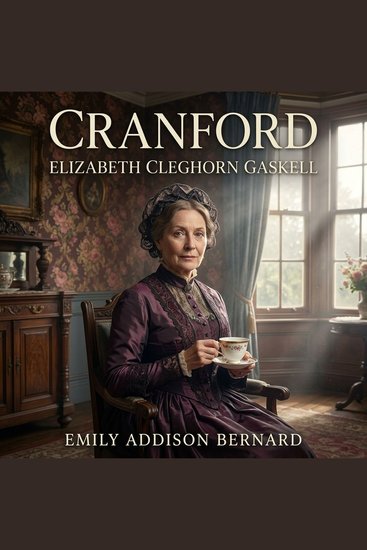
  • Cranford - Step into a society ruled by fiercely independent women in this heartwarming masterpiece of Classic Fiction Discover Elizabeth Gaskell's timeless tale of Victorian friendship secrets and survival - cover

    Cranford - Step into a society...

    Elizabeth Cleghorn Gaskell

    • 0
    • 0
    • 0
    Welcome to a town where men are an afterthought, and the women rule with elegant economy and iron wills. 
    In the quiet, provincial English town of Cranford, a formidable society of unmarried women and widows maintains the strict local social order. They are governed by rigid rules of propriety, observing everything with razor-sharp wit and masking their modest means behind a veil of aristocratic pride. But when the modern world begins to encroach—in the form of shocking male arrivals, scandalous romances, and the terrifying rumble of the new railway—the even tenor of Cranford life is thrown into sudden chaos. At the heart of it all is Miss Matty Jenkyns, a gentle soul hiding a quiet heartbreak, who must navigate personal tragedy and financial ruin while clinging to the unwavering support of her eccentric, fiercely loyal friends. 
    Why you will love this: This poignant and gently satirical gem of Classic Fiction is a masterful exploration of nineteenth-century female friendship, small town secrets, and the enduring power of community. Perfect for fans of Victorian literature, quiet domestic dramas, and stories of strong women defying societal expectations in rural England. Experience a lush, character-driven world full of humor, sorrow, and ultimate triumph. 
    Elizabeth Cleghorn Gaskell (1810-1865) was a prominent Victorian author known for her sharp social observation, psychological nuance, and compassionate portrayals of all classes of society. Her works cemented her legacy as one of the nineteenth century's most essential and beloved literary voices.
    Mostra libro
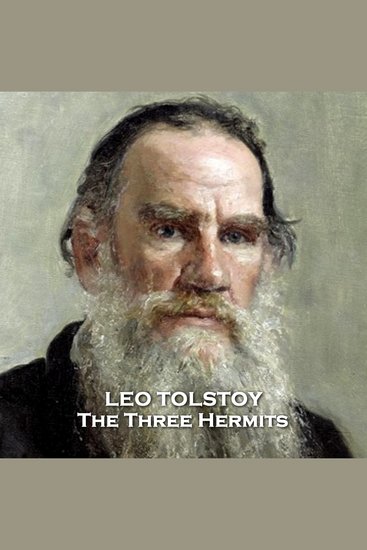
  • The Three Hermits - From their pens to your ears genius in every story - cover

    The Three Hermits - From their...

    Leo Tolstoy

    • 0
    • 0
    • 0
    Leo Tolstoy was born in 1828 in the Russian province of Tula to a wealthy noble family. As a child, he had private tutors but he showed little interest in any formal education. When he went to the University of Kazan in 1843 to study oriental languages and law, he left without completing his courses.  Life now was relaxed and idle but with some writing also taking place.  Gambling debts forced an abrupt change of path and he joined the army to fight in the Crimean War.  He was commended for his bravery and promoted but was appalled at the brutality and loss of life.  He recorded these and other earlier experiences in his diaries which formed the basis of several of his works. 
    In 1852 ‘Childhood’ was published to immediate success and was followed by ‘Boyhood’ and ‘Youth’. 
    His experience in the army and the horrors he witnessed resulted in ‘The Cossacks’ in 1862 and the trilogy ‘Sevastopol Tales’. After the war he travelled around Europe, visiting London and Paris and meeting such luminaries as Victor Hugo and Charles Darwin.  
    It was now that Tolstoy began his masterpiece, ‘War and Peace’. Published in 1869 it was an epic work that changed literature. He quickly followed this with ‘Anna Karenina’.  
    These successes made Tolstoy rich and helped him accomplish many of his dreams but also brought problems as he grappled with his faith and the lot of the oppressed poor. These revolutionary views became so popular that the authorities now kept him under surveillance.  
    He led a life of asceticism and vegetarianism and put his socialist ideals into practice by establishing numerous schools for the poor and food programmes. He also believed in giving away his wealth, which caused much discord with his wife.  
    His writing continued to bring forth classics such as ‘The Death of Ivan Ilyich’ and many brilliant and incisive short stories such as ‘How Much Land Does A Man Need’.  
    In 1901 Tolstoy was excommunicated from the Church and controversially deselected for the Nobel Prize for Literature. 
    Whilst undertaking a pilgrimage by train in October 1910 with his daughter Aleksandra he caught pneumonia in the nearby town of Astapovo.  Leo Tolstoy died on November 9th, 1910, he was 82.
    Mostra libro
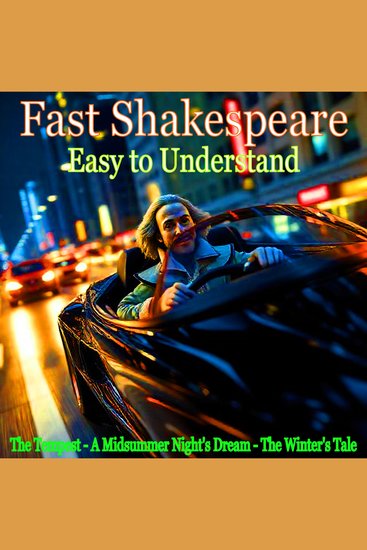
  • Fast Shakespeare – Easy to Understand (The Tempest - A Midsummer Night's Dream - The Winter's Tale) - cover

    Fast Shakespeare – Easy to...

    Charles Lamb, Mary Lamb

    • 0
    • 0
    • 0
    Fast Shakespeare – Easy to Understand 
    By Charles Lamb (1775–1834) and Mary Lamb (1764–1847) 
     
    This collection of tales offers a clear and approachable introduction to Shakespeare’s works. Whenever possible, the authors weave in Shakespeare’s own words, preserving the beauty of his language while shaping the plays into connected, easy-to-follow stories. Great care was taken to avoid modern expressions that might disrupt the timeless rhythm of Elizabethan English, ensuring young readers experience the richness of Shakespeare’s style in a way that feels both authentic and accessible. 
     
    The Tempest - A Midsummer Night's Dream - The Winter's Tale
    Mostra libro
  • The Advanced Lady - cover

    The Advanced Lady

    Katherine Mansfield

    • 0
    • 0
    • 0
    The Advanced Lady is a short story by Katherine Mansfield: “Do you think we might ask her to come with us,” said Fräulein Elsa, retying her pink sash ribbon before my mirror. “You know, although she is so intellectual, I cannot help feeling convinced that she has some secret sorrow. And Lisa told me this morning, as she was turning out my room, that she remains hours and hours by herself, writing; in fact Lisa says she is writing a book! I suppose that is why she never cares to mingle with us, and has so little time for her husband and the child.”
    Mostra libro
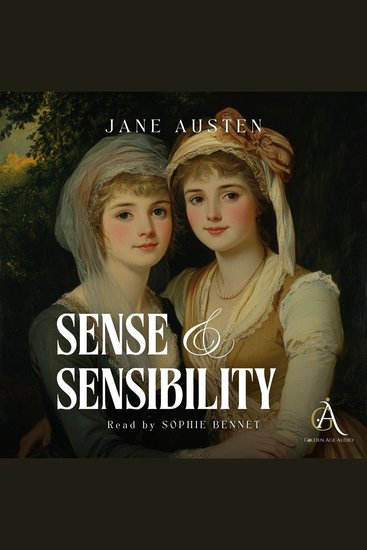
  • Sense and Sensibility - Audiobook - cover

    Sense and Sensibility - Audiobook

    Jane Austen, Classic Audiobooks,...

    • 0
    • 0
    • 0
    Sense and Sensibility follows the contrasting lives of the Dashwood sisters, Elinor and Marianne, as they navigate love, heartbreak, and societal expectations in early 19th-century England. Elinor, the embodiment of sense, values reason, restraint, and propriety, while Marianne, representing sensibility, is ruled by passion, emotion, and romantic idealism.Through their experiences with love — including disappointment, betrayal, and eventual self-discovery — Austen explores the balance between emotion and logic, personal happiness and social obligation. With wit and subtle irony, the novel critiques the limited roles of women and the importance of wealth and marriage in determining one's fate.
    Mostra libro