Unisciti a noi in un viaggio nel mondo dei libri!
Aggiungi questo libro allo scaffale
Grey
Scrivi un nuovo commento Default profile 50px
Grey
Iscriviti per leggere l'intero libro o leggi le prime pagine gratuitamente!
All characters reduced
Special messenger - cover

Special messenger

Robert W. Chambers

Casa editrice: DD Sales & Distributors

  • 0
  • 0
  • 0

Sinossi

Chambers was born in Brooklyn, New York, to William P. Chambers (1827–1911), a corporate and bankruptcy lawyer, and Caroline Smith Boughton (1842–1913). His parents met when his mother was twelve years old and William P. was interning with her father, Joseph Boughton, a prominent corporate lawyer. Eventually the two formed the law firm of Chambers and Boughton which continued to prosper even after Josephs death in 1861. Robert Chamberss great-grandfather, William Chambers (birth unknown), a lieutenant in the British Royal Navy, was married to Amelia Saunders (1765–1822), a great granddaughter of Tobias Saunders of Westerly, Rhode Island. The couple moved from Westerly to Greenfield, Massachusetts and then to Galway, New York, where their son, also William Chambers (1798–1874), was born. The second William graduated from Union College at the age of 18, and then went to a college in Boston, where he studied medicine. Upon graduating, he and his wife, Eliza P. Allen (1793–1880), a direct descendant of Roger Williams, the founder of Providence, Rhode Island, were among the first settlers of Broadalbin, New York. His brother was the architect Walter Boughton Chambers.
Disponibile da: 28/03/2019.
Lunghezza di stampa: 164 pagine.

Altri libri che potrebbero interessarti

  • Anathema - From their pens to your ears genius in every story - cover

    Anathema - From their pens to...

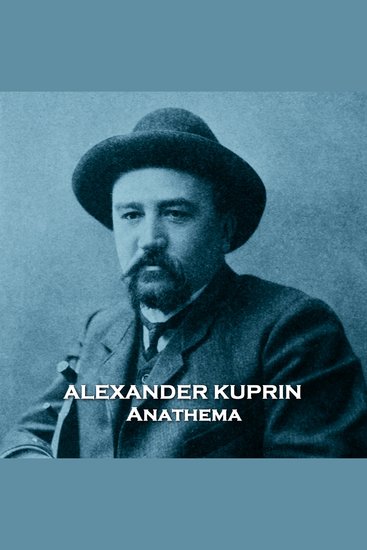
    Alexandr Kuprín

    • 0
    • 0
    • 0
    Alexander Kuprin was born in Narovchat, Penza in Russia on 7th September 1870. 
    At 3 his Father died and he and mother moved to Moscow. By 10 he was enrolled at the Second Moscow Military High School and there his interest in literature began. The Alexander Military Academy followed and two years later he was a sub-lieutenant and posted to an Infantry Regiment for a further four years. 
    Despite his duties he was a now a keen writer and published his first short story at this time. His military duties also garnered him experiences for his breakthrough work ‘The Duel’.  Leaving the military he left for Kiev to work for local newspapers.  He continued to publish both stories and novels and by 1901 he was in St Petersburg becoming part of a group that included Chekhov, Ivan Bunin, Maxim Gorky and Leonid Andreyev.  
    In the years that followed further controversial works and acclaim followed.  His comments on the regime meant he was also put under secret police surveillance.   
    As World War I erupted, Kuprin opened a military hospital but was then given command of an infantry company in Finland. He was soon discharged on grounds of ill health.  
    The October Revolution saw him praise Lenin, but he warned that the Bolsheviks threatened Russian culture and might cause further widespread suffering to the peasants.  As Civil War raged he took his family to Helsinki and then on to Paris. 
    Exile saw his talents decline further and his succumbing to alcoholism. He became lonely and withdrawn. The family's poverty increased his malaise.   
    In May 1937, the Kuprin’s returned to Moscow.  He now saw his work published but wrote almost nothing new.  In 1938 his health rapidly deteriorated.  Already suffering from a kidney problems and sclerosis, he had now developed cancer of the oesophagus.  
    Alexander Kuprin died on 25th August 1938.
    Mostra libro
  • The Adventures of Roderick Random - A classic Picaresque Novel of rogue survival revenge and highway adventure in 18th-century Britain Join an outcast hero on an uproarious perilous journey from rags to high-stakes redemption - cover

    The Adventures of Roderick...

    Tobias Smollett

    • 0
    • 0
    • 0
    A treacherous birthright, a cutthroat world, and an underdog determined to conquer it all. 
    Born into poverty after being disowned by his cruel aristocratic grandfather, young Roderick Random is thrust into the unforgiving landscape of 18th-century Britain. Stripped of his rightful fortune and armed with nothing but a sharp wit and fierce pride, he embarks on a dizzying journey alongside his loyal but timid companion, Hugh Strap. From the merciless beatings of a tyrannical schoolmaster to terrifying nighttime encounters with desperate highwaymen and deceitful charlatans, Roderick must navigate a society rigged to crush the poor. 
    As his wealthy, spoiled cousins conspire against his very survival, and his only protector—a rugged, fiercely loyal sea-captain uncle—is forced to flee after a deadly duel, Roderick's quest for vengeance, prosperity, and a place in the world hangs by a fragile thread. 
    Why you will love this: As a foundational masterpiece of the Picaresque Novel genre, this gripping historical audiobook brims with dark humor, episodic rogue adventures, and razor-sharp social satire. If you love classic literary fiction featuring resilient antiheroes, thrilling highwaymen robberies, raucous tavern escapades, and a vast cast of eccentric archetypes, this epic coming-of-age journey offers pure, unadulterated storytelling magic. 
    Tobias Smollett (1721–1771) was a legendary Scottish poet and author whose darkly comedic, visceral depictions of gritty societal realities and maritime life profoundly influenced the modern English novel, inspiring literary giants like Charles Dickens and George Orwell.
    Mostra libro
  • Arcadian Adventures with the Idle Rich - Plutoria Avenue and Its Mausoleum Club - cover

    Arcadian Adventures with the...

    Stephen Leacock

    • 0
    • 0
    • 0
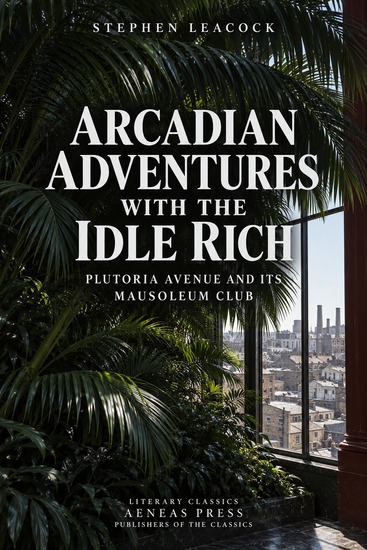
    Plutoria Avenue: a university that sells its soul for an endowment, two churches that merge for financial reasons, a mystic who fleeces the ladies' lunch club, and a clean-government campaign run by the men it is meant to expose. Leacock ran the economics department at McGill by day and claimed the humour paid better; this 1914 companion to Sunshine Sketches turns the same eye on the rich, and the knife goes in much deeper. Fifty-seven plates by painters from Hogarth to Bellows, all clubs and supper tables and family gatherings, give Leacock's idle rich a visual ancestry stretching back two centuries.
    Mostra libro
  • A Matter of Fact - cover

    A Matter of Fact

    Rudyard Kipling

    • 0
    • 0
    • 0
    Three journalists witness the unbelievable. Their biggest problem is not surviving it—it is convincing anyone else that it happened. 
     
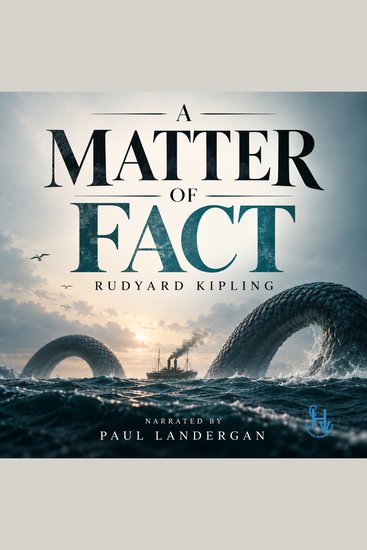
    Traveling from Cape Town to England aboard a small tramp steamer, three newspapermen expect an uneventful voyage home. Instead, a violent underwater disturbance sends a colossal wave across the sea and brings something extraordinary to the surface. 
     
    There, beside the ship, the men witness a massive sea creature unlike anything known to science. 
     
    For the journalists, the encounter should be the story of a lifetime. But once the danger has passed, another problem emerges: how do you report a truth so incredible that no reasonable reader will believe it? 
     
    As Keller, Zuyland, and the narrator debate evidence, credibility, sensationalism, and the expectations of the newspaper-reading public, Rudyard Kipling turns a fantastic maritime encounter into a sharp and witty meditation on journalism, storytelling, and the strange relationship between fact and fiction. 
     
    First published in 1892 and later collected in Many Inventions, A Matter of Fact blends sea adventure, speculative fiction, humor, and literary satire into one of Kipling’s most unusual short stories. 
     
    Narrated by Paul Landergan.
    Mostra libro
  • Futility - cover

    Futility

    William Gerhardie

    • 0
    • 0
    • 0
    Andrei Andreiech, a young Russian-English man, finds himself in the company of the three lovely daughters of the Bursanov family. Their father, Nikolai Vasilievich, is a man of potential means, but besides a large house most of his wealth is tied up in a series of non-productive Siberian goldmines. Still, the possibility of future income is enough to keep him afloat, along with his daughters, his lover, his ex-wife, and a whole series of extended family members and hangers-on. Both Nikolai and his retinue seem locked into a holding pattern, their lives unable to progress without some inflection point that never seems to arrive. Futility is William Gerhardie's first novel, published while he was attending Oxford after a stint in the British army. Like his protagonist, he was born and raised in Russia, then joined the English army as an officer, but he was careful to note that "the 'I' of this book is not me." The book was critically acclaimed: both Evelyn Waugh and H. G. Wells championed him, and Edith Wharton wrote a preface for this edition. It has been cited as one of the earliest appearances of a theme that would become recurrent in twentieth century literature: that of "waiting" (a theme made most famous in Beckett's Waiting for Godot ). William Gerhardie (died 1977) was a significant literary figure of the 20th century. Their work has endured across generations and continues to be read and studied worldwide. As a work of classic literary fiction, Futility exemplifies the narrative craft and social insight that defined great storytelling of its era. Literary fiction of this period was characterized by careful attention to character psychology, social milieu, and the moral questions that animated public discourse.
    Mostra libro
  • They Don't Wear Labels - From their pens to your ears genius in every story - cover

    They Don't Wear Labels - From...

    E M Delafield

    • 0
    • 0
    • 0
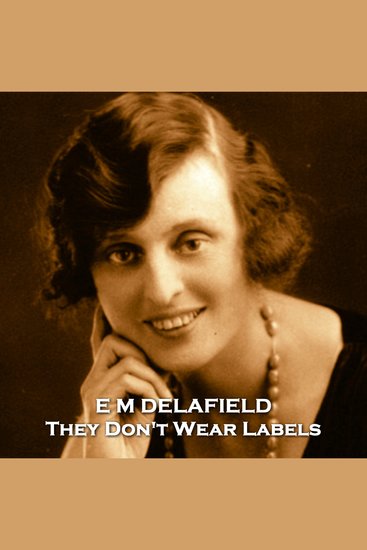
    Edmée Elizabeth Monica Dashwood, née de la Pasture, and more commonly known as E M Delafield, was born in Steyning, Sussex on 9th June 1890.   
    Raised in the fading years of the Victorian era with its Empire and strict moral codes Delafield, not yet married at twenty-one, joined a French religious order, in Belgium, but soon decided that this was a totally wrong choice for her.   
    Her next challenge was her work during the horror of the First World War.  Delafield decided to take up a position as a nurse in a Voluntary Aid Detachment in Exeter.  It was whilst here that she managed to write her first novel, ‘Zella Sees Herself’.   
    With the end of the war new opportunities were sought and she now took up a position for the South-West Region of the Ministry of National Service in Bristol.  With it came enough time to write two more novels: ‘The War Workers’ (1918) and ‘The Pelicans’ (1918).   
    On 17th July 1919, she married Colonel Arthur Paul Dashwood, OBE, an engineer responsible for building the massive docks at Hong Kong Harbour.  The marriage produced two children; Lionel and Rosamund.  That same year her fourth novel, ‘Consequences’, was published.   
    The couple spent their early years in Malaya but returned to England to live in Croyle, an old house in Kentisbeare, Devon.  Delafield continued to collect responsibilities and organise whatever she could.  At the initial meeting of the Kentisbeare Women's Institute, Delafield was unanimously elected president, and also became a Justice of the Peace, raised the children and, of course, continued to write her best-selling novels.   
    Her greatest work is undoubtedly the largely autobiographical ‘Diary of a Provincial Lady’, which is a simply structured journal of the life of an upper-middle class Englishwoman, living mostly in a Devon village of the 1930s.  It spawned several best-selling sequels.  Her works also includes stage and radio plays, film scripts and short stories.  
    After the death of her son in 1940, her health began to markedly decline.    
    E M Delafield died on 2nd December 1943 after collapsing whilst giving a lecture in Oxford.  She was 53.
    Mostra libro