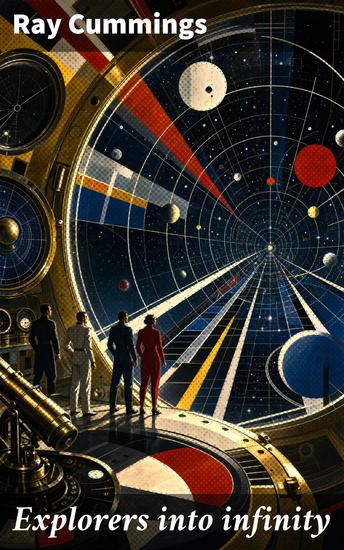
Explorers into infinity
Ray Cummings
Casa editrice: Good Press
Sinossi
Ray Cummings's Explorers into Infinity is a classic work of early twentieth-century science fiction, blending cosmic speculation, adventure narrative, and philosophical wonder. The novel follows daring voyagers beyond ordinary human limits, using the era's fascination with astronomy, dimensional theory, and technological possibility to imagine encounters with the unknown. Cummings writes in a vivid, energetic prose characteristic of pulp-era scientific romance, yet beneath its momentum lies a serious meditation on scale, perception, and humanity's place in an immeasurable universe. Its literary context is that of the interwar boom in speculative fiction, when writers transformed scientific curiosity into exhilarating imaginative literature. Cummings was one of the formative American science-fiction authors of the magazine age and worked for a time with Thomas Edison, an experience that sharpened his sense of invention and modernity. His fiction repeatedly explores invisible worlds, altered dimensions, and the instability of what seems real. Explorers into Infinity reflects both his fascination with scientific frontiers and the broader cultural excitement of a period in which new discoveries invited writers to rethink space, time, and human destiny. This book is especially recommended to readers interested in the origins of modern science fiction. It offers not only entertainment but a revealing glimpse into the imaginative ambitions of early speculative literature, where wonder, science, and metaphysical curiosity converge.
Disponibile da: 29/06/2026.
Lunghezza di stampa: 63 pagine.