Unisciti a noi in un viaggio nel mondo dei libri!
Aggiungi questo libro allo scaffale
Grey
Scrivi un nuovo commento Default profile 50px
Grey
Iscriviti per leggere l'intero libro o leggi le prime pagine gratuitamente!
All characters reduced
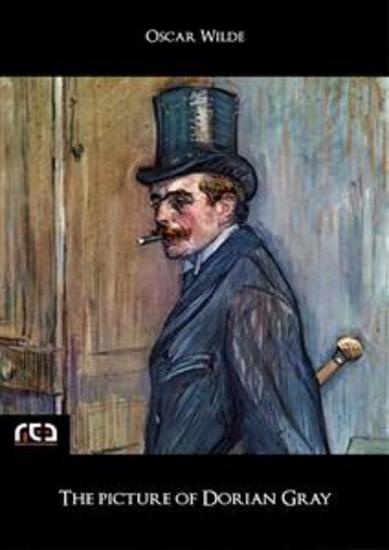
The picture of Dorian Gray - cover

The picture of Dorian Gray

Oscar Wilde

Casa editrice: REA Multimedia

  • 0
  • 0
  • 0

Sinossi

The Picture of Dorian Gray is a philosophical novel by Irish writer Oscar Wilde. The story revolves around a portrait of Dorian Gray painted by Basil Hallward, a friend of Dorian's and an artist infatuated with Dorian's beauty. Through Basil, Dorian meets Lord Henry Wotton and is soon enthralled by the aristocrat's hedonistic worldview: that beauty and sensual fulfillment are the only things worth pursuing in life. Newly understanding that his beauty will fade, Dorian expresses the desire to sell his soul, to ensure that the picture, rather than he, will age and fade. The wish is granted, and Dorian pursues a libertine life of varied amoral experiences while staying young and beautiful; all the while, his portrait ages and visually records every one of Dorian's sins.
Disponibile da: 03/07/2023.

Altri libri che potrebbero interessarti

  • The Jelly-Bean - cover

    The Jelly-Bean

    F. Scott Fitzgerald

    • 0
    • 0
    • 0
    The Jelly-Bean - one of the stories, which entered in a collection of eleven short stories by F. Scott Fitzgerald "Tales of the Jazz Age" (1922). 
    This is a Southern story, with the setting laid in the small Lily of Tarleton, Georgia. Fitzgerald wrote that he had "a profound affection for Tarleton, but somehow whenever I write a story about it I receive letters from all over the South denouncing me in no uncertain terms." Written shortly after his first novel was published, the author also collaborated with his wife on certain scenes.
    The story momentarily follows the life of a "jelly-bean", or idler, named Jim Powell. An invitation to a dance with the old crowd revives his dreams of social advancement and love, until the consequences of drink and power of money come through and ruin them.
    Mostra libro
  • Reprinted Pieces (Unabridged) - cover

    Reprinted Pieces (Unabridged)

    Charles Dickens

    • 0
    • 0
    • 0
    There was once a child, and he strolled about a good deal, and thought of a number of things. He had a sister, who was a child too, and his constant companion. These two used to wonder all day long. They wondered at the beauty of the flowers; they wondered at the height and blueness of the sky; they wondered at the depth of the bright water.
    Mostra libro
  • Short History Of England A (Unabridged) - cover

    Short History Of England A...

    G. K. Chesterton

    • 0
    • 0
    • 0
    G.K. Chesterton was one of the towering figures of British literature in the early twentieth century. A man of massive size, massive personality, and massive appetite, Chesterton famous personality, dress, and personality gave rise to an eponymous adjective: Chestertonian. Although he is renowned for the Father Brown detective series, Chesterton also wrote volumes of nonfiction. First published in 1917, A Short History of England is exactly that, serving Chesterton's goal of publishing "a popular book of history written from the standpoint of a member of the public." Filled with Chestertonian wit, the fast-moving history includes such gemlike observations as, Henry VIII "was almost as unlucky in his wives as they were in their husband." Of the great late Victorian/Edwardian trio of wits: George Bernard Shaw, Oscar Wilde, and Chesterton himself, it is Chesterton whose body of work -- writing in an unassuming manner, without great pretension may well persist for future generations far longer than its charming, genial author ever imagined.
    Mostra libro
  • 3 Stories - Set in Summer - A trio of classic tales perfect for a commute walk or quiet night in - cover

    3 Stories - Set in Summer - A...

    Virginia Woolf, W F Harvey,...

    • 0
    • 0
    • 0
    There is something about the number 3.    
     
    The Ancient Greeks believed 3 was the perfect number, and in China 3 has always been a lucky number, and they know a thing or two.   
     
    Most religions also have 3 this and 3 that and, of course, in these more modern times, three’s a crowd may be too many, except when it’s a ménage à trois.  It seems good things usually come in threes. 
     
    Whatever history and culture says WE think 3, a hat-trick of stories, is a great number to explore themes and literary avenues that classic authors were so adept at creating. 
     
    From their pens to your your ears.   
     
    01 - 3 Stories - Set in Summer 
    02 - August by Bruno Schulz 
    03 - August Heat by W F Harvey 
    04 - Kew Gardens by Virginia Woolf
    Mostra libro
  • Who Are the Living? - Weird story delving into the fear of the unknown - cover

    Who Are the Living? - Weird...

    Clark Ashton Smith

    • 0
    • 0
    • 0
    The bookshelves of American literature are incredible collections that have gathered together centuries of very talented authors.  From this continent their fame spread and whilst among their number many are now forgotten or neglected their talents endure.  Among them is Clark Ashton Smith.
    Mostra libro
  • Les Misérables - Volume 5: Jean Valjean (Unabridged) - cover

    Les Misérables - Volume 5: Jean...

    Victor Hugo

    • 0
    • 0
    • 0
    Victor-Marie Hugo (26 February 1802 - 22 May 1885) was a French poet, novelist, essayist, playwright, and dramatist of the Romantic movement. During a literary career that spanned more than sixty years, he wrote abundantly in an exceptional variety of genres: lyrics, satires, epics, philosophical poems, epigrams, novels, history, critical essays, political speeches, funeral orations, diaries, and letters public and private, as well as dramas in verse and prose.
    VOLUME 5: JEAN VALJEAN: The two most memorable barricades which the observer of social maladies can name do not belong to the period in which the action of this work is laid. These two barricades, both of them symbols, under two different aspects, of a redoubtable situation, sprang from the earth at the time of the fatal insurrection of June, 1848, the greatest war of the streets that history has ever beheld.
    Mostra libro