Begleiten Sie uns auf eine literarische Weltreise!
Buch zum Bücherregal hinzufügen
Grey
Einen neuen Kommentar schreiben Default profile 50px
Grey
Jetzt das ganze Buch im Abo oder die ersten Seiten gratis lesen!
All characters reduced
The Picture of Dorian Gray - Hyperlegible Font for Low Vision Readers - cover

The Picture of Dorian Gray - Hyperlegible Font for Low Vision Readers

Oscar Wilde

Verlag: FV Éditions

  • 0
  • 0
  • 0

Beschreibung

*** Atkinson Hyperlegible is a typeface created in partnership with Braille Institute. It has been developed specifically to increase legibility for readers with low vision, and to improve comprehension ***

"How sad it is!" murmured Dorian Gray with his eyes still fixed upon his own portrait. "How sad it is! I shall grow old, and horrible, and dreadful. But this picture will remain always young. It will never be older than this particular day of June. … If it were only the other way! If it were I who was to be always young, and the picture that was to grow old! For that—for that—I would give everything! Yes, there is nothing in the whole world I would not give! I would give my soul for that!"

The Picture of Dorian Gray is a classic philosophical novel that explores themes of aestheticism and double lives. It is the only novel written by Wilde, and one of his major and most controversial works.
Verfügbar seit: 03.05.2022.
Drucklänge: 568 Seiten.

Weitere Bücher, die Sie mögen werden

  • Prophet the - cover

    Prophet the

    Kahlil Gibran

    • 0
    • 0
    • 0
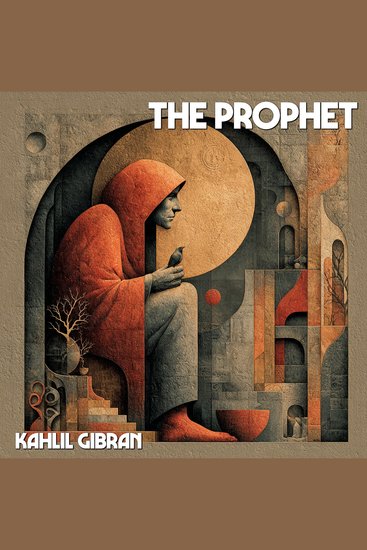
    Brought to you by Altrusian Grace Media and narrated by Matthew Schmitz. Gibran’s book follows the final hours of the prophet Almustafa as he prepares to depart the city of Orphalese, offering distilled reflections on the fundamental forces of human existence—love, work, joy, sorrow, freedom, self-knowledge, and death. Each teaching arises from direct insight rather than doctrine, presenting life as an interwoven field of opposites whose tensions refine the soul. The text unfolds as a sequence of poetic addresses that cut through sentiment and moralism, pointing the reader toward inward clarity and responsibility.
    Zum Buch
  • The Ugly Duckling and Other Stories - cover

    The Ugly Duckling and Other Stories

    Hans Christian Andersen

    • 0
    • 0
    • 0
    First published as "Den Grimme Ælling" in 1843, The Ugly Duckling is one of the best-known and well-loved fairy tales of the Danish poet and author Hans Christian Andersen. An unusual looking young duck is bullied by the other barnyard inhabitants and wanders the world trying to find where he can fit in. This collection also includes The Naughty Boy, The Leaping Match and Sunshine Stories.
    Zum Buch
  • Selected Works of Edgar Allan Poe - cover

    Selected Works of Edgar Allan Poe

    Edgar Allan Poe

    • 0
    • 0
    • 0
    Opening with the poem that made Poe a household name overnight, this collection of his short works includes the narrative poem "The Raven", the short story "The Fall of the House of Usher", and the first of Poe's "ratiocination" tales: "The Murders in the Rue Morgue", featuring the first of the fictional detectives: C. Auguste Dupin. From there we encounter the horror classics: The Pit & the Pendulum, the Cask of Amontillado and the Masque of the Red Death, and the Tell Tale Heart, before finishing with another tale of C. Auguste Dupin: The Purloined Letter. 
    Narrated by Michael Ward.
    Zum Buch
  • Wheels of Chance The (Unabridged) - cover

    Wheels of Chance The (Unabridged)

    H. G. Wells

    • 0
    • 0
    • 0
    A humorous account of a young man's cycling holiday in the south of England. By the author of The Time Machine, The Invisible Man and The War of the Worlds.
    Zum Buch
  • Around the World in Eighty Days - Audiobook - cover

    Around the World in Eighty Days...

    Jules Verne, Classic Audiobooks,...

    • 0
    • 0
    • 0
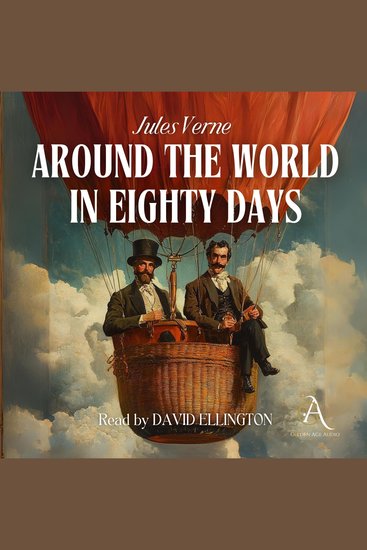
    Jules Verne's Around the World in Eighty Days is a thrilling adventure novel that follows the unshakable English gentleman Phileas Fogg as he attempts to circumnavigate the globe in just eighty days to win a wager. Accompanied by his loyal French valet, Passepartout, Fogg races against time using steamships, trains, elephants, and even sledges, navigating unexpected obstacles and cultural encounters across continents. Set in the late 19th century, this novel is both a celebration of technological progress and a timeless story of determination, precision, and courage.Verne masterfully blends humor, suspense, and exotic settings, offering readers a whirlwind tour of the world through the lens of a man who never loses his composure. The novel remains one of the most beloved works of classic adventure literature and continues to captivate readers of all ages.
    Zum Buch
  • A Man with Two Lives - From their pens to your ears genius in every story - cover

    A Man with Two Lives - From...

    Ambrose Bierce

    • 0
    • 0
    • 0
    Ambrose Gwinnett Bierce was born on 24th June 1842 at Horse Cave Creek in Meigs County, Ohio. His parents were poor but they introduced him to literature at an early age, instilling in him a deep appreciation of books, the written word and the elegance of language.  
    Growing up in Koscuisko County, Indiana poverty and religion were defining features of his childhood, and he would later describe his parents as “unwashed savages” and fanatically religious, showing him little affection but always quick to punish. He came to resent religion, and his introduction to literature appears to be their only positive effect. 
    At age 15 Bierce left home to become a printer’s devil, mixing ink and fetching type at The Northern Indian, a small Ohio paper. Falsely accused of theft he returned to his farm and spent time sending out work in the hopes of being published. 
    His Uncle Lucius advised he be sent to the Kentucky Military Institute. A year later he was commissioned as an Officer.  As the Civil War started Bierce enlisted in the 9th Indiana Infantry Regiment.  
    In April 1862 Bierce fought at the Battle of Shiloh, an experience which, though terrifying, became the source of several short stories. Two years later he sustained a serious head wound and was off duty for several months. He was discharged in early 1865.  
    A later expedition to inspect military outposts across the Great Plains took him all the way to San Francisco. He remained there to become involved with publishing and editing and to marry, Mary Ellen on Christmas Day 1871.  They had a child, Day, the following year.  
    In 1872 the family moved to England for 3 years where he wrote for Fun magazine. His son, Leigh, was born, and first book, ‘The Fiend’s Delight’, was published.  
    They returned to San Francisco and to work for a number of papers where he gained admiration for his crime reporting. In 1887 he began a column at the William Randolph Hearst’s San Francisco Examiner.  
    Bierce’s marriage fell apart when he discovered compromising letters to his wife from a secret admirer. The following year, 1889 his son Day committed suicide, depressed by romantic rejection. 
    In 1891 Bierce wrote and published the collection of 26 short stories which included ‘An Occurrence at Owl Creek Bridge’.  Success and further works including poetry followed.  
    Bierce with Hearst’s resources helped uncover a financial plot by a railroad to turn 130 million dollars of loans into a handout. Confronted by the railroad and asked to name his price Bierce answered “my price is $130 million dollars. If, when you are ready to pay, I happen to be out of town, you may hand it over to my friend, the Treasurer of the United States”.  
    He now began his first foray as a fabulist, publishing ‘Fantastic Fables’ in 1899.  But tragedy again struck two years later when his second son Leigh died of pneumonia relating to his alcoholism.  
    He continued to write short stories and poetry and also published ‘The Devil’s Dictionary’.  
    At the age of 71, in 1913 Bierce departed from Washington, D.C., for a tour of the battlefields where he had fought during the civil war. At the city of Chihuahua he wrote his last known communication, a letter to a friend. It’s closing words were “as to me, I leave here tomorrow for an unknown destination,” Ambrose Bierce then vanished without trace.
    Zum Buch