Unisciti a noi in un viaggio nel mondo dei libri!
Aggiungi questo libro allo scaffale
Grey
Scrivi un nuovo commento Default profile 50px
Grey
Iscriviti per leggere l'intero libro o leggi le prime pagine gratuitamente!
All characters reduced
The Canterville Ghost - A Haunting Tale - cover

The Canterville Ghost - A Haunting Tale

Oscar Wild, Zenith Crescent Moon Press

Casa editrice: Zenith Crescent Moon Press

  • 0
  • 0
  • 0

Sinossi

👻 Experience the Charm of Wilde's Wit and Ghostly Humor! 👻

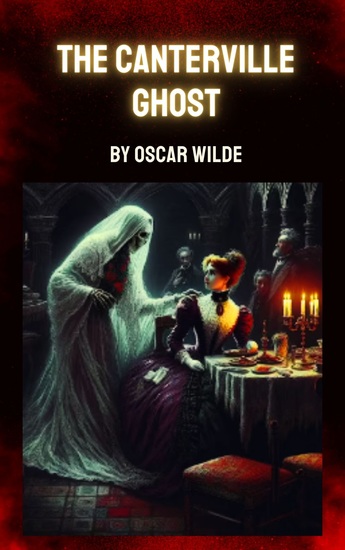
Step into the spooky yet comical world of Oscar Wilde's "The Canterville Ghost", a delightful short story that blends ghostly apparitions with satirical humor. This eBook invites you to discover the misadventures of a ghostly apparition and the American family that moves into his haunted mansion. 🌟

📖 What Awaits You 📖

Meet Sir Simon, the tormented ghost haunting Canterville Chase, and the fun-loving Otis family who isn't the least bit scared 🕯️🏰

Enjoy Wilde's clever commentary on British and American culture and societal norms 🎩🇺🇸

Revel in the humorous and heartwarming interactions between the ghost and the Otis children 🌹👦👧

💬 Why Readers Are Enchanted 💬

"A brilliantly crafted tale that combines humor, satire, and a touch of spookiness. Wilde at his best" – [Testimonial]

"A must-read for anyone who loves a good ghost story with a twist of wit" – [Notable Mention]

💡 Ready for a Ghostly Adventure? 💡 Dive into the world of "The Canterville Ghost" and enjoy Wilde's masterful blend of comedy and supernatural charm. Get your copy today and let the haunting fun begin! 📘✨
Disponibile da: 13/03/2025.
Lunghezza di stampa: 37 pagine.


Altri libri che potrebbero interessarti

  • A Prelude - cover

    A Prelude

    D H Lawrence

    • 0
    • 0
    • 0
    'A Prelude' was written by D H Lawrence in 1907. It was the first of his sixty-seven short stories, all of which will be published individually in audio format by the Blackthorn Press. The story is set on a Nottinghamshire farm and tells the tale of two lovers, almost separated by class and money but brought together by passion and love.
    Mostra libro
  • Balkan Bombshells - Contemporary Women's Writing from Serbia and Montenegro - cover

    Balkan Bombshells - Contemporary...

    Will Firth

    • 0
    • 0
    • 0
    A collection to whet the appetite of anyone wishing to learn more about a region rich in history, folklore and (her)stories. Telling it like a woman does not mean literature for women only: it provides an insight into half of humanity, a window onto the lives of citizens who work, love and develop their inner lives. This collection brings together the voices of a wide selection of prize-winning and established authors:
    Balkan Bombshells brings together established Serbian and Montenegrin writers like Svetlana Slapšak, Jelena Lengold (winner of the EU Prize for Literature 2013), Dana Todorović and Olja Kneżević (author of Catherine the Great and the Small, Istros 2020), together with a select group of up-coming writers: Marijana Čanak (1982, Serbia): "Awakened" (Probuđena) follows the early years of a girl from a very simple background, who discovers she has extrasensory powers. A gruesome fascination with biology allows her to attend high school, where she ends up sewing a voodoo doll to take revenge on a molesting teacher. Marijana Dolić (1990, Bosnia-Herzegovina & Serbia): "Notes from the attic" (Zapisi iz potkrovlja), originally diary entries, are intense mediatations on faith, love and hope – poignant testimony to a struggle to cope in difficult times. Ana Miloš (1992, Serbia): "Peace" (Mir) portrays a woman struggling with disparate feelings after her only child dies. She has long since broken up with the child's father. She enjoys finally having time for herself, but she has to confront accusations of people around her that she is heartless. Once a mother, always a mother? Katarina Mitrović (1991, Serbia):"Small death" (Mala smrt). We are introduced to a fearful young woman who is far from happy with life, and we follow her on a summer holiday by the Adriatic, where a halfhearted romantic adventure takes a scary turn. Andrea Popov Miletić (1985, Serbia):|: excerpt from the novel Young pioneers, we are seaweed (Pioniri maleni, mi smo morska trava; 2019). This stand-alone excerpt is a poetic flashback to her childhood in the province of Vojvodina in the Yugoslav era, to holidays by the Mediterranean, and to feelings of belonging and home. Lena Ruth Stefanović (1970, Sebria/ Montenegro): "Zhenya" is a fragment from her 2016 novel Daughter of the Childless Man (Šćer onoga bez đece), is an entertaining meta-story about an ordinary woman in the late Soviet Union, whom the author decides to grant a new lease of life, so Zhenya studies languages, becomes a mondain writer and moves with her new husband to Montenegro, where the author loses track of her.
    Mostra libro
  • Sister Agnes - cover

    Sister Agnes

    Mai Redding

    • 0
    • 0
    • 0
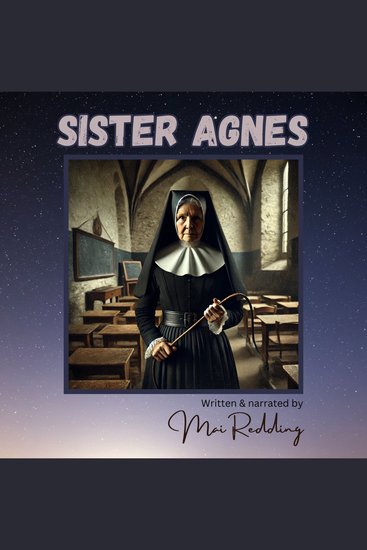
    Saint Michael’s Academy for Girls was a place of strict discipline, ruled by the fearsome Sister 
    Agnes. Rumors of missing students and cruel punishments haunted its halls, but no one truly 
    believed them, until Emily’s small mistake drew the nun’s attention. As strange disappearances 
    continued, a group of students uncovered a chilling secret. 
    Mai Redding, both the author and narrator of this chilling tale, is a storyteller fascinated by the 
    unexplained. With a keen eye for atmospheric horror, she weaves haunting narratives that blur 
    the line between reality and legend. Her immersive storytelling draws readers into eerie worlds 
    of suspense.
    Mostra libro
  • After the Race - From their pens to your ears genius in every story - cover

    After the Race - From their pens...

    James Joyce

    • 0
    • 0
    • 0
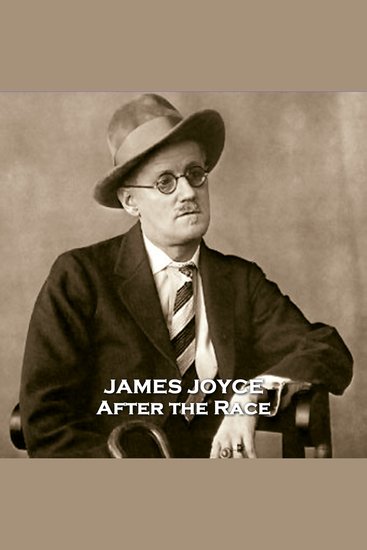
    James Augustine Aloysius Joyce was born on the 2nd February 1882 in Dublin into a middle-class family, and the eldest of ten surviving siblings 
    Admired as a brilliant student he briefly attended the Christian Brothers-run O'Connell School before excelling at the Jesuit schools of Clongowes and Belvedere.  From there he went on to attend University College Dublin from 1898, studying English, French and Italian 
    In 1902, Joyce was now in his early twenties, and went to Paris to study Medicine but soon abandoned his teachings.  Back in Dublin to attend to his dying Mother he met Nora Barnacle. They bonded immediately into a life-long match. Together they decided to emigrate to Europe.  The couple lived in Trieste, Rome, Paris, and finally Zürich where Joyce pursued a variety of jobs and ventures to supplement his literary pursuits but none of these paid off.  
    After publishing a poetry volume, ‘Chamber Music’, in 1907, his short story collection ‘The Dubliners’, in 1914, helped establish his talent in the rapidly changing world.  
    Although far from home Joyce’s literary heart and works were set in his recollections of Dublin.  Characters are close resemblances of family and friends and indeed enemies.  His landmark work ‘Ulysses’, published in 1922, is set in the streets and alleyways of the city as it parallels Homer’s Odyssey in a variety of styles including its famed stream of consciousness. 
    His pen continued to produce classics of the order of ‘A Portrait of the Artist as A Young Man’ and ‘Finnegan’s Wake’ together with several volumes of poetry and a play ‘The Exiles, in 1918.   
    On the 11th January 1941, Joyce underwent surgery in Zürich for a perforated duodenal ulcer. The next day he fell into a coma. On the 13th after a brief period of lucidity in which he called for his wife and son he passed.  He was 58.
    Mostra libro
  • A Wagner Matinee - From their pens to your ears genius in every story - cover

    A Wagner Matinee - From their...

    Willa Cather

    • 0
    • 0
    • 0
    Willa Sibert Cather had Welsh ancestry but like her parents Charles and Mary, was born in Virginia, on 7th December 1873.  Despite strong roots in the community, Willa was 9, when the family moved to Nebraska, to work the rich soil and avoid TB of which there were numerous outbreaks in Virginia.   
    The vastness and drama of the Nebraska prairie and its’ extreme weather conditions as well as the many diverse cultures of the local families proved to be a major influence on her and can be evidenced in much of her later writing.   
    Her first writing was for the local journal when she was at the University of Nebraska and later became the managing editor of the student newspaper.    
    In 1896 she obtained work for a woman’s magazine in Pittsburgh and soon after became a regular contributor to the Pittsburgh Leader and wrote poetry and short stories for the Library, another local publication.   
    Her first collection of short stories, ‘The Troll Garden’, was published in 1905 and contains several of her most famous including ‘A Wagner Matinee’ and ‘Paul's Case.’ As a writer Cather was now taking immense strides forward.   
    Between 1913 and 1918 Cather wrote her Prairie Trilogy: ‘O Pioneers!’, ‘The Song of the Lark’, and ‘My Ántonia’ and in 1922 the Pulitizer Prize was hers for her novel ‘One of Ours’ set during WWI.  
    Acknowledged as one of America's greatest writers’ further honours flowed. In 1943 she was elected a Fellow of the American Academy of Arts and Sciences. The following year Cather received the gold medal for fiction from the National Institute of Arts and Letters.  
    A determinedly private person, Cather destroyed many old drafts, personal papers, and letters. Her will would also restrict the ability of scholars to quote from personal papers that remained. 
    On 24th April 1947, Willa Siebert Cather died of a cerebral haemorrhage at her Manhattan home. She was 73.
    Mostra libro
  • A Dead Woman's Secret - From their pens to your ears genius in every story - cover

    A Dead Woman's Secret - From...

    Guy de Maupassant

    • 0
    • 0
    • 0
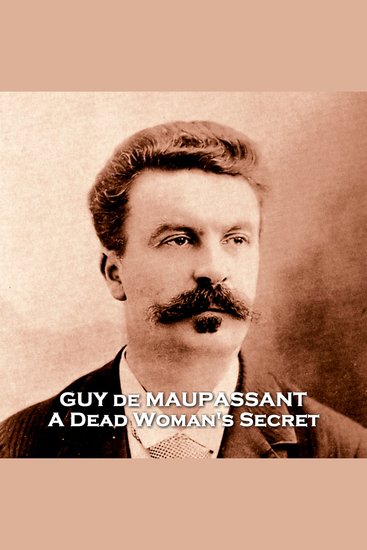
    Henri René Albert Guy de Maupassant was born on August 5th, 1850 near Dieppe in France.  
    Maupassant’s early life was badly torn when at age 11 (his younger brother Hervé was then five) his mother, Laure, a headstrong and independent-minded woman, risked social disgrace in order to obtain a legal separation from her husband. 
    After the separation, Laure kept custody of her two boys. With the father now forcibly absent, Laure became the most influential and important figure in the young boy's life.   
    Maupassant’s education was such that he rebelled against religion and other societal norms but a developing friendship with Gustave Flaubert began to turn his mind towards creativity and writing. 
    After graduation he volunteered for the Franco-Prussian war. With its end he moved to Paris to work as a clerk in the Navy Department.  Gustave Flaubert now took him under his wing.  Acting as a literary guardian to him, he guided the eager Maupassant to debuts in journalism and literature.  For Maupassant these were exciting times and the awakening of his creative talents and ambitions. 
    In 1880 he published what is considered his first great work, ‘Boule de Suif’, (translated as as ‘Dumpling’, ‘Butterball’, ‘Ball of Fat’, or ‘Ball of Lard’) which met with a success that was both instant and overwhelming.  Flaubert at once acknowledged that it was ‘a masterpiece that will endure.’ Maupassant had used his talents and experiences in the war to create something unique.  
    This decade from 1880 to 1891 was to be the most pivotal of his career.  With an audience now made available by the success of ‘Boule de Suif’ Maupassant organised himself to work methodically and relentlessly to produce between two and four volumes of work a year.  The melding of his talents and business sense and the continual hunger of sources for his works made him wealthy. 
    In his later years he developed a desire for solitude, an obsession for self-preservation, and a fear of death as well as a paranoia of persecution caused by the syphilis he had contracted in his youth.  
    On January 2nd, 1892, Maupassant tried to commit suicide by cutting his throat.  Unsuccessful he was committed to the private asylum of Esprit Blanche at Passy, in Paris.  It was here on July 6th, 1893 that Henri René Albert Guy de Maupassant died at the age of only 42.
    Mostra libro