Unisciti a noi in un viaggio nel mondo dei libri!
Aggiungi questo libro allo scaffale
Grey
Scrivi un nuovo commento Default profile 50px
Grey
Iscriviti per leggere l'intero libro o leggi le prime pagine gratuitamente!
All characters reduced
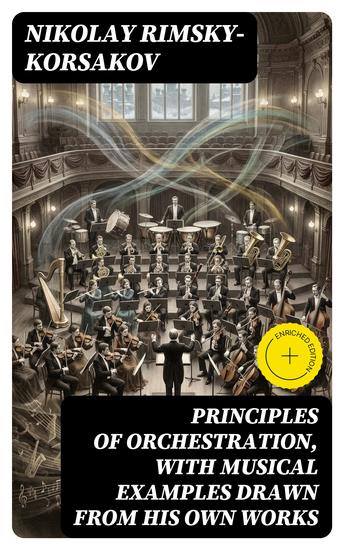
Principles of Orchestration with Musical Examples Drawn from His Own Works - Enriched edition - cover

Principles of Orchestration with Musical Examples Drawn from His Own Works - Enriched edition

Nikolay Rimsky-Korsakov

Traduttore Edward Agate

Casa editrice: DigiCat

  • 0
  • 0
  • 0

Sinossi

In "Principles of Orchestration, with Musical Examples Drawn from His Own Works," Nikolay Rimsky-Korsakov presents an insightful exploration of orchestration techniques, weaving together theoretical understanding and practical application. The book balances detailed discussions of orchestral color, texture, and instrumental capabilities with numerous musical examples, primarily sourced from his illustrious compositions. Rimsky-Korsakov's prose harmonizes instructive clarity and artistic eloquence, making it a quintessential guide for both aspiring composers and seasoned musicians. Set against the backdrop of late 19th-century Russian music, this work reflects the period's burgeoning experimentation with orchestral sound and texture, mirroring Rimsky-Korsakov's innovative contributions to the genre. Nikolay Rimsky-Korsakov, a leading figure of the Russian nationalist movement, dedicated much of his life to melding folk traditions with classical forms. His upbringing in a military family, coupled with his extensive education at the St. Petersburg Conservatory, provided him a unique lens through which to examine orchestral writing. His experiences as a naval officer and inherent passion for storytelling through music profoundly influenced his teaching and compositional style, culminating in this seminal work aimed at democratizing orchestration knowledge. I wholeheartedly recommend "Principles of Orchestration" to both contemporary musicians and composers who seek a deeper understanding of orchestral arrangement. Its thorough yet accessible structure makes it invaluable for all who wish to enrich their appreciation of orchestral music, and its relevance continues to resonate in today's musical discourse.

In this enriched edition, we have carefully created added value for your reading experience:
- A succinct Introduction situates the work's timeless appeal and themes.
- The Synopsis outlines the central plot, highlighting key developments without spoiling critical twists.
- A detailed Historical Context immerses you in the era's events and influences that shaped the writing.
- An Author Biography reveals milestones in the author's life, illuminating the personal insights behind the text.
- A thorough Analysis dissects symbols, motifs, and character arcs to unearth underlying meanings.
- Reflection questions prompt you to engage personally with the work's messages, connecting them to modern life.
- Hand‐picked Memorable Quotes shine a spotlight on moments of literary brilliance.
- Interactive footnotes clarify unusual references, historical allusions, and archaic phrases for an effortless, more informed read.
Disponibile da: 29/05/2022.
Lunghezza di stampa: 3 pagine.
Altri libri che potrebbero interessarti

  • Ultimate Guide to Music Monetization - A Complete Breakdown of the Strategies Platforms & Tools That Pay Artists - cover

    Ultimate Guide to Music...

    Shawn Folk

    • 0
    • 0
    • 0
    The Ultimate Guide to Music Monetization 
    A Practical Breakdown of How Artists Earn in the Modern Music Industry 
    In today’s music industry, making great music isn’t enough—understanding how money is made is just as essential. The Ultimate Guide to Music Monetization is a practical, research-driven resource created to help artists, managers, and independent creatives make sense of the evolving monetization landscape. 
    This guide breaks down the many different ways artists can earn income, not to promise riches, but to help you understand how each model actually works, where its limitations lie, and how artists are using them today. 
    Inside, you'll find:Clear explanations of streaming, licensing, NFTs, catalog advances, social tokens, direct sales, subscriptions, and moreAnalysis of the platforms and companies leading each monetization modelInsights into the incentives behind industry messaging—from distributors to marketers to creatorsReal-world pros and cons of each path, so you can make informed decisions based on your goals and circumstances 
    Written by Gif of Payusnomind, an artist, marketer, and founder of the first YouTube channel offering comparative analysis of music distribution platforms, this guide offers an unbiased look at the business side of music, free from hype, and focused on helping you understand the options available. 
    If you're trying to find the right path, build sustainable systems, or just want to know what’s behind the curtain, this book is a valuable starting point.
    Mostra libro
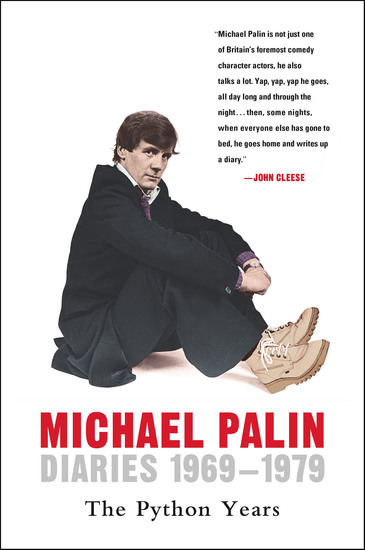
  • Diaries 1969–1979 - The Python Years - cover

    Diaries 1969–1979 - The Python...

    Michael Palin

    • 0
    • 0
    • 0
    The amazingly insightful, funny and brilliant record of Michael Palin's prime years as a member of the famed comedic group, Monty Python. “Charming and at times revelatory . . . A voice of (relative) sanity in the eye of a comedic storm, Palin paints so vivid a picture that the reader becomes a Python by proxy.” —The New York Times Book ReviewMichael Palin has kept a diary since newly married in the late 1960s, when he was beginning to make a name for himself as a TV scriptwriter, and Monty Python was just around the corner.This volume of his diaries reveals how Python emerged and triumphed, how he, John Cleese, Graham Chapman, the two Terrys—Jones and Gilliam—and Eric Idle came together and changed the face of British comedy. But this is only part of Palin’s story. Here, too, is his growing family, his home in a north London Victorian terrace, his solo effort as an actor, and his writing endeavors (often in partnership with Terry Jones) that produce Ripping Yarns and even a pantomime.Meanwhile Monty Python refuses to go away: his account of the making of both The Holy Grail and the Life of Brian movies are page-turners, and the sometimes extraordinary goings-on of the many powerful personalities who coalesced to form the Python team makes for funny and riveting reading.A perceptive and funny chronicle, the diaries are a rich portrait of a fascinating period.“It is terrifically good: funny, astute, and wonderfully written.” —The Boston Globe
    Mostra libro
  • Greatest Drama Shows Volume 4 - Ten Classic Shows from the Golden Era of Radio - cover

    Greatest Drama Shows Volume 4 -...

    Various Various

    • 0
    • 0
    • 0
    OASIS AUDIO CLASSIC RADIO SHOWCASE SERIES   Oasis Audio has gone into the vaults and dusted off the very earliest form of audio book, old time radio shows, for our listeners. Introduced episode by episode by Jim Engel, old time radio authority and board member of the Museum of Broadcast Communications in Chicago, this series of classic radio shows is sure to have something for everyone. Celebrity casts and top-notch writers made the 1920s through the early 1950s, the golden era of radio. The series features seven exciting themes with 100 episodes in each. That is 700 classic radio programs in all.   Greatest Drama Shows   Cling to the edge of your seat for the Adventures of Sherlock Holmes, The Green Hornet, The Third Man. Hear classic stores brought to radio by celebrity casts such as Brave New World with William Conrad, The Pickwick Papers starring Orson Welles, and so many more. 100 great Drama classics in ten volumes. Volume 4 David Harding Counterspy 4-4-50 Magic Murder with Don MacLaughlinDavid Harding Counterspy 4-11-50 Mile High Murder with Don MacLaughlinDimension X 4-22-50 Report on The Barnhouse Effect with Santos OrtegaDimension X 9-15-50 Hello Tomorrow with Nancy OlsonDr. Christian 1-16-38 The Flood with Jean HersholtDr. Christian 1-23-38 The Brent Family with Jean HersholtEscape 5-16-48 The Match with Frank LovejoyEscape 12-20-49 Figure A Dame with Frank LovejoyEscape 11-5-50 Earth Abides Pt. 1 with John DehnerEscapes 11-12-50 Earth Abides Pt. 2 with John Dehner
    Mostra libro
  • Birdman - The Ultimate Trivia Collection - From The Movie Directed By Alejandro G Iñarritu - cover

    Birdman - The Ultimate Trivia...

    Film Trivia Metaverse

    • 0
    • 0
    • 0
    BIRDMAN 
    THE ULTIMATE TRIVIA COLLECTION 
      
    FROM THE MOVIE DIRECTED BY ALEJANDRO G. IÑÁRRITU 
      
    CREATED BY FILM TRIVIA METAVERSE 
      
    ABOUT THE FILM 
    Birdman (2014), directed by Alejandro G. Iñárritu, follows Riggan Thomson, a faded Hollywood actor known for his role as the superhero "Birdman." Struggling with his past fame, Riggan attempts to reinvent himself by writing, directing, and starring in a Broadway play. The film explores themes of identity, self-worth, and the pressures of fame, blurring the lines between reality and fantasy. Shot in long takes to create the illusion of a single continuous scene, Birdman delves into the complexities of artistic expression, personal redemption, and the challenges of escaping the shadows of past successes. 
      
    TRIVIA SAMPLES: 
      
    "The movie was rehearsed and shot in sequence, so the editing process only took two weeks." 
      
    "Only sixteen visible cuts can be found in the entire film." 
      
    "During filming, Edward Norton and Michael Keaton kept track of the actors' flubs, with Emma Stone making the most errors and Zach Galifianakis the fewest." 
      
    "Much of the film was shot inside Broadway's St. James Theatre, where the actors had to deliver up to fifteen pages of dialogue in one take while hitting precisely choreographed marks." 
      
    "Edward Norton's character parodies his own reputation for being difficult to work with, similar to the way Michael Keaton's Birdman mirrors his earlier role as Batman."
    Mostra libro
  • The Ming Dynasty - Maritime Exploration and the Forbidden City - cover

    The Ming Dynasty - Maritime...

    Jun Liu

    • 0
    • 0
    • 0
    The Ming Dynasty, one of China's most influential and enduring dynasties, emerged in the aftermath of the Mongol-led Yuan Dynasty’s decline. It was a period marked by great transformation, political consolidation, and cultural revival. The dynasty's establishment under Zhu Yuanzhang, later known as Emperor Hongwu, signified the restoration of Han Chinese rule and the reinforcement of Confucian governance. Through military conquest, administrative reforms, and strategic centralization of power, the Ming Dynasty laid the foundation for a strong and prosperous China. 
    The fall of the Yuan Dynasty was driven by internal corruption, economic mismanagement, and widespread discontent. Mongol rulers faced difficulties controlling the vast empire, and their reliance on foreign administrators alienated the native Chinese population. Heavy taxation and frequent natural disasters exacerbated social unrest, leading to a series of revolts across the country. Among these rebellions, the Red Turban Rebellion, a movement rooted in peasant uprisings and religious discontent, played a crucial role in undermining Yuan authority. It was within this turbulent period that Zhu Yuanzhang, a former Buddhist monk turned military leader, rose to prominence. His leadership and military strategies enabled him to unify rebel factions and ultimately overthrow the Mongols in 1368, marking the beginning of the Ming Dynasty. 
    Upon ascending the throne, Emperor Hongwu sought to consolidate power and rebuild a nation weakened by war and misrule. His first priority was to eliminate threats to his rule, which led to purges against those he suspected of disloyalty. To prevent a recurrence of Yuan-era administrative failures, he restructured the government, reducing the influence of court eunuchs and emphasizing Confucian ideals in governance. He also reinstated the civil service examination system, ensuring that officials were selected based on merit rather than birthright.
    Mostra libro
  • Julius Caesar - William Shakespeare - cover

    Julius Caesar - William Shakespeare

    William Shakespeare

    • 0
    • 0
    • 0
    Julius Caesar - William Shakespeare 
     
    In the play, Brutus joins a conspiracy led by Cassius to assassinate Julius Caesar, to prevent him from becoming a tyrant. Caesar's right-hand man Antony stirs up hostility against the conspirators and Rome becomes embroiled in a dramatic civil war. 
     
    Narrator: Peter Why 
     
    Flavius, Casca, Volumnius: Maria Kasper 
     
    Marullus, Cinna the Poet, Poet, Dardanius: Ray Kasper 
     
    First Commoner, Decius Brutus, Fourth Citizen, First Soldier, Titinius,: Tomas Peter 
     
    Second Commoner, Soothsayer, Octavius: Charlotte Duckett 
     
    Julius Caesar, Strato: Beth Thomas 
     
    Mark Antony: Esther ben Simonides 
     
    Calpurnia, Second Citizen, Messala: Sonia 
     
    Brutus: LindaB 
     
    Cassius: Hamlet 
     
    Cicero, Cato: Paul Huxley 
     
    Cinna the Politician: Anna Simon 
     
    Ligarius, Popilius, Pindarus: Phil Schempf 
     
    Lucius, Third Citizen, Second Soldier,: Gaby 
     
    Publius: Brian 
     
    Metellus Cimber, Artemidorus,: John Burlinson 
     
    Trebonius: Khaghbboommm 
     
    Portia: Lydia 
     
    Servant, Lepidus, Clitus: Lian Pang 
     
    First Citizen, Claudius, Third Soldier, Messenger: Rachel 
     
    Lucilius: Roohi 
     
    Varro: Tony Addison
    Mostra libro