Join us on a literary world trip!
Add this book to bookshelf
Grey
Write a new comment Default profile 50px
Grey
Subscribe to read the full book or read the first pages for free!
All characters reduced
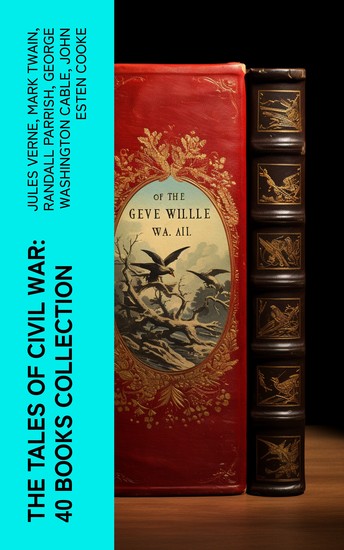
The Tales of Civil War: 40 Books Collection - Novels & Stories of Civil War Including the Rhodes History of the War - cover

The Tales of Civil War: 40 Books Collection - Novels & Stories of Civil War Including the Rhodes History of the War

Mark Twain, Stephen Crane, Edward Everett Hale, Ambrose Bierce, Joseph A. Altsheler, John Esten Cooke, John William De Forest, Randall Parrish, Mary Johnston, Charles King, G. A. Henty, Robert W. Chambers, Winston Churchill, George Washington Cable, George W. Peck, Ellen Glasgow, Natalie Sumner Lincoln, John McElroy, Byron A. Dunn, John R. Musick, James Ford Rhodes, Jules Verne, Thomas Dixon Jr., B. K. Benson, Charles Carleton Coffin, Lucy Foster Madison, W. H. Shelton, Harry Hazelton, Edward Robins, Henry F. Keenan, María Ruiz de Burton

Publisher: e-artnow

  • 0
  • 0
  • 0

Summary

e-artnow presents to you this meticulously edited collection of the greatest novels and stories written in the aftermath of the Civil War, trying to show the truth in disguise of fiction, the trauma, the turmoil, the massacre and the heroism of all people involved: Stephen Crane: The Red Badge of Courage The Little Regiment The Veteran The Private History of a Campaign That Failed & A Curious Experience (Mark Twain) Ambrose Bierce: An Occurrence at Owl Creek Bridge A Horseman in the Sky Chickamauga Joseph A. Altsheler: The Guns of Bull Run The Guns of Shiloh The Scouts of Stonewall The Sword of Antietam The Star of Gettysburg The Rock of Chickamauga The Shades of the Wilderness The Tree of Appomattox The Crisis (Winston Churchill) Miss Ravenel's Conversion from Secession to Loyalty (John William De Forest) With Lee in Virginia (G. A. Henty) Who Would Have Thought It? (María Ruiz de Burton) The Long Roll (Mary Johnston) Cease Firing (Mary Johnston) The Victim: A Romance of the Real Jefferson Davis (Thomas Dixon Jr.) Kincaid's Battery (George Washington Cable) The Border Spy (Harry Hazelton) The Battle Ground (Ellen Glasgow) Who Goes There? (B. K. Benson) Ailsa Paige (Robert W. Chambers) Special Messenger (Robert W. Chambers) How Private George W. Peck Put Down the Rebellion (George W. Peck) Raiding with Morgan (Byron A. Dunn) Mohun; Or, the Last Days of Lee and His Paladins (John Esten Cooke) Brother Against Brother (John R. Musick) The Last Three Soldiers (W. H. Shelton) A War-Time Wooing (Charles King) The Iron Game (Henry F. Keenan) The Blockade Runners (Jules Verne) The Lost Despatch (Natalie Sumner Lincoln) My Lady of the North (Randall Parrish) Uncle Daniel's Story of "Tom" Anderson (John McElroy) The Red Acorn (John McElroy) Winning His Way (Charles Carleton Coffin) A Daughter of the Union (Lucy Foster Madison) Chasing an Iron Horse (Edward Robins) The Man Without a Country (Edward Everett Hale) History of the Civil War, 1861-1865 (James Ford Rhodes)
Available since: 12/11/2023.
Print length: 9581 pages.

Other books that might interest you

  • The Wife of His Youth - From their pens to your ears genius in every story - cover

    The Wife of His Youth - From...

    Charles W. Chesnutt

    • 0
    • 0
    • 0
    Charles Waddell Chesnutt was born on 20th June 1858 in Cleveland, Ohio, to parents who were both ‘free persons of color’. His paternal grandfather was a white slaveholder, and Chesnutt although he identified as African-American noted that he was seven-eighths white.   
    By age 20 Chesnutt had married and settled in Cleveland.  After reading law and passing the bar exam he established a lucrative court reporting business, which rapidly elevated his financial standing. 
    The Atlantic Monthly published his short story, and the first by an African-American, ‘The Goophered Grapevine’. This was quickly followed by 2 volumes of his short stories mainly themed with racial identity that were more complex than those of many of his contemporaries.  
    Encouraged by Atlantic editors, Chestnutt moved to writing novels. It published his first ‘The House behind the Cedars’ in 1900. 
    As well as business interests and his writing he also toured on the national lecture circuit, primarily in northern states. 
    Despite this his novels received poor sales but excellent reviews and so a self-fueling literary career based on novels was beyond his reach.   
    With the turn of the new century Chesnutt turned more energies to his court reporting business and in 1910, he served on the General Committee of the newly founded National Association for the Advancement of Colored People (NAACP) becoming one of the early 20th century's most prominent activists and commentators. 
    Chesnutt is now regarded as an integral part of the Harlem Renaissance which did much to reinforce Black culture as a thriving, vibrant and essential part of 20th Century culture. 
    Charles W Chesnutt died on 15th November 1932.  He was 74.
    Show book
  • Angèle au Couvent - A young girls search for happiness in art is challenged by her religious commitments and society - cover

    Angèle au Couvent - A young...

    Mary Butts

    • 0
    • 0
    • 0
    Mary Frances Butts was born on 13th December 1890 in Poole, Dorset. 
     
    Her early years were spent at Salterns, an 18th-century house overlooking Poole Harbour.  Sadly in 1905 her father died, and she was sent for boarding at St Leonard's school for girls in St Andrews. 
     
    Her mother remarried and, from 1909, Mary studied at Westfield College in London, and here, first became aware of her bisexual feelings.  She was sent down for organising a trip to Epsom races and only completed her degree in 1914 when she graduated from the London School of Economics.  By then Mary had become an admirer of the occultist Aleister Crowley and she was given a co-authorship credit on his ‘Magick (Book 4)’. 
     
    In 1916, she began the diary which would now detail her future life and be a constant reference point for her observations and her absorbing experiences. 
     
    During World War I, she was doing social work for the London County Council in Hackney Wick, and involved in a lesbian relationship.  Life changed after meeting the modernist poet, John Rodker and they married in 1918. 
     
    In 1921 she spent 3 months at Aleister Crowley's Abbey of Thelema in Sicily; she found the practices dreadful and also acquired a drug habit.  Mary now spent time writing in Dorset, including her celebrated book of short stories ‘Speed the Plough’ which saw fully develop her unique Modernist prose style. 
     
    Europe now beckoned and several years were spent in Paris befriending many artists and writing further extraordinary stories.   
     
    She was continually sought after by literary magazines and also published several short story collections as books. Although a Modernist writer she worked in other genres but is essentially only known for her short stories.  Mary was deeply committed to nature conservation and wrote several pamphlets attacking the growing pollution of the countryside. 
     
    In 1927, she divorced and the following year her novel ‘Armed with Madness’ was published.  A further marriage followed in 1930 and time was spent attempting to settle in London and Newcastle before setting up home on the western tip of Cornwall.  By 1934 the marriage had failed. 
     
    Mary Butts died on 5th March 1937, at the West Cornwall Hospital, Penzance, after an operation for a perforated gastric ulcer. She was 46. 
     
    In ‘Angèle Au Couvent’ Butts takes up the story of a young school girl desperate for friendships but wrestling with her fluid interpretation of religion.
    Show book
  • Forgetting to Remember Love - cover

    Forgetting to Remember Love

    Ella Stories

    • 0
    • 0
    • 0
    A renowned neurosurgeon, fiercely independent and dismissive of love, faces a life-altering condition that slowly erases his personal memories. The only person who can help him hold on to his identity is an optimistic, free-spirited musician, who becomes the doctor's unexpected treatment — and perhaps, his greatest love. As the doctor's memories fade, they must learn to navigate their differences, find common ground, and write a love story one won't remember and the other will never forget.
    Show book
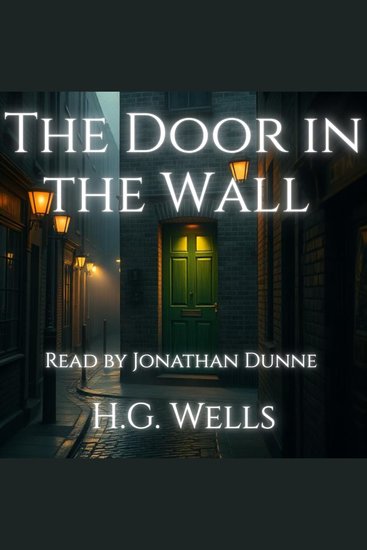
  • The Door in the Wall - cover

    The Door in the Wall

    H. G. Wells

    • 0
    • 0
    • 0
    Title: The Door in the Wall 
    Author: H. G. Wells 
    Narrator: Jonathan Dunne 
    Original Publication: 1906 
    Public Domain: Yes 
    Series Placement: Number 42 in the Timeless Terrors series 
    Description: 
    The Door in the Wall by H. G. Wells is a haunting meditation on memory, regret, and the fragile boundary between reality and imagination. Blending psychological mystery with quiet supernatural suggestion, Wells crafts one of his most poignant and enduring tales. 
    Lionel Wallace, a successful statesman, is haunted by a recurring vision from his childhood — a green door in a white wall that opens onto a garden of impossible beauty. Throughout his life, the door reappears at unexpected moments, tempting him to abandon the world he knows for one that may not exist at all. As Wallace’s obsession deepens, the story becomes a reflection on the price of ambition, the ache of lost wonder, and the peril of yearning for what lies beyond the known. 
    Narrated by Amazon bestselling horror author Jonathan Dunne, this performance captures Wells’s tone of wistful dread and quiet revelation — the sense that paradise may be only a step away, but that to open the door is to lose oneself forever. While the text is in the public domain, this narration is an original performance and copyright © 2025 Jonathan Dunne. 
    Part of Timeless Terrors, a series devoted to resurrecting the masters of the macabre and uncanny, The Door in the Wallendures as a tale of elusive beauty and the inexorable pull of the mysterious — a reminder that some doors, once found, can never truly be closed.
    Show book
  • Middlemarch - cover

    Middlemarch

    George Eliot

    • 0
    • 0
    • 0
    Middlemarch is a complex tale of idealism, disillusion, profligacy, loyalty and frustrated love. This penetrating analysis of the life of an English provincial town during the time of social unrest prior to the Reform Bill of 1832 is told through the lives of Dorothea Brooke and Dr Tertius Lydgate and includes a host of other paradigm characters who illuminate the condition of English life in the mid-nineteenth century.America.
    Show book
  • Barn Blind - cover

    Barn Blind

    Jane Smiley

    • 0
    • 0
    • 0
    Best-selling author and Pulitzer-Prize winner Jane Smiley crafts compelling novels filled with quiet strength and emotion. In Barn Blind she portrays a middle-aged woman so galvanized with success that she drives a wedge between herself and those who love her most. Kate Karlson's only focus in life is her Midwestern horse farm. Ignoring her husband, she spends long days giving riding lessons and training horses. To showcase her teaching ability, she enters her three sons and daughter in all the equestrian shows. But when her family dares to thwart her interests, the results bring tragedy and devastation. In this spellbinding tale of love, work, and duty, Jane Smiley examines the excesses we sometimes commit in the name of ambition. Narrator Suzanne Toren's dramatic performance highlights the daily rigors and joys of the equestrian life.
    Show book