Unisciti a noi in un viaggio nel mondo dei libri!
Aggiungi questo libro allo scaffale
Grey
Scrivi un nuovo commento Default profile 50px
Grey
Iscriviti per leggere l'intero libro o leggi le prime pagine gratuitamente!
All characters reduced
Future-Focused Church - Leading through Change Engaging the Next Generation and Building a More Diverse Tomorrow - cover

Future-Focused Church - Leading through Change Engaging the Next Generation and Building a More Diverse Tomorrow

Kara Powell, Jake Mulder, Raymond Chang

Casa editrice: Baker Books

  • 0
  • 0
  • 0

Sinossi

In the past few decades, the church has experienced rapid and distressing change. Hard-working pastors and leaders often know they need to embrace diversity, creatively engage younger generations, and equip their people to love their neighbors. But since they don't know how to make the changes needed, they feel stuck and wonder, "What do I do now? What steps can I take to lead our church purposefully and prayerfully into a more hopeful future?" 
 
For these dedicated yet drained church leaders, this research-informed resource from the team at the Fuller Youth Institute offers a clear roadmap to faithfully and effectively navigate change that will revitalize your church. Through extensive research, interviews, and case studies, you will learn how to see the big picture, activate a transformation team, know your "why," discern where God is leading, communicate a compelling vision, maintain disciplined attention, and experiment toward a more fruitful, faithful, and lasting future. 
 
This hope-filled guide for building tomorrow's church today is the resource your church has been waiting for.
Disponibile da: 25/03/2025.
Lunghezza di stampa: 320 pagine.
Altri libri che potrebbero interessarti

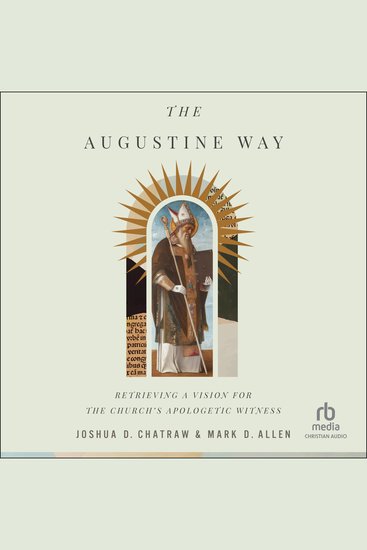
  • The Augustine Way - Retrieving a Vision for the Church's Apologetic Witness - cover

    The Augustine Way - Retrieving a...

    Joshua D. Chatraw, Mark D. Allen

    • 0
    • 0
    • 0
    Christianity Today 2024 Book Award Finalist (Apologetics/Evangelism) 


    Outreach 2024 Resource of the Year (Apologetics) 


    What can we learn from Augustine about apologetics? This book shows how Augustine defended the faith in late antiquity and how his approach to engaging the culture has great significance for the apologetic task today. 


    The Augustine Way recovers Augustine's mature apologetic voice to address the challenges facing today's church. It offers a compelling argument for Christian witness that is rooted in tradition and engaged with contemporary culture. The book focuses on Augustine's best-known works, Confessions and The City of God, to retrieve his scriptural and ecclesial approach for a holistic apologetic witness. 


    This book will be useful for students, pastors, church leaders, and practitioners of Christian apologetics. It puts pastors and churches back at the center of apologetics, transcending popular contemporary methods with a view to a more effective witness in post-Christendom.
    Mostra libro
  • Manichaeism: The History and Legacy of the Ancient Persian Religion - cover

    Manichaeism: The History and...

    Editors Charles River

    • 0
    • 0
    • 0
    During the first half of the 1st millennium CE, an empire arose in Persia that extended its power and influence to Mesopotamia in the east, Arabia in the south, the Caucasus Mountains in the north, and as far east as India. This empire, known alternatively as the Sasanian Empire or Sassanid Empire, was the last of three great dynasties in Persia - the Achaemenid and the Parthian being the first two dynasties - before the rise of Islam. In fact, many scholars consider the Sasanian Empire to be the last great empire of the ancient Near East. 
    	Many scholars have been fascinated with the beliefs and teachings of Manichaeism, dating as far back as the early Church. Christian theologians who acted as heresy hunters (including Augustine of Hippo) took it upon themselves to attack Mani’s new religion on the grounds that it was just another dangerous heresy that had cropped up in the fertile ideological soils where the powerful Roman and Persian worlds collided. As such, Manichaeism was dismissed as an aberration of the truth and was critiqued in many writings of orthodox church leaders. This remained a powerful influence for scholars all the way up to the 20th century, largely due to the fact that few if any original Manichaean writings had survived the centuries.  
    	Modern studies of Manichaeism began in the 1930s at the hands of Hans Jacob Polosky and Carl Schmidt, who announced the discovery of new 4th century Manichaean codices which detailed the beliefs of Manichaeism in greater depth than any prior text. Reliance on the polemics of heresiologists from both the ancient and medieval periods came to an end and the Manichaean faith could be studied on its own terms. Previous concepts about what Manichaean faith was had to be dismantled to make way for what these ancient believers in this mysterious religion actually had to say for themselves. 
    Mostra libro
  • The Coming Times - A Pathway To Inner Peace - cover

    The Coming Times - A Pathway To...

    Helen Jane Rose, The Divine Council

    • 0
    • 0
    • 0
    Unstable times call for unconventional solutions and for those seeking peace within the chaos The Coming Times: A Pathway To Inner Peace offers spiritual solutions for living a surrendered soul-led life for the times ahead - full of peace, purpose, love, abundance & adventure.The book presents timely channeled teachings & guidance from The Divine Council (a collaboration of enlightened beings), scribed through automatic writing, edited only for punctuation, with the purpose of helping us to transcend from awakening and into enlightenment. It is a book for NOW! 
    The Divine Council offer much needed clarity for the times ahead, urging us to raise our consciousness, teaching us that surrender is the solution for experiencing true inner peace. They remind us that our greatest help to ourselves and humanity is to focus inwards and overcome the control of our minds - only then will we free ourselves.
    Mostra libro
  • Reparations - A Christian Call for Repentance and Repair - cover

    Reparations - A Christian Call...

    Gregory Thompson, Duke L. Kwon

    • 0
    • 0
    • 0
    Christians are awakening to the legacy of racism in America like never before. While public conversations regarding the realities of racial division and inequalities have surged in recent years, so has the public outcry to work toward the long-awaited healing of these wounds. But American Christianity, with its tendency to view the ministry of reconciliation as its sole response to racial injustice, and its isolation from those who labor most diligently to address these things, is underequipped to offer solutions. Because of this, the church needs a new perspective on its responsibility for the deep racial brokenness at the heart of American culture and on what it can do to repair that brokenness. 


    This book makes a compelling historical and theological case for the church's obligation to provide reparations for the oppression of African Americans. Duke Kwon and Gregory Thompson articulate the church's responsibility for its promotion and preservation of white supremacy throughout history, investigate the Bible's call to repent and make restitution, and offer concrete examples of the work of reparation at the local level. They lead listeners toward a moral imagination that views reparations as a long-overdue and necessary step in our collective journey toward healing and wholeness.
    Mostra libro
  • In Their Surroundings - Localizing Modern Jewish Literatures in Eastern Europe - cover

    In Their Surroundings -...

    Yfaat Weiss, Natasha Gordinsky,...

    • 0
    • 0
    • 0
    From the second half of the nineteenth century through to World War II, Eastern Europe, especially the territories that formerly made up the Pale of Settlement in the Tsarist Empire, witnessed a Jewish cultural flowering that went hand-in-hand with a multifaceted literary productivity in the Hebrew and Yiddish languages. Accompanied and sometimes directly affected by the dramatic political ruptures of the era, many authors experimented with various modernist poetics in the context of a culturally and literarily closely interwoven milieu. This beautifully illustrated catalogue presents for the first time some of the key figures of the era, including in each case a portrait of the author and a close reading of selected texts, including Yosef Ḥayim Brenner, Leah Goldberg, Moyshe Kulbak, and Deborah Vogel. Of particular interest here is the productive entanglement of cultures and literatures, of cultural contact and transfer, and the significance of space and place for the development of modern Jewish literatures.
    Mostra libro
  • The Sacred Art of Slowing Down - Find Relief from Rushed Living Soothe Your Soul and Restore Wholeness - cover

    The Sacred Art of Slowing Down -...

    Anna Christine Seiple

    • 0
    • 0
    • 0
    We were created for so much more than rushing through life.It’s easy for everything in our lives to seem fine on the surface. But deep down inside, there’s often another story at play―one of overwhelm, stress and heartache, of finding ourselves stuck in old patterns. Rather than feeling the weight of it all, it’s easier to spend our days on autopilot, ignoring the noise inside.But what if the peace and relief we most long for comes from tuning in with what’s happening inside, instead of tuning it out?Join therapist Anna Christine (A.C.) Seiple on a compassionate, mindful exploration of the depths of our souls. With gentleness, wisdom, and expertise, A.C. invites us to connect with our body and get curious about the spaces within that feel most stuck―and find where we need safety, attunement and care.Rather than a prescriptive “how-to” guide, The Sacred Art of Slowing Down offers unique therapeutic prompts and contemplative reflections to help uscultivate new rhythms to work with what’s happening inside rather than feeling like we’re working against ourselvesholistically explore the cognitive, emotional, spiritual, and somatic strands of ourselves―connecting with and honoring the whole of our created beingbecome more comfortable with being instead of getting caught up in doing through experiential exercisesembrace God’s tender compassion and care―especially for the most wounded parts of usWhen we slow down to connect with the depths of our being, we are able to move through life in freer, more wholehearted―and whole-bodied―ways. May these pages be a sacred space for all parts of us to be seen, held, and nourished.
    Mostra libro