Unisciti a noi in un viaggio nel mondo dei libri!
Aggiungi questo libro allo scaffale
Grey
Scrivi un nuovo commento Default profile 50px
Grey
Iscriviti per leggere l'intero libro o leggi le prime pagine gratuitamente!
All characters reduced
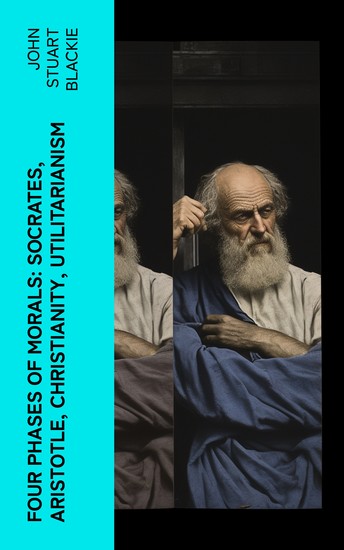
Four Phases of Morals: Socrates Aristotle Christianity Utilitarianism - cover

Four Phases of Morals: Socrates Aristotle Christianity Utilitarianism

John Stuart Blackie

Casa editrice: e-artnow

  • 0
  • 0
  • 0

Sinossi

"Four Phases of Morals: Socrates, Aristotle, Christianity, Utilitarianism" by John Stuart Blackie. Published by e-artnow. e-artnow publishes a wide range of titles that encompasses every genre. From well-known classics & literary fiction and non-fiction to forgotten−or yet undiscovered gems−of world literature, we issue the books that need to be read. Each e-artnow edition has been meticulously edited and formatted to boost readability for all e-readers and devices. Our goal is to produce eBooks that are user-friendly and accessible to everyone in a high-quality digital format.
Disponibile da: 24/11/2023.
Lunghezza di stampa: 338 pagine.

Altri libri che potrebbero interessarti

  • Nor Fish Nor Fowl: From Deckhand to Flight Lieutenant - The Story of a Merchant Navy seaman in the Royal Air Force Marine Branch - cover

    Nor Fish Nor Fowl: From Deckhand...

    Colin Yorke

    • 0
    • 0
    • 0
    In 1934, after five years travelling the world as a Merchant Seaman, my father, aged 21, enlisted in the British Royal Air Force to escape the Depression. Entering the Marine Branch, he swapped big ships for small fast boats - Seaplane Tenders, Armoured Target Boats and High Speed Launches. 
    In 1940, when the Air Sea Rescue service was formed, he joined the crew of High Speed Launch 102 (now fully restored and based at Portsmouth) as a Coxswain, stationed at Blyth. Three busy years on the "Spitfires of the Sea" followed, before his leg was "smashed" in heavy seas. 
    On recovery, he spent time in the Faroe Islands and in the English Channel, after "D-Day", and before being commissioned. The war's end found him in West Africa. After VJ Day he was demobbed, then recalled and posted to Egypt. 
    After a brief unhappy spell in "Civvy Street", he re-enlisted in the RAF as an acting corporal. First on the scene when HSL 2555 blew up, he was commended and subsequently carried the RAF ensign at the 1950 Battle of Britain celebrations in Paris, France. On return to the UK he was once again commissioned. 
    In Malta, during the Suez Crisis, he supervised a flying boat airlift of families and service personnel through Malta as the Canal Zone was evacuated. Later, serving in Cold War Germany, he skippered German boats with mixed German/British crews and was present when the Unit was handed back to the Germans. 
    In 1961, aged just 48, injuries forced his retirement from the RAF. 
    Now, fittingly narrated by my actor daughter, this book reveals a great deal of the little known story of the RAF Marine Branch, its boats and the life of a British serviceman's family in war and peace.
    Mostra libro

  • Revolution & Counter Revolution - cover

    Revolution & Counter Revolution

    Friedrich Engels

    • 0
    • 0
    • 0
    Revolution and Counter-Revolution is an account of what happened in Prussia, Austria, and other German states during 1848, describing the impact on both middle-class and working-class aspirations and on the idea of German unification. Events in Austria and Prussia are discussed, along with the role of the Poles and Czechs and Panslavism, which Engels was against. 
     
    Friedrich Engels (German: (28 November 1820 – 5 August 1895) was a German social scientist, author, political theorist, philosopher, and father of Marxist theory, alongside Karl Marx.
    Mostra libro
  • All in! - Energy and Prosperity for a Growing World - cover

    All in! - Energy and Prosperity...

    Bert Beyers, Franz Josef Prof....

    • 0
    • 0
    • 0
    Today, more than 80 percent of global energy comes from coal, gas and oil. A completely renewable and electric energy system (All-Electric) is a distant dream, perhaps not even that.
    
    Time is of the essence. That is why we need to use all climate-neutral and secure energy sources immediately: Renewable, fossil with CO2 capture and nuclear energy-ALL IN! instead of All-Electric. Because fossil emissions are the problem, not fossil fuels.
    
    Climate neutrality can only be achieved pragmatically, open to technology and together in a symbiosis of technology and nature. Whether we get climate change under control will not be decided in Germany or Europe, not even in the USA, but in China, India and Africa. At best, climate nationalism helps our own conscience.
    Mostra libro
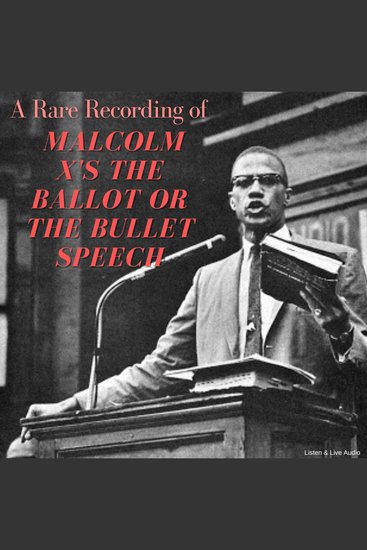
  • A Rare Recording of Malcolm X's The Ballot or The Bullet Speech - cover

    A Rare Recording of Malcolm X's...

    Malcolm X

    • 0
    • 0
    • 0
    Malcolm X (born Malcolm Little, later Malik el-Shabazz; May 19, 1925 - February 21, 1965) was an American Muslim minister and human rights activist who was a prominent figure during the civil rights movement of the 1950s and 60s. A spokesman for the Nation of Islam until 1964, he was a vocal advocate for Black empowerment and the promotion of Islam within the Black community. On February 21, 1965, he was assassinated in New York City. Three Nation members were charged with the murder and given indeterminate life sentences; in 2021, two of the convictions were vacated. Speculation about the assassination and whether it was conceived or aided by leading or additional members of the Nation, or with law enforcement agencies, has persisted for decades.
    Mostra libro
  • Gifted People - Being Aware of Gifted Children and Adults - cover

    Gifted People - Being Aware of...

    Robert Nathans

    • 0
    • 0
    • 0
    I felt compelled to share what I've recently discovered about giftedness. Personally, I wish I had been informed about this particular divergence from the average human brain earlier. However, my intention is not to attract undue attention or create a sense of superiority over others. 
      
    When I mentioned to my parents that many descriptions of gifted individuals resonated with my own experiences, they were hesitant to accept this label. The term "gifted" often carries implications of superiority, which can seem boastful. Yet, true talent or giftedness should foster humility and gratitude, coupled with a determination to navigate the challenges that come with such exceptional qualities. 
      
    Saying you are gifted often results in perceptions of being smarter than others. Yet, those who grasp these concepts usually understand that increased knowledge reveals the vast extent of what remains unknown. Even if you grasp things more quickly than others, the paradox is that those who believe they know everything are often the least knowledgeable. This can create a paradox for those trying to find self-confidence in their intelligence or creative abilities.
    Mostra libro
  • Awkwardness - A Theory - cover

    Awkwardness - A Theory

    Alexandra Plakias

    • 0
    • 0
    • 0
    Awkwardness offers an account of the psychology and philosophical significance of a ubiquitous social phenomenon. Our aversion to awkwardness mirrors our desire for inclusion. This explains its power to influence and silence us: as social creatures, we don't want to mark ourselves as outsiders. As a result, our fear of awkwardness inhibits critique and conversation, acting as an impediment to moral and social progress. Even the act of describing people as "awkward" exacerbates existing inequities, by consigning them to a social status that gives them less access to the social goods (knowledge, confidence, social esteem) needed to navigate potentially awkward situations. 


    Awkwardness discusses how we ostracize and punish those who fail to fit into existing social categories; how we all depend on—and are limited by—social scripts and norms for guidance; and how these norms frequently let us down when we need them. But awkwardness has a positive side: it can highlight opportunities for moral and social improvement, by revealing areas where our social norms and scripts fail to meet our needs or have yet to catch up with changing social and moral realities. Awkwardness ultimately underscores the conflict between our moral motivations and our desire for social approval and conformity.
    Mostra libro