Unisciti a noi in un viaggio nel mondo dei libri!
Aggiungi questo libro allo scaffale
Grey
Scrivi un nuovo commento Default profile 50px
Grey
Iscriviti per leggere l'intero libro o leggi le prime pagine gratuitamente!
All characters reduced
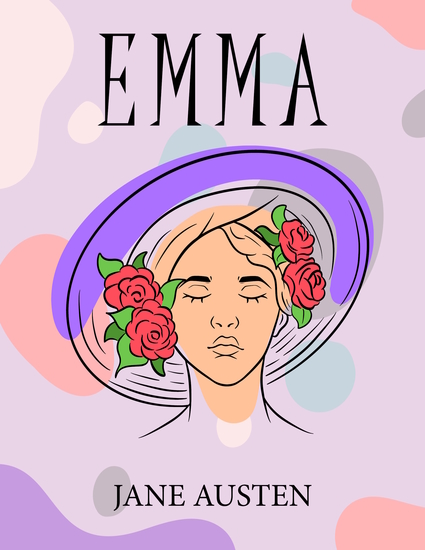
Emma - cover

Emma

Jane Austen

Casa editrice: Pretorian Media

  • 0
  • 0
  • 0

Sinossi

Step into the elegant world of Georgian England with Jane Austen's beloved classic, "Emma". Meet Emma Woodhouse, a young woman with a passion for matchmaking who is convinced she knows best when it comes to matters of the heart. Despite her best intentions, Emma's meddling often leads to unintended consequences and heartache for those around her.

Follow Emma as she navigates the intricate social hierarchy of her community, charming and exasperating those around her in equal measure. Along the way, she must confront her own flaws and biases, learning valuable lessons about friendship, love, and the consequences of her actions.

Austen's signature wit and incisive social commentary are on full display in "Emma". Her richly drawn characters, including the endearing Mr. Knightley, the boisterous Harriet Smith, and the hapless Mr. Elton, are sure to capture your heart and imagination.

First published in 1815, "Emma" has become a timeless classic, beloved by generations of readers for its engaging plot, memorable characters, and insightful commentary on human nature. Whether you are a lifelong Austen fan or a newcomer to her works, "Emma" is sure to enchant and delight you. So curl up with a cup of tea and lose yourself in the captivating world of "Emma".
Disponibile da: 08/04/2023.
Lunghezza di stampa: 450 pagine.

Altri libri che potrebbero interessarti

  • The Girl at the Gate - cover

    The Girl at the Gate

    Wilkie Collins

    • 0
    • 0
    • 0
    The Girl at the Gate is a gripping tale of mystery, secrecy, and emotional conflict by Wilkie Collins, one of the pioneers of sensation fiction. Blending psychological tension with social insight, this compelling short novel draws readers into a world where hidden motives and unspoken truths shape every human connection.
    
    The story centers on a young woman whose quiet presence at the gate of a country estate sparks curiosity, suspicion, and intrigue. As her past slowly comes to light, long-buried secrets emerge—secrets tied to love, betrayal, social class, and the rigid moral expectations of Victorian society. What begins as a simple act of observation unfolds into a suspenseful exploration of identity and deception.
    
    Collins masterfully builds tension through atmosphere and character rather than overt action, allowing psychological depth to drive the narrative. His keen understanding of human behavior reveals how fear, pride, and compassion influence choices, often with life-altering consequences. The novel's concise structure heightens its intensity, making every revelation feel deliberate and powerful.
    
    The Girl at the Gate exemplifies Collins's talent for transforming ordinary settings into stages for dramatic conflict. With its sharp social commentary and subtle emotional complexity, the story offers readers a haunting glimpse into the lives of individuals caught between duty and desire.
    
    Ideal for fans of classic mystery, Victorian literature, and character-driven suspense, The Girl at the Gate remains a timeless reminder that the most profound mysteries are often hidden in plain sight.
    Mostra libro
  • The Tragedy of a Comic Song - Hilarious story written in the early 20th century - cover

    The Tragedy of a Comic Song -...

    Leonard Merrick

    • 0
    • 0
    • 0
    The bookshelves of British literature are incredible collections that have gathered together centuries of very talented authors.  From these Isles their fame spread and whilst among their number many are now forgotten or neglected their talents endure.  Among them is Walter Besant.
    Mostra libro
  • The Treasure of the Lake - cover

    The Treasure of the Lake

    H. Rider Haggard

    • 0
    • 1
    • 0
    Gentleman adventurer Allan Quartermain discovers a strange African village in this 1926 novel by the author of King Solomon’s Mines.An Englishman living in South Africa, Allan Quartermain has spent his life exploring the mysteries of the Dark Continent. When he hears the legend of a lost tribe ruled by a magical priestess, he goes in search of a remote holy lake surrounded by tall cliffs. Together with his companion Hans, Allan discovers a land and a people even more peculiar than the legend describes. Published posthumously in 1926, The Treasure of the Lake is one of the last Allan Quartermain novels written by H. Rider Haggard. Set in the Victorian era, it is a quintessential tale of colonial adventure.
    Mostra libro
  • The Student - From their pens to your ears genius in every story - cover

    The Student - From their pens to...

    Anton Chekhov

    • 0
    • 0
    • 0
    Anton Pavlovich Chekhov was born on 29th January 1860 in Taganrog, on the south coast of Russia.  
    His family life was difficult; his father was strict and over-bearing but his mother was a passionate story-teller, a subject Chekhov warmed to. As he later said; ‘our talents we got from our father, but our soul from our mother’.  
    At school Chekhov was distinctly average. At 16 his father mis-managed his finances and was declared bankrupt. His family fled to Moscow. Chekhov remained and eked out a living by various means, including writing and selling short sketches to newspapers, to finish his schooling. That completed and with a scholarship to Moscow University obtained he rejoined his family. 
    He was able to help support them by selling satirical sketches and vignettes of Russian lifestyles and gradually obtained further commissions. In 1884, he qualified as a physician and, although it earned him little, he often treated the poor for free, he was fond of saying ‘Medicine is my lawful wife, and literature is my mistress.’ 
    His own health was now an issue as he began to cough up blood, a symptom of tuberculosis.  Despite this his writing success enabled him to move the family into more comfortable accommodation.  
    Chekhov wrote over 500 short stories which included many, many classics including ‘The Kiss’ and ‘The Lady with a Dog’.  His collection ‘At Dusk’ won him the coveted Pushkin Prize when was only 26.  
    He was also a major playwright beginning with the huge success of ‘Ivanov’ in 1887.   
    In 1892 Chekhov bought a country estate north of Moscow. Here his medical skills and money helped the peasants tackle outbreaks of cholera and bouts of famine. He also built three schools, a fire station and a clinic.  It left him with less time for writing but the interactions with real people gained him detailed knowledge about the peasantry and their living conditions for his stories.  
    His most famous work, ‘The Seagull’ was received disastrously at its premiere in St Petersburg. It was later restaged in Moscow to highlight its psychological aspects and was a huge success. It led to ‘Uncle Vanya’, ‘The Three Sisters’ and ‘The Cherry Orchard’.  
    Chekhov suffered a major lung hemorrhage in 1897 while visiting Moscow. A formal diagnosis confirmed tuberculosis and the doctors ordered changes to his lifestyle.  
    Despite a dread of weddings the elusive literary bachelor quietly married the actress Olga Knipper, whom he had met at rehearsals for ‘The Seagull’, on 25th May 1901. 
    By May 1904 with his tuberculosis worsening and death imminent he set off for the German town of Badenweiler writing cheerful, witty letters to his family and assuring them his health was improving.  
    On 15th July 1904 Anton Chekhov died at Badenweiler.  He was 44.
    Mostra libro
  • Making a Living - From their pens to your ears genius in every story - cover

    Making a Living - From their...

    Charlotte Perkins Gilman

    • 0
    • 0
    • 0
    Charlotte Perkins Gilman was born on 3rd July 1860 in Hartford, Connecticut, to an unaffectionate mother and a father who abandoned her and her older brother to a life of poverty. 
    Inevitably her schooling was limited and by 15 she had attended seven different schools but received only four years education.  However Charlotte was resourceful and did spend time with her father’s aunts – the suffragist Isabella Beecher Hooker and the ‘Uncle Tom Cabin’s’ author, Harriet Beecher Stowe as well as many hours at the public library studying ancient civilisations. 
    In 1878, she enrolled in classes at the Rhode Island School of Design where she met Martha Luther and they developed a close relationship until Luther married in 1881. Charlotte was devastated and detested romance and love until she met and married the artist Charles Walter Stetson.  
    Their only child, Katharine Beecher Stetson, was born in 1885 but left Charlotte with post-natal depression, then often dismissed as a case of hysteria or nerves.  Unsuited to domestic life she ruptured her life and moved to California with Katherine.  She divorced in 1894 and then sent Katharine east to live with her father and his second wife confirming that his paternal rights be acknowledged and that Katherine establish a relationship with her father. 
    After her mother died in 1893, Charlotte moved back east and became involved with her first cousin, Wall Street attorney, Houghton Gilman who she married in 1900. After his death she moved back to California, where Katherine now lived.   
    Her most popular story is ‘The Yellow Wallpaper’ which touched on her own post-partum depression and underlined the need for women to be responsible for their mental and physical well-being, as the narrator is ordered by her husband/doctor to take compete rest in her room where she is isolated and becomes obsessed with the revolting yellow wallpaper.   
    She wrote other notable short stories the best of which we also include.   
    Charlotte lectured widely for social reform, wrote important non-fiction works that questioned our patriarchal system and left a legacy as a leading and positive spokesperson for feminism.  
    She was diagnosed with incurable breast cancer in 1932 and, as she wrote in her suicide note and autobiography, she ‘chose chloroform over cancer’    
    Charlotte Perkins Gilman took her own life on 17th August 1935, aged 75, in Pasadena, California.
    Mostra libro
  • Titus Andronicus - cover

    Titus Andronicus

    Pierre Arthur Laure, Tom...

    • 0
    • 0
    • 0
    The noble Titus returns victorious to Rome, bringing Tamora, queen of the Goths, as his captive. When one of Tamora's sons is condemned to die, she vows revenge, and, aided by the villainous Aaron, she exacts a terrible retribution, inaugurating a grim cycle of rape, murder, and cannibalism. This macabre, often brilliant tragedy comes from the earliest stage of Shakespeare's dramatic career. 
    Titus is played by David Troughton and Tamora by Harriet Walter. Paterson Joseph is Aaron, and David Burke is Marcus.
    Mostra libro