Junte-se a nós em uma viagem ao mundo dos livros!
Adicionar este livro à prateleira
Grey
Deixe um novo comentário Default profile 50px
Grey
Assine para ler o livro completo ou leia as primeiras páginas de graça!
All characters reduced
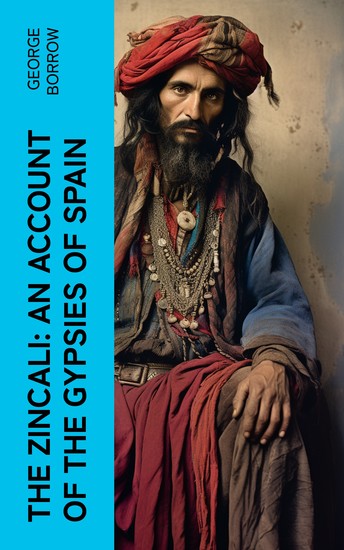
The Zincali: An Account of the Gypsies of Spain - cover
LER

The Zincali: An Account of the Gypsies of Spain

George Borrow

Editora: e-artnow

  • 0
  • 0
  • 0

Sinopse

The Zincali - An Account of the Gypsies of Spain is an interesting and valuable book by George Borrow (1803-1881), a gifted linguist who spent five years in Spain as a missionary. Some part of that time he spent in jail because of his activities. George Borrow learned the language of the Zincali (Gypsies or Roma) and began to mix with them to prepare a valuable account of their life, presented in this book.
Disponível desde: 26/11/2023.
Comprimento de impressão: 606 páginas.

Outros livros que poderiam interessá-lo

  • Connecting Scotland's History - A Scottish History Timeline Linked into 2000 Years of World History - cover

    Connecting Scotland's History -...

    Anna Groundwater

    • 0
    • 0
    • 0
    What was happening elsewhere in the world when Robert the Bruce was outlawed and Mary Queen of Scots lost her head? When Genghis Khan was on the warpath and Ivan the Terrible was the Russian czar, what was happening in Scotland? Find the answers to these questions in 2,000 years of Scottish history presented alongside what was happening in the rest of the world.
    By placing events in Scotland in relation to those elsewhere, we can see what is different or distinctive about Scotland's experience. Simultaneously we can also see where movements in Scottish history were part of wider cultural or political change in Europe and beyond. John Knox's fiery sermons of the 1560s were connected into a wider Protestant Reformation, but they also represented a singularly Scottish version of a European phenomenon.
    Connecting Scotland's History also gives us a history of 'many Scotlands'. We see the hybrid nature of a country where multiple peoples have come together in a distinctively Scottish mixture. From the Gaels, Picts and Norse people to more recent influxes from England, Ireland, continental Europe and beyond, Scotland's history tells us of internal connections as well as connections between Scotland and the wider world.
    Ver livro
  • Handsome Lake: The Life and Legacy of the Iroquois Prophet - cover

    Handsome Lake: The Life and...

    Editors Charles River

    • 0
    • 0
    • 0
    The name "Iroquois", like many Native American tribal names, is not a name the people knew themselves by, but a word applied to them by their enemies the Huron, who called them “Iroquo” (rattlesnake) as an insult. The French later added the suffix “ois.” Moreover, the Iroquois are not even a single tribe but a confederation of several different tribal nations that include the Seneca, Oneida, Onondaga, Mohawk, Cayuga and the Tuscarora, who didn’t become part of the union until the early 1700’s. The name Haudenosaunee (pronounced “ho-den-oh-SHO-nee”) is the name the people use for themselves, which translates as “the People of the Longhouse.” They are also commonly known as the Six Nations. 
    	Despite their own cultural differences, the nations that comprised the Iroquois Confederacy established their political dominance across much of America’s East Coast and Midwest through conquest, and it is that aspect which has perhaps best endured among Americans in terms of the Iroquois’ legacy. European settlers who came into contact with the Mohawks in the Northeast certainly learned to respect their combat skills, to the point that there were literally bounties on the Mohawks’ heads, with scalps fetching money for colonists who succeeded in slaying them and carrying away the “battle prize”. 
    	Handsome Lake (1735-1815) lived through the confederacy’s most turbulent time. His long life started when the Iroquois were powerful and widely feared and respected by all the tribal peoples in the region, and also by the French and the British. He lived through wars, some victories and some defeats, as well as the disunity and the collapse of traditional ways. Handsome Lake experienced his visions late in his life, at a time when the Six Nations, and his own life, were at their nadir.
    Ver livro
  • Rome's Imperial Legacy - The Empire's Enduring Impact - cover

    Rome's Imperial Legacy - The...

    Rogan Fish

    • 0
    • 0
    • 0
    The rise of the Roman Empire marks one of the most transformative periods in world history. Emerging from humble beginnings as a small settlement on the banks of the Tiber River, Rome grew to dominate the ancient world through a combination of military prowess, political innovation, and cultural assimilation. This chapter explores the foundations of Roman power, the empire’s expansive reach across continents, and the key figures who shaped its rise. 
    Rome's origins date back to the 8th century BCE, with its legendary founding attributed to Romulus and Remus. Initially a monarchy, Rome evolved into a republic around 509 BCE after the overthrow of the last Etruscan king. This transition marked the beginning of a new political era, where power rested with the Senate and elected magistrates. The republican framework, characterized by a system of checks and balances, laid the foundation for Rome's expansive ambitions. As the republic matured, it developed a complex legal system and a robust military structure that would be instrumental in its growth. 
    One of Rome’s most significant advantages was its strategic location. Positioned at the crossroads of the Mediterranean, Rome became a hub for trade and communication. The city's ability to integrate conquered territories through road networks and infrastructure projects further solidified its control. Additionally, the Roman practice of granting varying levels of citizenship to conquered peoples helped maintain loyalty and stability within the expanding state.
    Ver livro
  • Ramesses the Great - Egypt's King of Kings - cover

    Ramesses the Great - Egypt's...

    Toby Wilkinson

    • 0
    • 0
    • 0
    The life, dramatic reign, and enduring legacy of the pharaoh Ramesses the Great, with lessons for the present, from internationally acclaimed Egyptologist Toby Wilkinson 
     
    Ramesses II ruled the Nile Valley and the wider Egyptian empire from 1279 to 1213 B.C., one of the longest reigns in pharaonic history. He was a cultural innovator, a relentless self-promoter, and an astute diplomat—the peace treaty signed after the Battle of Kadesh was the first in recorded history. He outbuilt every other Egyptian pharaoh, leaving behind the temples of Abu Simbel; the great hypostyle hall of Karnak; the tomb for his wife Nefertari; and his own memorial, the Ramesseum. 
     
    His reputation eclipsed that of all other pharaohs as well: he was decried in the Bible as a despot, famed in literature as Ozymandias, and lauded by early antiquarians as the Younger Memnon. His rule coincided with the peak of ancient Egypt’s power and prosperity, the New Kingdom (1539–1069 B.C.). 
     
    In this authoritative biography, Toby Wilkinson considers Ramesses’ preoccupations and preferences, uncovering the methods and motivations of a megalomaniac ruler, with lessons for our own time.
    Ver livro
  • Dark Psychology - Mental Manipulation and Psychosocial Tricks to Influence Others - cover

    Dark Psychology - Mental...

    Wesley Felt

    • 0
    • 0
    • 0
    Why does understanding a psychological risk lead to physical reactions? The answer lies in human anatomy, specifically in the mechanisms behind real pain. Is mental pain comparable to physical pain? How does intense pain manifest? When it comes to physical pain, the process is straightforward. We rarely consider the basic motor reflexes controlled by the spine. 
      
    During physical sensation, a nervous impulse is transmitted through the nerves to the corresponding part of the brain, which then sends a response impulse to an organ. But how does mental pain occur? Our bodies possess a self-regulation function for all physiological processes. In essence, the brain responds to changes in the body's chemical processes. 
      
    It’s likely that emotions cause some form of change in the body, such as in the blood’s composition. This change is then transmitted to the brain, which sends a response impulse to an organ, resulting in real pain. This phenomenon is known as the psychological cause of real pain. 
      
    For example, if you’re afraid of the dark, you might experience discomfort or a choking sensation in your throat. It feels as if something is obstructing your breathing. The fear isn’t of the darkness itself but of what might be lurking within it. This fear is based on information you've gathered throughout your life. A child, for instance, doesn’t fear the dark until they’re told what might be in it. This is what we call conscious fear.
    Ver livro
  • Backroom Deals in Our Backyards - How Government Secrecy Harms Our Communities and the Local Heroes Fighting Back - cover

    Backroom Deals in Our Backyards...

    Miranda S. Spivack

    • 0
    • 0
    • 0
    Most Americans are likely to encounter the effects of government malfeasance or neglect close to home—from their governors, mayors, town councils, school boards, police, and prosecutors. In fact, deals shrouded in darkness are regularly made at the state and local levels, often the result of closed-door discussions between governments and industry without any scrutiny whatsoever from the public. Too often, residents are intentionally kept on the outside, struggling to get information about significant issues affecting their communities—from car crashes and dirty drinking water, to failing safety gear—until the backroom deals are done and it's too late to challenge them. 


    Backroom Deals in Our Backyards tells the story of five "accidental activists"—people from across the United States who started questioning why their local and state governments didn't protect them from issues facing their communities and why there was a frightening lack of transparency surrounding the way these issues were resolved. The secret deals, lies, and corruption they uncover shake their faith in government but move them to action. 


    For readers of Chain of Title and Superman's Not Coming, Spivack's revealing take on a hidden dimension of American politics will outrage and educate anyone who cares about the forces shaping their own communities.
    Ver livro