
Unisciti a noi in un viaggio nel mondo dei libri!
Aggiungi questo libro allo scaffale
Grey
Scrivi un nuovo commento Default profile 50px
Grey
Iscriviti per leggere l'intero libro o leggi le prime pagine gratuitamente!
All characters reduced
Tricameralism - Exploring the Dynamics of Triple-Chamber Governance - cover

Tricameralism - Exploring the Dynamics of Triple-Chamber Governance

Fouad Sabry

Casa editrice: One Billion Knowledgeable

  • 0
  • 0
  • 0

Sinossi

Explore the world of legislative structures with "Tricameralism," an engaging addition to the "Political Science" series. This book thoroughly examines the three-chamber legislative system, covering its history, implementations, and impacts on governance. Understanding Tricameralism is essential for anyone interested in political representation and legislative dynamics.
 
1: Tricameralism - Discover Tricameralism's origins and foundations, setting the stage for its advantages.
 
2: Bicameralism - Compare the two-chamber system, clarifying Tricameralism's unique features.
 
3: Unicameralism - Investigate the simplicity of single-chamber systems and their contrast with Tricameralism.
 
4: Separation of Powers - Analyze Tricameralism's interaction with governmental power separation, enhancing checks and balances.
 
5: Parliament - Explore Parliament's role in various frameworks and its adaptation to a tricameral model.
 
6: Legislature - Understand legislatures and how Tricameralism fits into legislative systems.
 
7: Upper House - Investigate the upper house's functions and significance in a tricameral system.
 
8: Lower House - Explore the lower house's role and interaction with other chambers.
 
9: Senate - Analyze the Senate's position in bicameral and tricameral systems.
 
10: House of Representatives - Review the House of Representatives' function and its tricameral adaptations.
 
11: Sejm - Examine Poland's Sejm as a historical tricameral example.
 
12: Legislative Yuan - Explore Taiwan's Legislative Yuan and its practical tricameral aspects.
 
13: National Assembly (ROC) - Understand the ROC National Assembly's contributions to tricameral discussions.
 
14: Congress of the Philippines - Analyze the Philippine Congress's relevance to tricameralism.
 
15: Speaker (Politics) - Investigate the Speaker's role and its impact on a tricameral legislature.
 
16: Control Yuan - Explore Taiwan's Control Yuan and its implications for tricameral governance.
 
17: Congress of the Dominican Republic - Review the Dominican Republic's Congress and its tricameral relevance.
 
18: Senate of Romania - Analyze Romania's Senate and its relationship to tricameralism.
 
19: Tricameral Parliament - Investigate historical and current examples of tricameral parliaments.
 
20: National Assembly (Haiti) - Understand Haiti's National Assembly within the tricameral context.
 
21: Multicameralism - Conclude with a discussion on multicameral systems, placing Tricameralism in a broader context.
 
"Tricameralism" provides invaluable insights into a complex legislative model. With detailed analyses and historical examples, it’s essential reading for anyone eager to deepen their understanding of political structures, offering significant returns on your investment in political science.
Disponibile da: 21/09/2024.
Lunghezza di stampa: 320 pagine.

Altri libri che potrebbero interessarti

  • The Autobiography of Benjamin Franklin - cover

    The Autobiography of Benjamin...

    Benjamin Franklin

    • 0
    • 0
    • 0
    The story of a runaway apprentice who became a world-changing thinker—and helped shape a nation.
    In this candid and remarkable autobiography, Benjamin Franklin shares how discipline, curiosity, and unwavering ambition transformed his life. From humble beginnings to becoming a renowned scientist, writer, diplomat, and Founding Father, Franklin offers timeless lessons on self-improvement, leadership, and personal success. His wisdom on habits, character, and practical achievement still inspires readers centuries later.
    
    Praised as "the most important autobiography in American history," this classic reveals the mindset of a man whose ideas shaped the modern world—and whose life proves that greatness is built, not born.
    
    If you want motivation, insight, and a guide to living with purpose, Franklin's journey will light your path.
    
    Start reading today—and learn from a life defined by invention, determination, and vision.
    Mostra libro
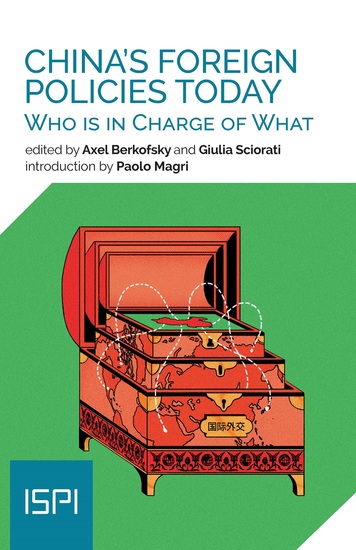
  • China's Foreign Policies Today - Who is in Charge of What - cover

    China's Foreign Policies Today -...

    Axel Berkofsky, Giulia Sciorati

    • 0
    • 0
    • 0
    Since Xi Jinping took power in 2012, China's foreign policy has significantly shifted from a defensive to an assertive approach. For decades, Beijing worked to integrate into the liberal international order, presenting itself as a peacefully rising power. By contrast, however, under Xi's leadership, the country is attempting to create a global system that is more favourable to its own interests.
    The Report examines China's current foreign policy approach, and the drivers behind the country's shift away from tradition. What are the main features of China's foreign policy today? How are decisions being taken, and to what extent do interest groups continue to have a say in decision-making after the recent power centralisation?
    Mostra libro
  • State looters Again and again - cover

    State looters Again and again

    Philippe Pascot

    • 0
    • 0
    • 0
    On September 15, 2017, in front of millions of television viewers, Emmanuel Macron, with François Bayrou, his Keeper of the Seals at the time, delivered his first lie: “It is now impossible to be elected when you have a B2 criminal record”. Nothing could be further from the truth: in 2025, it is still possible to stand for election and be elected after having been convicted by the courts, whereas there are 396 jobs requiring a clean criminal record. Ten years after the best-seller Pilleurs d'État (State Looters), which sold 120,000 copies, Philippe Pascot takes stock of the progress and setbacks in French politics, listing all the legal abuses still available to the political class: exorbitant salaries and associated expenses, tax exemptions, multiple pensions, fictitious employment, exceptional justice, show trials, bogus declarations of interest and activities, and so many other little arrangements between friends... For Philippe Pascot, the findings are indisputable: “Behind a declared desire for transparency and moralization in the political sphere, our elected representatives continue to nurture their own interests through laws that are less and less comprehensible, in order to escape criminal prosecution and drape themselves in a circumstantial innocence. ”
    Mostra libro
  • Summary of George Soros’s In Defense of Open Society - cover

    Summary of George Soros’s In...

    Falcon Press

    • 0
    • 0
    • 0
    Buy now to get the main key ideas from George Soros’s In Defense of Open Society 
      
    In Defense of Open Society (2019) is a collection of essays, articles, and speeches by George Soros, an international philanthropist. Soros examines the many dangers facing open societies, from rising dictatorships to the growing threat of tech companies and artificial intelligence. He chronicles his journey to philanthropy in detail, telling how he survived Nazi Germany, started a hedge fund, became mega-rich, and turned his attention toward protecting democracy and resolving world economic problems. Soros touches on many current global issues, especially in Europe - including a prophetic look at Ukraine’s perilous situation.
    Mostra libro
  • The Art of War - cover

    The Art of War

    Anonimo

    • 0
    • 0
    • 0
    Know yourself and you will win all battles.
    
    Dive into the enduring legacy of Sun Tzu's The Art of War, the definitive guide to strategy, warfare, and leadership that has stood the test of time. Written by a legendary military strategist over 2,000 years ago, this ancient Chinese treatise offers deep insights into mastering conflict and harnessing the power of strategic thinking in both military and civilian arenas.
    
    In this book you'll learn:
    
    - Know Thyself and the Enemy: Gain a strategic advantage by understanding your strengths and vulnerabilities, as well as those of your adversaries.
    
    - Leadership and Discipline: Emphasize the critical role of strong, disciplined leadership in guiding teams to victory.
    
    - Tactical Deception: Utilize tactics of surprise and deception to outsmart opponents and secure a competitive edge.
    
    - Achieving Victory with Strategy: Advocate for the supreme art of winning without conflict, highlighting the importance of intelligence and psychological warfare.
    
    
    The essential principles and tactical wisdom from Sun Tzu are still relevant for today's challenges in business, politics, and everyday life.
    
    Whether you're a leader, strategist, or thinker, The Art of War equips you with timeless strategies for overcoming obstacles and achieving your goals.
    
    Master the art of strategy, conquer challenges, and seize success—own The Art of War today. Don't wait—take the first step toward victory now!
    Mostra libro
  • The United States and the Armenian Genocide - History Memory Politics - cover

    The United States and the...

    Julien Zarifian

    • 0
    • 0
    • 0
    During the first World War, over a million Armenians were killed as Ottoman Turks embarked on a bloody campaign of ethnic cleansing. Scholars have long described these massacres as genocide, one of Hitler's prime inspirations for the Holocaust, yet the United States did not officially recognize the Armenian Genocide until 2021. 


    This is the first book to examine how and why the United States refused to acknowledge the Armenian Genocide until the early 2020s. Although the American government expressed sympathy towards the plight of the Armenians in the 1910s and 1920s, historian Julien Zarifian explores how, from the 1960s, a set of geopolitical and institutional factors soon led the United States to adopt a policy of genocide nonrecognition which it would cling to for over fifty years, through Republican and Democratic administrations alike. He describes the forces on each side of this issue: activists from the US Armenian diaspora and their allies, challenging Cold War statesmen worried about alienating NATO ally Turkey and dealing with a widespread American reluctance to directly confront the horrors of the past. Drawing from congressional records, rare newspapers, and interviews with lobbyists and decision-makers, he reveals how genocide recognition became such a complex, politically sensitive issue.
    Mostra libro