Unisciti a noi in un viaggio nel mondo dei libri!
Aggiungi questo libro allo scaffale
Grey
Scrivi un nuovo commento Default profile 50px
Grey
Iscriviti per leggere l'intero libro o leggi le prime pagine gratuitamente!
All characters reduced
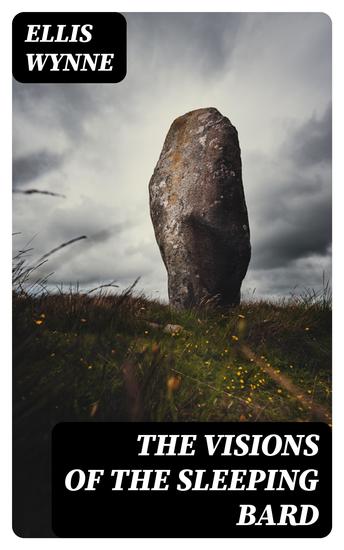
The Visions of the Sleeping Bard - cover

The Visions of the Sleeping Bard

Ellis Wynne

Traduttore Robert Gwyneddon Davies

Casa editrice: DigiCat

  • 0
  • 0
  • 0

Sinossi

In "The Visions of the Sleeping Bard," Ellis Wynne weaves a tapestry of allegorical dreams and mystical experiences that reflect the rich tapestry of Welsh spiritual and literary tradition. Written in an era marked by the flowering of Renaissance thought, Wynne's prose is imbued with a poetic style that invites readers into a multi-layered examination of virtue, morality, and the influence of divine imagination. The book's surreal narrative structure, laden with visionary symbolism, engages with the cultural dialogues of its time, offering an introspective view of the human condition through the lens of a bard's introspections and otherworldly encounters. Ellis Wynne, a prominent figure in Welsh literature, emerged from a culturally vibrant background that informed his fascination with vision and morality. His life in the late 17th and early 18th centuries, coupled with the religious and philosophical currents of the time, deeply influenced his writing. Wynne's commitment to exploring the inner workings of the soul, particularly in contrast with the external worldly challenges, plays a crucial role in shaping the dreamlike quality of this work. Readers seeking a profound exploration of spiritual introspection will find "The Visions of the Sleeping Bard" both enlightening and thought-provoking. Its rich allegorical content and lyrical prose make it a significant contribution to the canon of Welsh literature, inviting modern readers to reflect on their own moral journeys and existential musings.
Disponibile da: 16/09/2022.
Lunghezza di stampa: 107 pagine.

Altri libri che potrebbero interessarti

  • Winter Stranger - Poems - cover

    Winter Stranger - Poems

    Jackson Holbert

    • 0
    • 0
    • 0
    Winner of the Max Ritvo Poetry Prize, Jackson Holbert’s Winter Stranger is a solemn record of addiction and the divided affections we hold for the landscapes that shape us.In the cold, seminal countryside of eastern Washington, a boy puts a bullet through his skull in a high school parking lot. An uncle crushes oxycodone into “a thousand red granules.” Hawks wheel above a dark, indifferent river. “I left that town / forever,” Holbert writes, but its bruises appear everywhere, in dreams of violent men and small stars, the ghosts of friends and pills. These poems incite a complex emotional discourse on what it means to leave—if it’s ever actually possible, or if our roots only grow longer to accommodate the distance.Punctuated by recollections of loved ones consumed by their addictions, Winter Stranger also questions the capricious nature of memory, and poetry’s power to tame it. “I can make it all sound so beautiful. / You’ll barely notice that underneath / this poem there is a body / decaying into the American ground.” Meanwhile, the precious realities vanish—“your hair, your ears, your hands.”—leaving behind “the fucked up / trees,” the “long, cold river.” In verse both bleak and wishful, Holbert strikes a fine balance between his poetic sensibilities and the endemic cynicism of modern life.“It is clear now that there are no ends,” Holbert writes, “Just winters.” Though his poems bloom from hills heavy with springtime snow, his voice cuts through the cold, rich with dearly familiar longings: to not be alone, to honor our origins, to survive them.
    Mostra libro
  • Ghost in the Box - cover

    Ghost in the Box

    Tara A. Devlin

    • 0
    • 0
    • 0
    What is the Ghost in the Box? 
    An urban legend states that if you watch television alone late at night, you might come across the “Ghost in the Box.” It appears in the white noise when programming has ended for the night, but this is most certainly no regular program. And if you happen to see it, then you’ll only have three more days until “she” comes for you. 
    Who is this ghost? Why is she killing people who happen across her late at night? And is there any way to escape once you’ve seen her on screen…? 
    Click the buy now button to uncover the secrets behind this terrifying urban legend right now. 
    Reiwa Tanpen is a series of stand-alone Japanese horror, mystery, and thriller novellas and short stories for the new era. Featuring Japanese ghosts, curses, killers, yokai, urban legends, and much more, each story can be read independently of the rest.
    Mostra libro
  • The Poetry of John Milton - Sparkling poems from the famed man behind Paradise Lost - cover

    The Poetry of John Milton -...

    John Milton

    • 0
    • 0
    • 0
    John Milton was born in Bread Street, London, on December 9th, 1608.  His early years were privately tutored before gaining a place at St Paul’s School and in 1625 he matriculated at Christ's College, Cambridge, earning a BA in 1629 and an MA in 1632. At Cambridge he had developed a reputation for poetic skill but also experienced alienation from his peers and university life as a whole.  
    The next 6 years were spent in private study. He read both ancient and modern works of theology, philosophy, history, politics, literature and science, in preparation for a poetical career.  Milton mastered Latin, Greek, Hebrew, French, Spanish, and Italian. To these he would add Old English (whilst researching his History of Britain) and also acquired more than a passing acquaintance in Dutch.  
    Although he was studying, some of his poetry from this time is remarkable; L’Allegro and Il Penseroso in 1631 and Lycidias in 1638. 
    In May 1638, Milton embarked upon a 15 month tour of France and Italy. These travels added a new and direct experience of artistic and religious traditions, especially Roman Catholicism.  He cut the journey short to return home during the summer of 1639 because of what he claimed were "sad tidings of civil war in England."  
    Once home, Milton wrote prose tracts against episcopacy, in the service of the Puritan and Parliamentary cause.  
    He married 16-year-old Mary Powell in June 1643 but she left him after only a few months during which he wrote and published several writings on divorce. Mary did return after 3 years and their life thereafter seemed harmonious.  Milton received a hostile response to the divorce tracts and drove him to write Areopagitica, his celebrated attack on pre-printing censorship.  
    With the parliamentary victory in the Civil War, Milton wrote The Tenure of Kings and Magistrates (1649) which defended popular government and implicitly sanctioned the regicide which led to his appointment as Secretary for Foreign Tongues by the Council of State.  
    On 24 February 1652 Milton published his Latin defense of the English People, Defensio Pro Populo Anglicano, also known as the First Defense. Milton's Latin prose and intellectual sweep, quickly gained him a European reputation.  
    Tragically his first wife, Mary, died on May 5th, 1652 following the birth of their fourth child.   The following year Milton had become totally blind, probably due to glaucoma.  He then had to dictate his verse and prose to helpers, one of whom was the poet Andrew Marvell. 
    He married again to Katherine Woodcock but she died in February 1658, less than four months after giving birth to a daughter, who also tragically died.  
    Though Cromwell’s death in 1658 caused the English Republic to collapse Milton stubbornly clung to his beliefs and in 1659 he published A Treatise of Civil Power, attacking the concept of a state-dominated church. Upon the Restoration in May 1660, Milton went into hiding for his life. An arrest warrant was issued and his writings burnt. He re-emerged after a general pardon was issued, but was nevertheless arrested and briefly imprisoned before influential friends, such as Marvell, now an MP, intervened 
    His third marriage was to Elizabeth Mynshull. Despite a 31-year age gap, the marriage seemed happy and Milton spent the remaining decade of his life living quietly in London, apart from a short spell in Chalfont St. Giles, during the Great Plague of London.  
    Milton was to now publish his greatest works, which had been gestating for many years.
    Mostra libro
  • The Poetry of Elinor Wylie - One of the first American female celebrities Wylie was surrounded by media and controversy her whole life yet managed to write amazing poetry too - cover

    The Poetry of Elinor Wylie - One...

    Elinor Wylie

    • 0
    • 0
    • 0
    Elinor Morton Hoyt was born on 7th September, 1885 in Somerville, New Jersey and from age 12 grew up in Washington D C where her father served as assistant attorney general and later solicitor general.  Her early education together with her renowned beauty suggests she was being trained for life as a debutante but her life quickly found another route as she became absorbed in the world of books. 
     
    An early marriage following her graduation ended when, after being pursued by Horace Wylie, 17 years her senior and a married Washington lawyer with three children, she eloped to England with him.  His wife would not divorce him and the subsequent scandal was widely publicised further fueled by the suicide in 1912 of her abandoned husband. 
     
    With Wylie's encouragement she published in 1912, ‘Incidental Number’, assembled from poems of the previous decade. 
     
    Despite a child from her first marriage Elinor subsequently endured miscarriages, a stillbirth and a premature child who lived for only one week.  When Wylie’s deserted wife agreed to a divorce, the couple returned to the United States and married but they were already drawing apart. 
     
    In 1921, Elinor’s ‘Nets to Catch the Wind’, was published. It was an immediate success and a prize-winner.  In New York’s literary circles she found her next husband who acted as her agent – the poer William Rose Benét, brother of the famed Stephen. They married in 1923 and that same year ‘Black Armor’, was published. The New York Times said "There is not a misplaced word or cadence in it."  She also published her first of four novels, ‘Jennifer Lom’, to excellent reviews. 
     
    She worked for a time as the poetry editor of Vanity Fair, an editor of Literary Guild, and a contributing editor of The New Republic.  Her third book of poetry, ‘Trivial Breath’ arrived in 1928 as did the failure of her marriage with Benét.  
     
    She moved again to England and fell in love with a friend’s husband, to whom she wrote, and later published a series of 19 sonnets; ‘Angels and Earthly Creatures’. 
     
    Elinor Wylie suffered high blood pressure all her adult life and this eventually led to her death at Benet’s New York apartment on 16th December, 1928 where she suffered a stroke. She was 43. 
     
    1 - The Poetry of Elinor Wylie - An Introduction 
    2 - Wild Peaches by Elinor Wylie 
    3 - Escape by Elinor Wylie 
    4 - Ophelia by Elinor Wylie 
    5 - The Puritan's Ballad by Elinor Wylie 
    6 - Velvet Shoes by Elinor Wylie 
    7 - Parting Gift by Elinor Wylie 
    8 - Little Elegy by Elinor Wylie 
    9 - Love Song by Elinor Wylie 
    10 - Quarrel by Elinor Wylie 
    11 - Valentine by Elinor Wylie 
    12 - Les Lauriers Sont Coupee by Elinor Wylie 
    13 - Sunset on the Spire by Elinor Wylie 
    14 - Phases of the Moon by Elinor Wylie 
    15 - Full Moon by Elinor Wylie 
    16 - Nadir by Elinor Wylie 
    17 - Address to My Soul by Elinor Wylie 
    18 - The Child on the Curbstone by Elinor Wylie 
    19 - The Eagle and the Mole by Elinor Wylie 
    20 - The Falcon by Elinor Wylie 
    21 - A Proud Lady by Elinor Wylie 
    22 - Preference by Elinor Wylie 
    23 - Nancy by Elinor Wylie 
    24 - The Lion and the Lamb by Elinor Wylie 
    25 - Beauty by Elinor Wylie 
    26 - The Tortoise in Eternity by Elinor Wylie 
    27 - The Fairy Goldsmith by Elinor Wylie 
    28 - Innocent Landscape by Elinor Wylie 
    29 - A Madman's Song by Elinor Wylie 
    30 - Poor Earth by Elinor Wylie 
    31 - The Church Bell by Elinor Wylie 
    32 - Cold Blooded Creatures by Elinor Wylie 
    33 - Let No Charitable Hope by Elinor Wylie 
    34 - Little Joke by  Elinor Wylie 
    35 - Pretty Words by Elinor Wylie 
    36 - Incantation by Elinor Wylie 
    37 - Fire and Sle
    Mostra libro
  • Her Birth and Later Years - New and Collected Poems 1971–2021 - cover

    Her Birth and Later Years - New...

    Irena Klepfisz

    • 0
    • 0
    • 0
    Winner of the Publishing Triangle's Audre Lorde Award for Lesbian Poetry (2023)Finalist for a National Jewish Book Award, Berru Award for Poetry, in memory of Ruth and Bernie Weinflash (2022)A trailblazing lesbian poet, child Holocaust survivor, and political activist whose work is deeply informed by socialist values, Irena Klepfisz is a vital and individual American voice. This book is the first complete collection of her work. For fifty years, Klepfisz has written powerful, searching poems about relatives murdered during the war, recent immigrants, a lost Yiddish writer, a Palestinian boy in Gaza, and various people in her life. In her introduction to Klepfisz's A Few Words in the Mother Tongue, Adrienne Rich wrote: "[Klepfisz's] sense of phrase, of line, of the shift of tone, is almost flawless." Her Birth and Later Years was a Finalist for the Jewish Book Award and winner of the Audre Lorde Award for Lesbian Poetry.
    Mostra libro
  • What Is Amazing - cover

    What Is Amazing

    Heather Christle

    • 0
    • 0
    • 0
    Inspired by a voracious curiosity about humans and other subjects, the poems in Heather Christle's What Is Amazing describe and invent worlds in an attempt to understand through participation. The book draws upon the wisdom of foolishness and the logic of glee, while simultaneously exploring the suffering inherent to embodied consciousness. Speakers play out moments of bravado and fear, love and mortality, disappointment and desire. They socialize incorrigibly with lakes, lovers, fire, and readers, reasoning their way to unreasonable conclusions. These poems try to understand how it is that we come to recognize and differentiate objects and beings, how wholly each is attached to its name, and which space reveals them. What Is Amazing delights in fully inhabiting its varied forms and voices, singing worlds that often coincide with our own.
    Mostra libro