Unisciti a noi in un viaggio nel mondo dei libri!
Aggiungi questo libro allo scaffale
Grey
Scrivi un nuovo commento Default profile 50px
Grey
Iscriviti per leggere l'intero libro o leggi le prime pagine gratuitamente!
All characters reduced
Aurora Leigh - cover

Aurora Leigh

Elizabeth Barrett Browning

Casa editrice: DigiCat

  • 0
  • 0
  • 0

Sinossi

Elizabeth Barrett Browning's "Aurora Leigh" is a pioneering work of 19th-century literature that deftly intertwines poetry and prose to encapsulate the struggles of a female artist in a patriarchal society. Presented as a novel in verse, the narrative follows the titular character, Aurora, as she navigates her artistic ambitions while grappling with societal norms, personal relationships, and her own identity. Browning employs a vivid and innovative literary style, utilizing rich imagery and intricate verse to comment on the limitations placed upon women, making it a significant precursor to feminist literature. Browning, herself an accomplished poet, was influenced by the gender politics of her time, as well as her own experiences of confinement and social expectation. A strong advocate for women's rights, her personal struggles, including her own defiance against societal norms, fueled her inspiration for Aurora's character. This semi-autobiographical aspect invites readers to witness not only the societal critique but also Browning's own yearning for artistic freedom and personal fulfillment. Readers seeking a profound exploration of the female psyche and the quest for self-expression will find "Aurora Leigh" an insightful and enriching experience. Browning's heightened use of language and exploration of critical themes render this text essential for understanding both the women's literary tradition and the broader cultural shifts of the 19th century.
Disponibile da: 10/08/2022.
Lunghezza di stampa: 239 pagine.
Altri libri che potrebbero interessarti

  • Weir of Hermiston - cover

    Weir of Hermiston

    Robert Louis Stevenson

    • 0
    • 0
    • 0
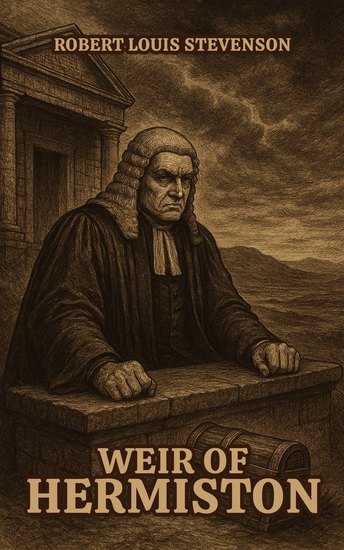
    First published posthumously in 1896, Weir of Hermiston is widely regarded as one of Robert Louis Stevenson's most powerful and mature novels, a dark and compelling exploration of authority, justice, and human conflict.
    
    Set in early 19th-century Scotland, the novel centers on the intense and tragic relationship between Archie Weir and his father, Adam Weir, the formidable Lord Hermiston. As a harsh and unyielding judge, Lord Hermiston embodies the rigid moral and legal authority of his time, ruling from the bench with uncompromising severity. Archie, sensitive and idealistic, struggles to reconcile his sense of justice and compassion with his father's cold absolutism.
    
    Seeking refuge from this oppressive relationship, Archie retreats to the countryside, where he becomes entangled in a passionate and dangerous romance that draws him into a web of jealousy, betrayal, and violence. As personal loyalties clash with moral duty, the novel builds toward an inevitable and haunting tragedy.
    
    Stevenson's prose in Weir of Hermiston is rich, atmospheric, and psychologically profound. Through vividly drawn characters and a stark Scottish landscape, he examines the destructive consequences of inflexible authority and the emotional cost of moral rigidity. Although left unfinished at Stevenson's death, the novel remains remarkably complete in its emotional power and thematic depth.
    
    Weir of Hermiston stands as a masterwork of classic literature—somber, intense, and deeply human. It is an essential read for those who appreciate literary fiction that confronts the complexities of justice, family, and the darker corners of the human heart.
    Mostra libro
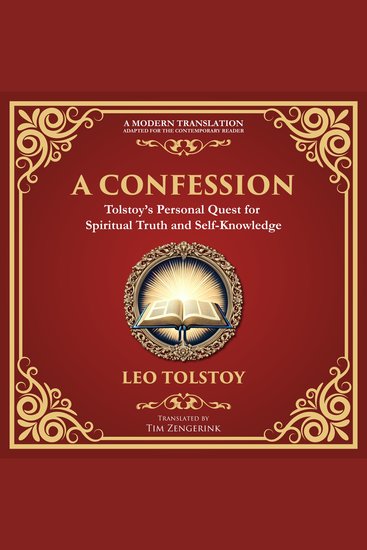
  • A Confession - A Journey Through Doubt Faith and the Search for Meaning - A Modern Translation - Adapted for the Contemporary Reader - cover

    A Confession - A Journey Through...

    Leo Tolstoy

    • 0
    • 0
    • 0
    How does one find meaning when life seems meaningless? 
    In A Confession, Leo Tolstoy embarks on a deeply personal and philosophical journey through his own crisis of faith. Despite being one of the most successful writers of his time, he finds himself consumed by existential dread—questioning the purpose of life, the inevitability of death, and whether true fulfillment is even possible. 
    As he grapples with these questions, Tolstoy delves into the philosophies of science, religion, and spirituality, ultimately arriving at a profound realization that would shape the rest of his life. This short yet powerful work is a raw and unfiltered glimpse into the mind of one of history’s greatest literary figures, offering insights that remain profoundly relevant today. 
    What You’ll Discover in This Modern Translation:A Candid Exploration of Existential Crisis – Follow Tolstoy’s honest and unfiltered reflections on life’s biggest questions.A Thought-Provoking Journey Through Philosophy and Faith – Engage with Tolstoy’s struggle to reconcile reason with belief.A Fresh, Readable Translation – This adaptation preserves Tolstoy’s depth while making his reflections clear and engaging for contemporary readers.A Timeless Work on the Search for Meaning – Discover insights that resonate with anyone questioning the purpose of life. 
    More than just an autobiography, A Confession is a work of philosophical and spiritual discovery that continues to inspire readers seeking answers to life’s greatest mysteries. 
    What does it mean to truly live? 
    Get your copy today and embark on Tolstoy’s powerful journey of self-discovery.
    Mostra libro
  • Heart of Darkness - cover

    Heart of Darkness

    Joseph Conrad

    • 0
    • 0
    • 0
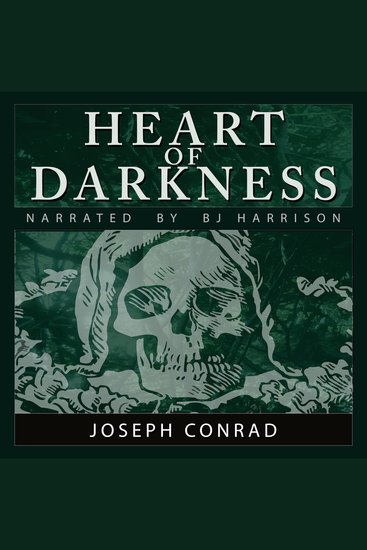
    “A weary pilgrimage amongst hints for nightmares.” This is how Marlowe describes his journey into the Belgian Congo. And while Europeans go mad, Corporations turn tyrannous, and the legend of a great Ivory hunter is dangled before him, Marlowe observes everything with a keen eye, as we journey with him, into the Heart of Darkness.
    Mostra libro
  • The Island of Doctor Moreau - cover

    The Island of Doctor Moreau

    H. G. Wells

    • 0
    • 0
    • 0
    "Not to go on all-fours; that is the Law. Are we not Men?"
    
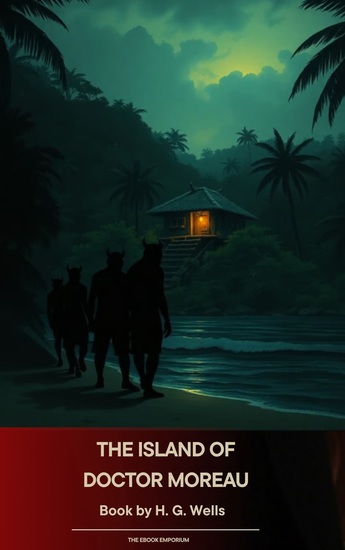
    After being shipwrecked in the South Pacific, Edward Prendick is rescued and brought to a remote island inhabited by the brilliant, exiled physiologist Dr. Moreau. There, Prendick discovers a nightmare beyond his wildest imagination: a population of grotesque "Beast Folk"—animals transformed into humanoid shapes through the agony of vivisection and surgical grafting. As Moreau attempts to "carve" the animal out of the beast, the primal instincts of his creations begin to resurface. This chilling masterpiece is a foundational text of biological horror that questions what truly separates humanity from the beasts of the field.
    
    The "Law" and the Divine Surgeon: At the heart of the novel is the "Law"—a series of chanted prohibitions meant to suppress the animal instincts of the Beast Folk. Moreau acts as a cruel, indifferent god, using pain as a tool for "civilization." Wells uses this premise to satirize religion, social conditioning, and the Victorian belief that science alone could perfect human nature.
    
    A Critique of Scientific Hubris: Dr. Moreau is the ultimate "mad scientist," driven by a cold, intellectual curiosity that completely ignores the suffering of his subjects. The novel remains startlingly relevant in the age of genetic engineering and organ transplantation, serving as a cautionary tale about the ethics of "playing God" with the building blocks of life.
    
    A Descent into the Primal: As the social order of the island collapses, Prendick is forced to confront the beast within himself. The novel's haunting conclusion, where the protagonist returns to London only to see the animal eyes and instincts in his fellow humans, is one of the most powerful and unsettling endings in English literature.
    
    Enter the House of Pain. Purchase "The Island of Doctor Moreau" today and discover the animal truth.
    Mostra libro
  • Dubliners - cover

    Dubliners

    James Joyce

    • 0
    • 0
    • 0
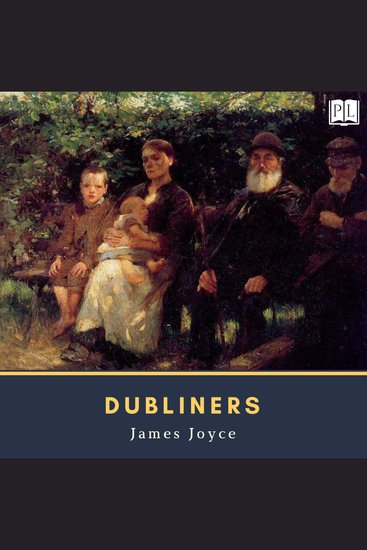
    Dubliners is a collection of picturesque short stories that paint a portrait of life in middle-class Dublin in the early 20th century. Joyce, a Dublin native, was careful to use actual locations and settings in the city, as well as language and slang in use at the time, to make the stories directly relatable to those who lived there.
    The collection had a rocky publication history, with the stories being initially rejected over eighteen times before being provisionally accepted by a publisher - then later rejected again, multiple times. It took Joyce nine years to finally see his stories in print, but not before seeing a printer burn all but one copy of the proofs. Today Dubliners survives as a rich example of not just literary excellence, but of what everyday life was like for average Dubliners in their day.
    Mostra libro
  • The Purple Cloud - cover

    The Purple Cloud

    Matthew Phipps Shiel

    • 0
    • 0
    • 0
    The Purple Cloud by Adultbrain is a hypnotic sonic journey into surreal landscapes of consciousness, memory, and desire. Blending immersive narration with atmospheric sound design, this audiobook adaptation transforms the cult-favorite experience into a vivid psychological dreamscape. Adultbrain’s haunting delivery pulls listeners through waves of mystery, emotional tension, and cosmic introspection, where reality dissolves beneath a drifting purple haze. Perfect for late-night listening, fans of experimental storytelling, dark ambient moods, and mind-expanding fiction will find themselves completely absorbed in this unforgettable audio experience.
    Mostra libro