Unisciti a noi in un viaggio nel mondo dei libri!
Aggiungi questo libro allo scaffale
Grey
Scrivi un nuovo commento Default profile 50px
Grey
Iscriviti per leggere l'intero libro o leggi le prime pagine gratuitamente!
All characters reduced
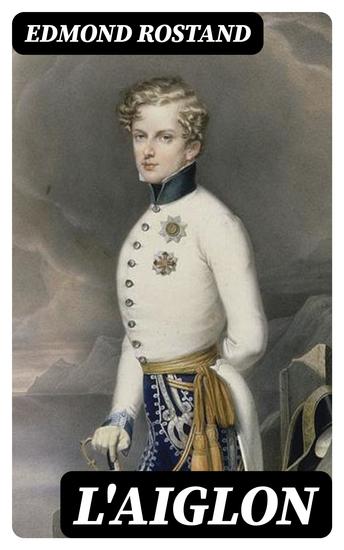
L'Aiglon - cover

L'Aiglon

Edmond Rostand

Traduttore Louis Napoleon Parker

Casa editrice: DigiCat

  • 0
  • 0
  • 0

Sinossi

Edmond Rostand's "L'Aiglon" is a monumental verse play that intricately weaves the historical and the personal, focusing on the life of Napoleon's son, the Duke of Reichstadt. Set in the early 19th century, the play is notable for its vibrant poetry and rich character portrayals, encapsulating the themes of identity, legacy, and the struggles between ambition and ennui. Rostand employs a lyrical style that echoes the Romanticism of his time, creating a powerful narrative that questions the nature of greatness and the burdens of heritage in a rapidly changing Europe. Rostand, a luminary of French theater best known for his classic "Cyrano de Bergerac," draws upon his deep fascination with the Napoleonic saga and its enduring impact on French national identity. His own experiences of theater, artistry, and the political climate of fin-de-siècle Paris infused his writing with a sense of urgency and passion, making "L'Aiglon" a poignant exploration of inherited destiny and unfulfilled dreams. I highly recommend "L'Aiglon" to readers who appreciate the interplay of history and poetry, as well as those who admire complex character studies. Rostand's masterful prose invites reflection on the dualities of legacy and self-discovery, revealing truths that remain relevant across generations.
Disponibile da: 10/08/2022.
Lunghezza di stampa: 110 pagine.
Altri libri che potrebbero interessarti

  • Messiah The - A Sacred Ecologue - Pope is one of our greatest poets here he once again demonstrates his brilliant talents - cover

    Messiah The - A Sacred Ecologue...

    Alexander Pope

    • 0
    • 0
    • 0
    Alexander Pope was born on May 21st, 1688 in London into a Catholic family.   
    His education was affected by the recent Test Acts, upholding the status of the Church of England and banning Catholics from teaching.  In effect this meant his formal education was over by the age of 12 and Pope was to now immerse himself in classical literature and languages and to, in effect, educate himself.    
    From this age too he also suffered from numerous health problems including a type of tuberculosis (Pott’s disease) which resulted in a stunted, deformed body.  Only to grow to a height of 4’ 6”, with a severe hunchback and complicated further by respiratory difficulties, high fevers, inflamed eyes and abdominal pain all of which served to further isolate him, initially, from society.  
    However his talent was evident to all. Best known for his satirical verse, his translations of Homer and the use of the heroic couplet, he is the second-most frequently quoted writer in The Oxford Dictionary of Quotations, after Shakespeare.  
    With the publication of Pastorals in 1709 followed by An Essay on Criticism (1711) and his most famous work The Rape of the Lock (1712; revised and enlarged in 1714) Pope became not only famous but wealthy.  
    His translations of the Iliad and the Odyssey further enhanced both reputation and purse.  His engagement to produce an opulent new edition of Shakespeare met with a mixed reception.  Pope attempted to "regularise" Shakespeare's metre and rewrote some of his verse and cut 1500 lines, that Pope considered to be beneath the Bard’s standard, to mere footnotes.  
    Alexander Pope died on May 30th, 1744 at his villa at Twickenham (where he created his famous grotto and gardens) and was buried in the nave of the nearby Church of England Church of St Mary the Virgin.   
    Over the years and centuries since his death Pope’s work has been in and out of favour but with this distance he is now truly recognised as one of England’s greatest poets.
    Mostra libro
  • Poets & Their Inner Demons – Suicide - Poems by poets all linked by suffering similar issues - cover

    Poets & Their Inner Demons –...

    John Gould Fletcher, Marina...

    • 0
    • 0
    • 0
    The stereotypical image of a poet is one of unknown talent starving in a garret and who’s faithfulness and legacy to the art is discovered only after their death. 
    In some cases this is undoubtedly true, but Poets being human and with the same building blocks of physical and mental health as the rest of us, also had the same afflictions and problems as the rest of us.   
    The long roll call of names and the truncated legacies that were left behind is filled with these lost talents. 
    In this volume the despair at life in general and their art in particular ruins lives in a few short moments.  Do their poems reflect this upcoming tragedy or at a particular point are they simply overwhelmed by what they see as a hopeless situation.   
    The long roll call and the truncated legacies that were left behind is filled with the names of these lost talents.
    Mostra libro
  • Ground Provisions - cover

    Ground Provisions

    Shauna M. Morgan

    • 0
    • 0
    • 0
    In her debut collection, Ground Provisions, Shauna M. Morgan takes us on a sensory journey across landscapes of the body and the earth. Immersing readers in lush language and imagery, the collection traverses the natural world from the Caribbean to North America and provokes questions about identity in the making of diasporas and the formation of multi-ethnic realities. What remains and what is created anew? Who emerges at the fissures of culture? What is learned from human relationships with the land? How do we make provisions between generations?
    These poems guide us through a backabush Jamaican community to an often-hostile US environment as they interrogate power, follow the desire for freedom, explore the necessity of ancestral memory, and answer the crucial need to touch the earth and each other.
    Sonnet and sestina walk alongside contemporary poetic forms such as haibun and duplex to explore family origins and Afro-Indo cultural syncretism while offering intimate views of the speakers and their interior lives. We witness grief overwhelming the mind and body, children holding painful secrets, women leaning into sensuality, and families coming to terms with fracture and reconciliation.
    Through intertwined familial and historical inheritances, these poems ask us to imagine the liberatory possibilities of establishing new roots with legacy seeds.
    Mostra libro
  • My Land of Freedom - A poem of war and freedom - cover

    My Land of Freedom - A poem of...

    Ifeanyi Njoku

    • 0
    • 0
    • 0
    This poem is a powerful reflection on war, displacement, and the struggle for freedom. It tells the tragic story of a people who fought for liberation but were met with violence, loss, and eventual surrender. Likely referencing the Igbo experience during the Nigerian Civil War, it captures the pain of oppression and the resilience of those who endured it. 
    The poem begins with a contradiction: "In my land of freedom, I walked with fear." This highlights the irony of living in a place meant to be free but being consumed by anxiety. The people demand justice, yet their cries are silenced by violence. The line "Killing our brothers, and leaving us undone" conveys both physical loss and emotional devastation. 
    The imagery of "scorching soil" and "separated from families" paints a picture of suffering and displacement. War does not just take lives—it tears families apart and leaves hearts unable to thrive. The mention of "refugee camps" emphasizes how many were forced from their homes, left to question their identity: "Are we unlucky, to be Igbo?" This speaks to a deep sense of abandonment and injustice. 
    The poem also highlights betrayal, as leaders fail to protect their people. "Everyone was a soldier, in this war we couldn't win." This line captures the grim reality of a war where survival itself was a battle. Despite their bravery, they were up against overwhelming forces. 
    The final lines are heartbreaking: "We had to surrender, and say goodbye to our pride." This is not just a loss of battle but a loss of dignity. Yet, even in surrender, their story lives on. This poem is a tribute to resilience, a reminder of suffering, and a call to remember those who fought, even when the world turned away.
    Mostra libro
  • The Poetry of Robert Herrick - 17th Century lyrical poet that was also a cleric - cover

    The Poetry of Robert Herrick -...

    Robert Herrick

    • 0
    • 0
    • 0
    The Clergyman and poet, Robert Herrick was born in Cheapside, in London in 1591. An exact date is not known though he was baptized on August 24th, the seventh child of Nicholas Herrick, a wealthy goldsmith.  
    Some controversy surrounds several chapters in his early years.  The first are allusions that his father, in November 1592, two days after making a will, killed himself by jumping from the fourth-floor window of his house. However, the Queen's Almoner did not confiscate the Herrick estate for the crown as was the usual procedure with suicides, so an alternate narrative emerged that he fell accidentally which seems to have more credence. 
    There is no record of Herrick attending school. Some claim a poem alludes to Westminster School, others merely that he meant Westminster, the area. Another school of thought claims he was educated at Merchant Taylor’s School.  What is known is that in 1607 he was apprenticed to his uncle Sir William Herrick as a goldsmith.   
    Herrick certainly seems to have been a keen and avid poet. The earliest work known to be written by him dates from 1610; 'A Country Life', and deals with the move from London to farm life in Leicestershire.  
    After six years as an apprentice, when Herrick was 22 he matriculated at St John’s College, Cambridge before moving to Trinity College and graduating with his Bachelor of Arts in 1617, Master of Arts in 1620, and in 1623 he was ordained priest.  
    By 1625 he was well known as a poet, mixing in literary circles in London such as that around Ben Jonson. An avowed admirer of Jonson he was also one of a group whom became known as ‘The Sons of Ben’ writing both in his style and about him. 
    In 1629 he was presented by Charles I to the parishioners of Dean Prior, a remote parish of Devonshire. The best of his work was written in the peace and seclusion of country life; 'To Blossoms' and 'To Daffodils' are classical depictions of a devoted appreciation of nature.  
    However, after he refused to subscribe to The Solemn League and Covenant, he was ejected from Devonshire in 1647 and moved to London where he published his religious poems Noble Numbers (1647), and Hesperides (1648). 
    Herrick was distinguished as a lyric poet, and some of his love songs, for example, 'To Anthea' and 'Gather Ye Rose-buds' are considered exceptional.  
    By 1660 he was reinstated at Dean Prior where he lived for the remainder of his life. He wrote no more poems after 1648 but over his life it is thought he wrote in the region of 2,500 poems in total, only a small portion of which were ever published. 
    He died in October 1674, at the age of 83 in circumstances unknown.  He was buried on October 15th, 1674 in an unmarked grave in the churchyard at Dean Prior. 
     This volume comes to you from Portable Poetry, a specialized imprint from Deadtree Publishing.  Our range is large and growing and covers single poets, themes, and many compilations.
    Mostra libro
  • Inter Alia - cover

    Inter Alia

    Suzie Miller

    • 0
    • 0
    • 0
    'We're all failing a generation of boys, and therefore we're failing a whole generation of girls.'
    Jessica Parks is smart, compassionate, and a true maverick at the peak of her career as a London Crown Court Judge. The system needs to change, and she's challenging it one case at a time.
    Behind the robe, Jessica is a loving wife, a supportive parent and a karaoke fiend. But when an incident involving her son threatens to blow the family apart, she finds herself having to fight for everything she holds dear.
    A scalding examination of modern masculinity and motherhood, Inter Alia premiered at the National Theatre, London, in 2025, with Rosamund Pike as Jessica. Written by Suzie Miller and directed by Justin Martin, the production reunited the team behind the global phenomenon Prima Facie, which won Best New Play at the 2023 Olivier and WhatsOnStage Awards.
    Mostra libro