Unisciti a noi in un viaggio nel mondo dei libri!
Aggiungi questo libro allo scaffale
Grey
Scrivi un nuovo commento Default profile 50px
Grey
Iscriviti per leggere l'intero libro o leggi le prime pagine gratuitamente!
All characters reduced
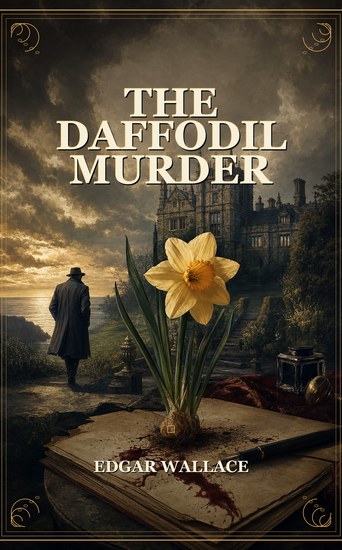
The Daffodil Murder - cover

The Daffodil Murder

Edgar Wallace

Casa editrice: Caelwick Press

  • 0
  • 0
  • 0

Sinossi

The Daffodil Murder by Edgar Wallace is offered here in a clean English digital edition prepared for fluent ebook reading. The work stands within classics and gives modern readers direct access to a public-domain classic with navigable structure and a restrained typographic presentation. The opening pages establish the book's atmosphere with this first movement: "I am afraid I don't understand you, Mr. Lyne." Odette Rider looked gravely at the young man who lolled against his open desk. Her clear skin was tinted with the faintest pink, and there was in the sober depths of those grey eyes of hers a light which would have warned a man less satisfied with his This edition is suited to readers who want a reliable, uncluttered version of the text for study, rediscovery, and sustained reading.
Disponibile da: 06/06/2026.
Lunghezza di stampa: 235 pagine.

Altri libri che potrebbero interessarti

  • A Legend of Old Egypt - From their pens to your ears genius in every story - cover

    A Legend of Old Egypt - From...

    Boleslaw Prus

    • 0
    • 0
    • 0
    Aleksander Głowacki who wrote under the nom de plume Boleslaw Prus was born on 20th August 1847 at Hrubieszów in the Kingdom of Poland, at that time, controlled by the Russian Empire. 
    At three his mother died and then at nine his father.  Female relatives helped raise him but at 15 he joined the Polish uprising against the might of Imperial Russia.  Wounded on the battlefield, arrested and imprisoned, he was later released into the care of a relative and resumed secondary school and then Warsaw University but poverty forced him to leave after two years.  At some point he developed agoraphobia which often caused problems. 
    In 1869, he enrolled in the Forestry Department at Puławy but was soon sacked and so he began a system of self-education that led to work as a newspaper columnist on a wide-ranging series of topics that eventually became the ‘Weekly Chronicles’ and spanned 40 years. 
    With his finances now stabilized he married and then adopted his late brother-in-law’s son.  
    It seems he had doubts as to the scale of his talents and early on adopted the name ‘Boleslaw Prus’ for both his journalistic and literary offerings. 
    His work as a short-story writer met with much acclaim. He wrote several dozen of them, originally published in newspapers and ranging in length from micro-story to novella. His keen observation of everyday life and sense of humor are evident in them.  
    During his career he also wrote novels. After ‘Pharoah’, in 1895, he embarked on a four-month journey taking in Berlin, Dresden, Nuremberg, Rapperswil in Switzerland, where he stayed for two months, and his final destination, Paris.  Here his agoraphobia was so bad he couldn’t cross the Seine.  
    However, his writing continued and in 1911 his novel ‘Changes’, though uncompleted, began to be serialised.  It was never finished. 
    Boleslaw Prus died on 19th May 1912, at his Warsaw apartment.  He was 64.  A National Hero, thousands attended both his funeral service and interment.
    Mostra libro
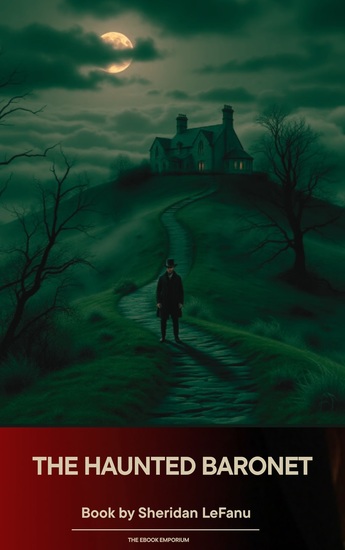
  • The Haunted Baronet - cover

    The Haunted Baronet

    Joseph Sheridan Le Fanu

    • 0
    • 0
    • 0
    "The lake does not give up its dead easily, and the House of Mardykes has a long memory."
    
    Sir Bale Mardykes is a man of iron will and a cold heart, living in the ancestral home of Mardykes Hall near the secluded village of Golden Friars. He believes he is the master of his own fate, but he is haunted by a centuries-old prophecy of doom. When he cruelly causes the death of his secretary and distant relative, Philip Feltram, Sir Bale believes he has cleared a nuisance from his path. But when Feltram returns—changed, silent, and carrying the chill of the lake—Sir Bale realizes that the dead have a way of reclaiming what is theirs. It is a slow-burn masterpiece of Gothic tension, where the environment itself seems to conspire against the living.
    
    The Environment as Antagonist: Le Fanu utilizes the "Atmospheric Gothic" to its fullest potential here. The swirling mists of the Lake District, the echoes in the mountain passes, and the bottomless depths of the lake serve as metaphors for Sir Bale's mounting paranoia. The house and the land are not just settings; they are active participants in the baronet's downfall.
    
    A Study in Psychological Ruin: Unlike many contemporary ghost stories, the horror in The Haunted Baronet is deeply internal. We watch Sir Bale's skepticism slowly erode as the supernatural elements become undeniable. The figure of the "Returned" Feltram is one of Le Fanu's most effective creations—a ghost that doesn't just haunt, but inhabits the social space of the living.
    
    The Weight of Ancestry: Le Fanu explores the idea that we are never truly free from the actions of our forefathers. Sir Bale is a victim of his own bloodline as much as his own choices. The novella builds to a tragic and inevitable climax that proves that some debts can only be paid in lifeblood.
    
    Beware the calm waters of Golden Friars. Purchase "The Haunted Baronet" today.
    Mostra libro
  • The Emperor's New Clothes - cover

    The Emperor's New Clothes

    Hans Christian Andersen

    • 0
    • 0
    • 0
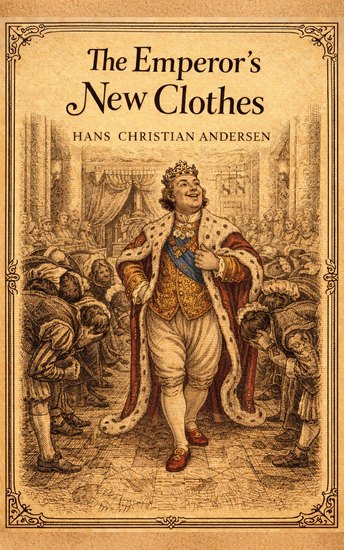
    Step into a world of vanity, deception, and surprising courage in Hans Christian Andersen's timeless classic, The Emperor's New Clothes. This beloved fairy tale tells the story of a proud and fashion-obsessed emperor who cares for little beyond his extravagant wardrobe and public image. When two cunning swindlers arrive at his court claiming they can weave the most magnificent fabric ever seen—one invisible to anyone unfit for their position or hopelessly foolish—the emperor eagerly commissions a royal suit.
    
    As the "magical" cloth is crafted, ministers and officials are sent to inspect the progress. Afraid of appearing incompetent or foolish, each one pretends to see the nonexistent fabric, praising its beauty and sophistication. The emperor himself, unwilling to admit he sees nothing, joins in the charade. Soon, the entire kingdom buzzes with admiration for a suit that does not exist.
    
    On the day of the grand procession, the emperor proudly parades through the streets wearing his "new clothes," while his subjects, equally fearful of exposing themselves as unworthy, applaud in false admiration. It is only when a small child, innocent and unafraid of judgment, speaks the simple truth—"But he isn't wearing anything at all!"—that the illusion is shattered.
    
    With humor, wit, and sharp social commentary, Andersen's tale explores themes of pride, conformity, honesty, and the power of truth. Beneath its playful storytelling lies a profound message about the dangers of vanity and the human tendency to follow the crowd rather than trust one's own judgment.
    
    The Emperor's New Clothes remains a powerful and relevant story for readers of all ages, reminding us that courage often comes from the most unexpected voices—and that sometimes, the simplest truth is the hardest to admit.
    Mostra libro
  • Vizetelly And Company - cover

    Vizetelly And Company

    Guy de Maupassant

    • 0
    • 0
    • 0
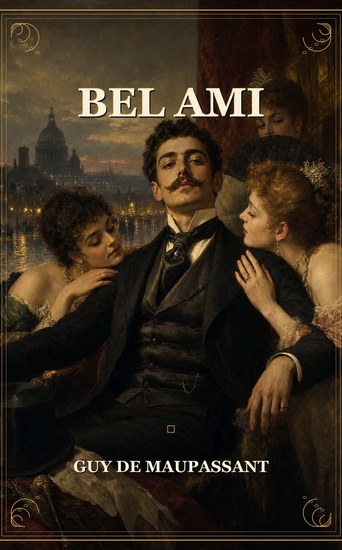
    Georges Duroy returns to Paris from military service in Algeria penniless. After meeting up with an old friend, he finds journalism work at a renowned newspaper. He gradually climbs the ranks to chief-editor—but all this time, he hasn't been using his wit as a writer, but rather the clever manipulation of the women around him, to get ahead. Bel Ami is Guy de Maupassant's second novel. It was first published in 1885 and was an instant success, with fifty more editions appearing in the following two years. This translation by Vizetelly & Co. was published in 1888. Bel Ami shows the rampant corruption prevalent in 19th century French high society. Guy de Maupassant (died 1893) was one of the most distinguished authors of the Victorian age. Their work has endured across generations and continues to be read and studied worldwide. As a work of classic literary fiction, Vizetelly And Company exemplifies the narrative craft and social insight that defined great storytelling of its era. Literary fiction of this period was characterized by careful attention to character psychology, social milieu, and the moral questions that animated public discourse.
    Mostra libro
  • Sanctuary - cover

    Sanctuary

    Edith Wharton

    • 0
    • 0
    • 0
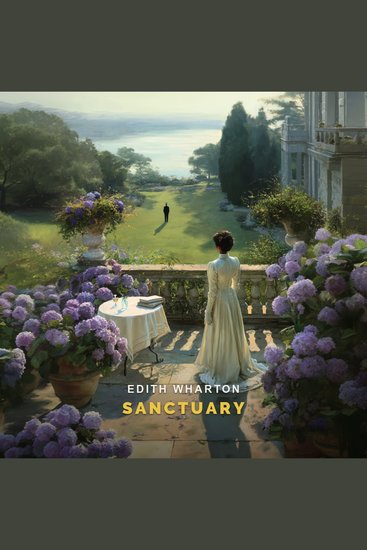
    In this poignant and intense novella, Edith Wharton examines the haunting weight of moral conscience and the redeeming power of maternal love. When young Kate Orme discovers her fiance suppressed a dying confession to protect his fortune, she chooses to marry him not for romance, but to provide a moral sanctuary for their unborn child. Years later, when their son faces a ruinous ethical temptation, her silent devotion becomes his final salvation.
    Mostra libro
  • Phineas Redux - cover

    Phineas Redux

    Anthony Trollope

    • 0
    • 0
    • 0
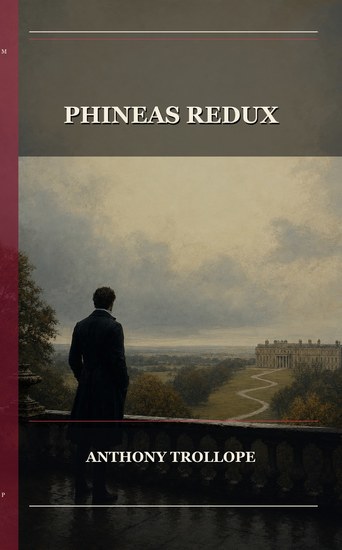
    At the end of Phineas Finn , the second of Anthony Trollope's Palliser series , Phineas has abandoned his parliamentary career, accepted a sinecure in the civil service in Dublin, and married his Irish sweetheart. As Phineas Redux begins, he is a widower and tired of Dublin life. Fortunately for him, his friends in London believe he might be enticed back to take a role as a member of Parliament in the face of the latest political crisis. Phineas answers the call—but all does not turn out as planned. His friends welcome him back, but even this involves serious social complications. And, it transpires, even the likable Phineas Finn has political enemies who wish to spoil his return to public life. Along the way, Phineas continues to deepen his understanding of both personal and public politics. As in The Eustace Diamonds , Trollope weaves high drama into his plot, but refuses to keep secrets from his readers. Far from having a dampening effect on the tension, the focus of Trollope's art directs his readers' attention to the psychological conflicts that arise. At this point in the series, something of Trollope's own political disappointments begin to cast a shadow over the maneuvers and machinations of both local and parliamentary politics. There is still a nobility about public service, though, of which Trollope never loses sight, and which will play a larger role as the series moves towards its conclusion. Anthony Trollope (died 1882) was one of the most distinguished authors of the Victorian age. Their work has endured across generations and continues to be read and studied worldwide. As a work of classic literary fiction, Phineas Redux exemplifies the narrative craft and social insight that defined great storytelling of its era. Literary fiction of this period was characterized by careful attention to character psychology, social milieu, and the moral questions that animated public discourse.
    Mostra libro