Unisciti a noi in un viaggio nel mondo dei libri!
Aggiungi questo libro allo scaffale
Grey
Scrivi un nuovo commento Default profile 50px
Grey
Iscriviti per leggere l'intero libro o leggi le prime pagine gratuitamente!
All characters reduced
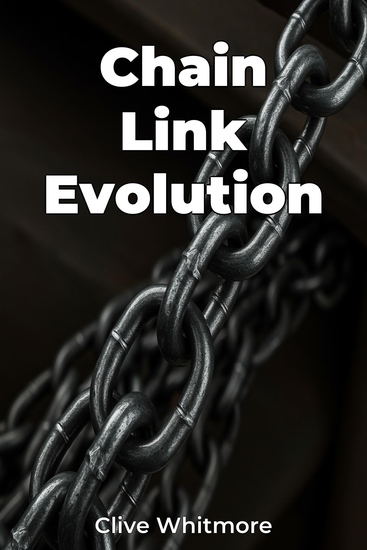
Chain Link Evolution - cover

Chain Link Evolution

Clive Whitmore

Traduttore A AI

Casa editrice: Publifye

  • 0
  • 0
  • 0

Sinossi

Chain Link Evolution explores the surprisingly rich history and diverse applications of metal interconnection systems, commonly known as chain link. This book reveals how these systems have evolved from simple adornments in ancient civilizations to critical components in modern industries. Did you know that the development and increasing precision in chain link manufacturing directly mirror advancements in fields like transportation, construction, and medicine? The book highlights the role of material science, from precious metals to ferrous alloys, in shaping the performance and capabilities of chain link. The book uniquely combines the aesthetic and functional evolution of chain link systems, offering a comprehensive understanding of this often-overlooked technology. Readers will learn how manufacturing processes have transformed from manual crafting to mechanized and automated production, driving down costs and increasing accessibility. Chain Link Evolution presents its information chronologically, beginning with fundamental principles and early examples, then progressing through the evolution of materials and manufacturing revolutions, before concluding with case studies across various industries.
Disponibile da: 27/02/2025.
Lunghezza di stampa: 64 pagine.


Altri libri che potrebbero interessarti

  • Elixir - A Parisian Perfume House and the Quest for the Secret of Life - cover

    Elixir - A Parisian Perfume...

    Theresa Levitt

    • 0
    • 0
    • 0
    For centuries, scientists believed that living matter possessed a special quality—a spirit or essence—that differentiated it from nonliving matter. But by the nineteenth century, the scientific consensus was that the building blocks of one were identical to the building blocks of the other. Elixir tells the story of two young chemists who were not convinced, and how their work rewrote the boundary between life and nonlife. 


    In the 1830s, Édouard Laugier and Auguste Laurent were working in Laugier Père et Fils, the oldest perfume house in Paris. By day they prepared the perfumery's revitalizing elixirs and rejuvenating eaux, drawing on alchemical traditions that equated a plant's vitality with its aroma. In their spare time they hunted the vital force that promised to reveal the secret to life itself. Their ideas, roundly condemned by established chemists, led to the discovery of structural differences between naturally occurring molecules and their synthetic counterparts, even when the molecules were chemically identical. 


    Scientists still can't explain this anomaly, but it may point to critical insights concerning the origins of life on Earth. Rich in sparks and smells, brimming with eccentric characters, experimental daring, and the romance of the Bohemian salon, Elixir is a fascinating cultural and scientific history.
    Mostra libro
  • The Curious History of the Heart - A Cultural and Scientific Journey - cover

    The Curious History of the Heart...

    Vincent M. Figueredo

    • 0
    • 0
    • 0
    For much of recorded history, people considered the heart to be the most important organ in the body. In cultures around the world, the heart—not the brain—was believed to be the location of intelligence, memory, emotion, and the soul. Over time, views on the purpose of the heart have transformed. Modern medicine and science dismissed what was once the king of the organs as a mere blood pump subservient to the brain, yet the heart remains a potent symbol of love and health and an important part of our cultural iconography. 


    This book traces the evolution of our understanding of the heart from the dawn of civilization to the present. Vincent M. Figueredo—an accomplished cardiologist and expert on the history of the human heart—explores the role and significance of the heart in art, culture, religion, philosophy, and science across time and place. He examines how the heart really works, its many meanings in our emotional and daily lives, and what cutting-edge science is teaching us about this remarkable organ. Figueredo considers the science of heart disease, recent advancements in heart therapies, and what the future may hold. He highlights the emerging field of neurocardiology, which has found evidence of a "heart-brain connection" in mental and physical health, suggesting that ancient views hold more truth than moderns suspect.
    Mostra libro
  • Artificial Intelligence and Data Science Practices in Scientific Development - cover

    Artificial Intelligence and Data...

    Alexandre Ribas Semeler

    • 0
    • 0
    • 0
    This book constitutes a comprehensive exploration of two pivotal domains that are indispensable for comprehending the contemporary challenges confronting science and society: artificial intelligence and data science. These disciplines profoundly influence the generation of knowledge, the development of innovations, and the resolution of complex problems in various domains of social, economic, political, and cultural life. Entitled Artificial Intelligence and Data Science Practices in Scientific Development, this book compiles studies and applications from research groups collaborating at the intersection of technology, information, and scientific innovation and cultural areas.
    Mostra libro
  • On IVF - cover

    On IVF

    Stephanie Gray Connors

    • 0
    • 0
    • 0
    In vitro fertilization (IVF)—the conceiving of new human beings in a laboratory—has become a widespread and international industry affecting millions upon millions of people. By some estimates, over eight million children in the US have been born as a result of this technology since 1978. But is it ethical to create human beings by science and not by sex? Is IVF inherently good or inherently evil? Or, perhaps, is it something that is sometimes right and other times wrong, depending on the circumstances? In this timely volume in Word on Fire’s Dignity Series, Stephanie Gray Connors engages both the mind and the heart in answering these increasingly urgent questions. Looking at the morality of IVF and the stories of people who have either embraced or refused it, On IVF will draw readers into the profound suffering of infertility and miscarriage, the difficulties and dangers of IVF, and the hope-filled alternatives that honor the dignity of human beings—both born and preborn.
    Mostra libro
  • Cobalt - Cradle of the Demon Metals Birth of a Mining Superpower - cover

    Cobalt - Cradle of the Demon...

    Charlie Angus

    • 0
    • 1
    • 0
    The world is desperate for cobalt. It drives the proliferation of digital and clean technologies. But this "demon metal" has a horrific present and a troubled history. 


    The modern search for cobalt has brought investors back to a small town in Northern Canada, a place called Cobalt. Like the demon metal, this town has a dark and turbulent history. 


    The tale of the early-twentieth-century mining rush at Cobalt has been told as a settle's adventure, but Indigenous people had already been trading in metals from the region for two thousand years. And the events that happened here—the theft of Indigenous lands, the exploitation of a multicultural workforce, and the destruction of the natural environment—established a template for resource extraction that has been exported around the world. 


    Charlie Angus reframes the complex and intersectional history of Cobalt within a broader international frame—from the conquistadores to the Western gold rush to the struggles in the Democratic Republic of Congo today. He demonstrates how Cobalt set Canada on its path to become the world's dominant mining superpower.
    Mostra libro
  • Lyme Disease - cover

    Lyme Disease

    Sam Dickinson

    • 0
    • 0
    • 0
    Lyme disease is an infectious disease caused by the bacteria Borrelia burgdorferi. B. burgdorferi is transmitted to humans by biting an infected black-legged or deer tick. The tick becomes infected after feeding on infected deer, birds, or mice.A tick has to be present on the skin for at least 36 hours to transmit the infection. Many people with Lyme disease have no memory of a tick bite.Lyme disease was first recognized in the town of Old Lyme, Connecticut, in 1975. It’s the most common tick-borne illness in Europe and the United States.People who live or spend time in wooded areas known for disease transmission are more likely to get this illness. People with domesticated animals visiting wooded regions also have a higher risk of developing Lyme disease.Cases of Lyme disease have varied yearly but have steadily increased for the past 20 years in the United States.Lyme disease is not common in all United States and is primarily concentrated in the Northeast and upper Midwest regions.
    Mostra libro