¡Acompáñanos a viajar por el mundo de los libros!
Añadir este libro a la estantería
Grey
Escribe un nuevo comentario Default profile 50px
Grey
Suscríbete para leer el libro completo o lee las primeras páginas gratis.
All characters reduced
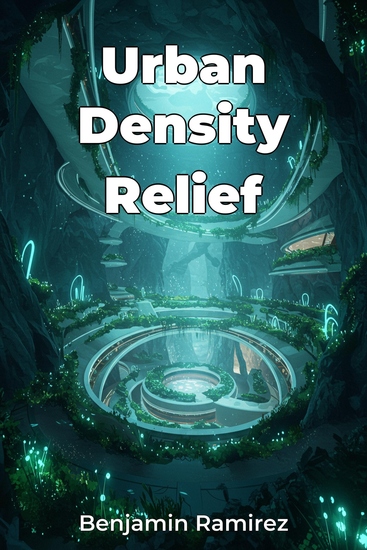
Urban Density Relief - cover

Urban Density Relief

Benjamin Ramirez

Traductor A AI

Editorial: Publifye

  • 0
  • 0
  • 0

Sinopsis

"Urban Density Relief" explores the potential of subterranean urbanism as a solution to urban overcrowding in megacities. The book investigates the architectural and engineering feasibility of large-scale underground construction, alongside the social and psychological impacts of subterranean living. Did you know that underground spaces can potentially reduce energy consumption, contributing to environmental sustainability? The book uniquely addresses the economic and regulatory frameworks necessary to govern such developments, an area often overlooked. 

 
The book's approach is multidisciplinary, integrating insights from architecture, engineering, social science, and economics. It begins by introducing subterranean urbanism, then delves into technical aspects like geological surveys and structural engineering, as well as the psychological effects of underground environments. Finally, the book examines economic and regulatory dimensions, presenting case studies and recommendations for future implementation. This comprehensive examination challenges conventional thinking and proposes a new paradigm for addressing the challenges of urban development, especially as surface-level solutions show their limits.
Disponible desde: 26/02/2025.
Longitud de impresión: 77 páginas.

Otros libros que te pueden interesar

  • French Cinema - A Very Short Introduction - cover

    French Cinema - A Very Short...

    Dudley Andrew

    • 0
    • 0
    • 0
    It is often claimed that the French invented cinema. Dominating the production and distribution of cinema until WWI, when they were supplanted by Hollywood, the French cinema industry encompassed all genres, from popular entertainment to avant-garde practice. 


    This Very Short Introduction opens up French cinema through focusing on some of its most notable works, using the lens of the New Wave decade (1958-1968) that changed cinema worldwide. Exploring the entire French cinematic oeuvre, Dudley Andrew teases out distinguishing themes, tendencies, and lineages, to bring what is most crucial about French Cinema into alignment. He discusses how style has shaped the look of female stars and film form alike, analyzing the "made up" aesthetic of many films, and the paradoxical penchant for French cinema to cruelly unmask surface beauty in quests for authenticity. Discussing how French cinema as a whole pits strong-willed characters against auteurs with high-minded ideas of film art, funded by French cinema's close rapport to literature, painting, and music, Dudley considers how the New Wave emerged from these struggles, becoming an emblem of ambition for cinema that persists today. He goes on to show how the values promulgated by the New Wave directors brought the three decades that preceded it into focus, and explores the deep resonance of those values today.
    Ver libro
  • Imperial China - Foundations of a Great Civilization (3 in 1) - cover

    Imperial China - Foundations of...

    Jun Liu

    • 0
    • 0
    • 0
    This book offers an in-depth exploration of three of the most influential dynasties in Chinese history: the Han, Qin, and Tang Dynasties. This book delves into the powerful legacies of these dynasties, each of which shaped China’s cultural, political, and social development in profound ways. The Qin Dynasty, under the leadership of Emperor Qin Shi Huang, is known for unifying China and initiating monumental infrastructure projects such as the Great Wall and the Terracotta Army. The Han Dynasty, a golden age in Chinese history, expanded China’s borders, solidified Confucian ideals, and fostered the flourishing of trade along the Silk Road. Finally, the Tang Dynasty, often regarded as the most prosperous period in China’s imperial history, saw significant advancements in arts, culture, and governance. 
    In the Qin Dynasty, China was unified for the first time under a single ruler, marking the beginning of imperial rule. Emperor Qin’s centralization of power, creation of a standardized legal system, and the construction of defensive walls set the stage for the future of Chinese civilization. Although short-lived, the Qin Dynasty’s impact on Chinese governance and infrastructure would echo through the centuries.  
    Meanwhile, the Han Dynasty succeeded the Qin, ushering in an era of stability, economic prosperity, and cultural development. The Han established a strong bureaucracy and military, advanced in science and technology, and integrated Confucianism as the official philosophy, influencing Chinese society for over two millennia. 
    The Tang Dynasty, which followed the collapse of the Sui Dynasty, is celebrated for its cultural achievements, including the flourishing of poetry, painting, and literature. The Tang Empire expanded China's territory to its greatest extent, and its cosmopolitan capital, Chang'an, became a vibrant hub for international trade and cultural exchange.
    Ver libro
  • Modernization and Reform - Den Xiaoping's Legacy - cover

    Modernization and Reform - Den...

    Jun Liu

    • 0
    • 0
    • 0
    Deng Xiaoping’s rise to power is a tale marked by perseverance, political acumen, and the ability to navigate the turbulent political landscape of 20th-century China. Born in 1904 in the Sichuan province, Deng’s early life was shaped by his education in France, where he studied at the University of Paris. His exposure to Marxist ideas during this time laid the foundation for his later role in the Chinese Communist Party. Upon his return to China, Deng became an important figure in the party’s early years, rising through the ranks as a trusted leader. 
    Deng’s political career began during the Second Sino-Japanese War, where he served in key military roles, building his reputation as a capable leader. However, it was during the Chinese Civil War that Deng truly began to cement his place in the party hierarchy. His involvement in the revolution and his leadership of various military campaigns helped to solidify his standing as a rising star in the Communist Party. Despite the chaos and upheaval surrounding the war, Deng’s strategic thinking and leadership made him an indispensable figure in the fight against both the Japanese and later the Nationalists. 
    After the establishment of the People’s Republic of China in 1949, Deng continued to rise through the ranks of the Communist Party, serving in various influential positions. However, his career was not without its setbacks. During the Cultural Revolution, a political movement led by Mao Zedong, Deng fell out of favor and was purged from his positions of power. He was sent to work on a farm, and his political influence was effectively diminished. Yet, despite these challenges, Deng’s political resilience would eventually lead to his return to power.
    Ver libro
  • Ottoman Dress and Design in the West - A Visual History of Cultural Exchange - cover

    Ottoman Dress and Design in the...

    Charlotte Jirousek, Sara Catterall

    • 0
    • 1
    • 0
    “This amply illustrated, attractive book is valuable for dress history scholars . . . [an] ideal textbook for courses on clothing and cultural history.” —The Journal of Dress History Ottoman Dress and Design in the West is a richly illustrated exploration of the relationship between West and Near East through the visual culture of dress. Charlotte Jirousek examines the history of dress and fashion in the broader context of western relationships with the Mediterranean world from the dawn of Islam through the end of the twentieth century. The significance of dress is made apparent by the author’s careful attention to its political, economic, and cultural context. The reader comes to understand that dress reflects not simply the self and one’s relation to community but also that community’s relation to a wider world through trade, colonization, religion, and technology. The chapters provide broad historical background on Ottoman influence and European exoticization of that influence, while the captions and illustrations provide detailed studies of illuminations, paintings, and sculptures to show how these influences were absorbed into everyday living. Through the medium of dress, Jirousek details a continually shifting Ottoman frontier that is closely tied to European and American history. In doing so, she explores and celebrates an essential source of influence that for too long has been relegated to the periphery.
    Ver libro
  • Sustainability - Pathways to a Greener Future for Society and the Environment - cover

    Sustainability - Pathways to a...

    Jeron Iris

    • 0
    • 0
    • 0
    At its core, sustainability strives for harmony between the environment, society, and economy, ensuring that each of these areas is addressed in ways that do not compromise the others. 
      
    In the environmental context, sustainability involves careful management of natural resources to ensure that ecosystems remain viable for generations to come. This includes minimizing waste, reducing pollution, and encouraging the responsible use of land, water, and energy resources. Rather than overexploiting resources for short-term gain, sustainable practices aim to maintain or restore the natural balance, ensuring that the resources will continue to be available and capable of supporting life in the future. 
      
    Economically, sustainability promotes the efficient use of resources to create systems that are resilient and able to support long-term prosperity. It encourages businesses and industries to integrate environmental and social considerations into their financial strategies. By focusing on long-term gains instead of short-term profits, sustainable economic practices seek to create an economy that can thrive without causing harm to the environment or society. This often involves adopting technologies and methods that reduce costs and create value without depleting resources or harming ecosystems.
    Ver libro
  • Fortune and Folly - The Weird and Wonderful Life of the South's Most Eccentric Millionaire - cover

    Fortune and Folly - The Weird...

    Sara A. H. Butler

    • 0
    • 0
    • 0
    Briarcliff Mansion and the land it occupies are owned by Emory University, which refers to it as its "Briarcliff Campus." Fortune and Folly, in part, illuminates the largely lost story of how the mansion, and the entire surrounding neighborhood, got its name. But in order to understand the mansion, we have to understand the man who built it. 


    Briarcliff Mansion once belonged to a man named Asa Candler, Jr.—also known as Buddie. The second son and namesake of Coca-Cola founder Asa Griggs Candler, Buddie was a wealthy real estate developer of great successes and greater failures. A man of big vision and bigger adventures, and a socialite whose boisterous, unapologetic personality made him both beloved and reviled in the Atlanta community. But after he passed away in 1953, his stories faded from memory, either tangled up with or overshadowed by his father. 


    It's no mystery why Briarcliff garners attention. It's self-consciously grandiose, built to display maximum grandeur to the neighborhood. It towers over the landscape, set far back from the road behind a filled-in, overgrown pool. Its face is stitched together where a music hall was added two years after the main house was completed, and the bricks don't quite match up. This book offers a deep-dive into the life of Asa Candler, Jr. to excavate a piece—and place—of Atlanta history.
    Ver libro