Unisciti a noi in un viaggio nel mondo dei libri!
Aggiungi questo libro allo scaffale
Grey
Scrivi un nuovo commento Default profile 50px
Grey
Iscriviti per leggere l'intero libro o leggi le prime pagine gratuitamente!
All characters reduced
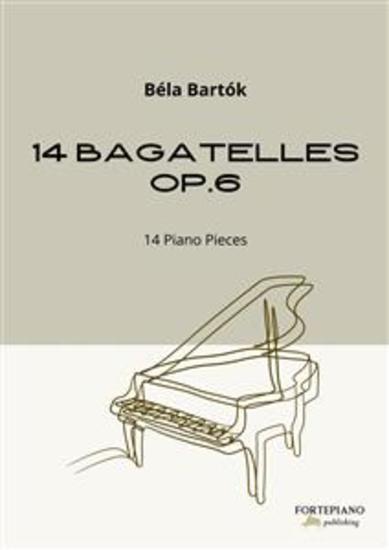
Bartók - 14 Bagatelles Op6 - 14 Piano Pieces - cover

Bartók - 14 Bagatelles Op6 - 14 Piano Pieces

Béla Bartók

Casa editrice: Fortepiano Publishing

  • 0
  • 0
  • 0

Sinossi

The "14 Bagatelles, Op.6" by Béla Bartók are a significant collection in the world of classical music, showcasing Bartók's evolving style and his interest in folk music. Composed in 1908, these pieces represent a departure from the Romantic style of his earlier works and a move towards a more modernist, even experimental approach.
Here are some key aspects of the 14 Bagatelles:

	Stylistic Shift: This collection marks a clear shift in Bartók's compositional style. The pieces are more abstract, atonal at times, and show a significant departure from the influence of composers like Brahms and Strauss, which were evident in his earlier works.
	Influence of Folk Music: Bartók was deeply influenced by Hungarian and other Eastern European folk music. This influence is evident in the Bagatelles, both in terms of melody and rhythm. He began to incorporate these elements more freely, moving away from traditional Western classical forms.
	Experimental Techniques: Bartók experimented with various new techniques in these pieces, including unconventional scales, irregular rhythms, and dissonance. This experimentation laid the groundwork for his later, more mature style.
	Emotional Depth and Range: Despite their brevity, the Bagatelles are rich in emotional content and range. They capture a wide spectrum of moods, from melancholy to playfulness.
	Influence on Modern Music: The 14 Bagatelles are considered to be among the precursors of modernist music in the 20th century. Bartók's innovative approach in these pieces influenced many later composers.
	Structure and Form: Each Bagatelle is relatively short but distinct, showcasing Bartók's ability to express complex ideas and emotions in a condensed form.

These pieces are not only important in understanding Bartók's development as a composer but also in the evolution of classical music in the early 20th century. They continue to be studied and performed widely, offering insights into the blending of folk influences with modernist musical techniques.
Disponibile da: 19/01/2024.
Altri libri che potrebbero interessarti

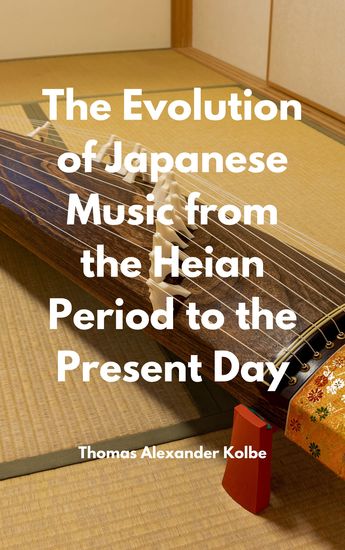
  • The Evolution of Japanese Music from the Heian Period to the Present Day - cover

    The Evolution of Japanese Music...

    Anonimo

    • 0
    • 0
    • 0
    The ebook "The Evolution of Japanese Music from the Heian Period to the Present Day" covers the rich history and transformation of Japanese music across multiple periods. It explores key eras such as the Heian, Muromachi, Edo, and modern periods, focusing on how historical, political, and cultural shifts shaped musical forms.
    
    During the Heian period (794–1185), Gagaku (court music) and Bugaku (dance) dominated the scene, representing the pinnacle of classical Japanese music tied to the imperial court. Instruments like the biwa and koto became central to these traditions. As Japan entered the Muromachi period (1336–1573), new musical influences from Zen Buddhism emerged, particularly through the use of the shakuhachi, a bamboo flute used by monks for meditation. Popular and folk music such as *dengaku* and *sarugaku* also evolved, becoming the foundation for future theatrical traditions like Noh.
    
    The Azuchi-Momoyama period (1573–1603) saw continued development in Noh theater and the rise of Kabuki, a dynamic theatrical form combining music, dance, and drama. The introduction of Western music through European contact during this time brought new instruments like the guitar and harpsichord to Japan, although traditional instruments such as the shamisen became key to the emerging Bunraku puppet theater.
    
    By the Edo period (1603–1868), Japan's isolationist policies preserved and refined its musical traditions. Kabuki and Bunraku became major cultural forces, heavily integrating music into their performances. The shamisen played a central role in both forms. Gagaku and other courtly traditions persisted but gradually became more ceremonial.
    
    In the modern era, Western influences grew stronger, leading to a blending of traditional and contemporary styles, from classical Japanese music to the introduction of genres like J-pop and Enka, while maintaining the distinctiveness of traditional Japanese sound.
    
    This historical journey shows how Japanese music continuously adapted to external influences while preserving its ancient roots.
    Mostra libro
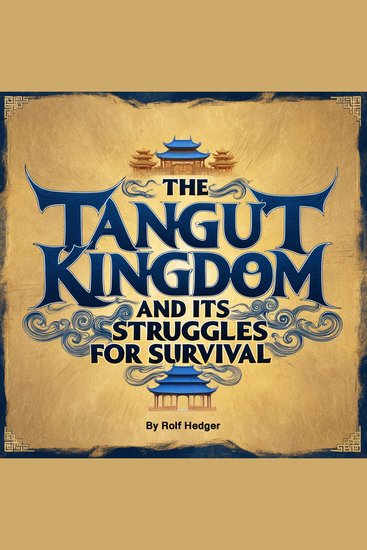
  • The Tangut Kingdom - And Its Struggles for Survival - cover

    The Tangut Kingdom - And Its...

    Rolf Hedger

    • 0
    • 0
    • 0
    The Tangut people, an ethnic group of uncertain origins, gradually emerged as a distinct force in northwestern China. They are believed to have descended from the Qiang tribes, a collection of nomadic and semi-nomadic groups that roamed the Tibetan Plateau and the Ordos region. Over centuries, they migrated and settled in what is now modern-day Ningxia and parts of Gansu and Inner Mongolia, where they established communities and developed a unique cultural identity. Their position between the Tibetan Plateau, the Central Asian steppes, and the Chinese heartland made them an important intermediary in regional affairs. 
    The Tangut rise to prominence was influenced by their interactions with the dominant powers of the region. The Tibetan Empire, which controlled vast areas of western China until its decline in the ninth century, played a significant role in shaping early Tangut culture and governance. The collapse of the Tibetan Empire created a power vacuum that allowed smaller groups like the Tangut to assert their independence. At the same time, the weakening of the Tang Dynasty left northern China vulnerable to fragmentation, further enabling the Tangut to carve out a space for themselves. 
    By the tenth century, the Tangut had developed into a formidable military and political entity, leveraging their strategic location along trade routes to establish economic and diplomatic ties with neighboring states. They maintained relations with the Song Dynasty to the east, the Tibetan remnants to the south, and the nomadic Khitan Liao Empire to the north. These interactions not only enriched Tangut society but also introduced them to a variety of political models, from the bureaucratic governance of the Chinese dynasties to the tribal confederations of the steppe.
    Mostra libro
  • Tell Them It's A Dream Sequence: And Other Smart Advice from Top Filmmakers - cover

    Tell Them It's A Dream Sequence:...

    John Gaspard

    • 0
    • 0
    • 0
    Is it your dream to make feature films? 
    Get advice on how to do that by some of the best in the business!  
    It’s like going to film school without ever leaving home. 
    Valuable Lessons on Making a Successful Feature Film.  
    Includes great tips and ideas from: Steven Soderbergh (“sex, lies & videotape”)Roger Corman (“Little Shop of Horrors”)Jon Favreau (“Swingers”)Rebecca Miller (“Personal Velocity”)Kenneth Lonergan (“You Can Count on Me”)Henry Jaglom (“Venice/Venice”)Miranda July (“Me and You and Everyone We Know”)Bob Odenkirk (“Melvin Goes to Dinner”)Dan O'Bannon (“Dark Star”)Whit Stillman (“Metropolitan”)Jonathan Lynn (“My Cousin Vinny”)Carol Littleton (“The Big Chill”)Dan Futterman (“Capote”)Joan Micklin Silver (“Hester Street”)Griffin Dunne (“Lisa Picard is Famous”)Stuart Gordon (“Re-Animator”)Kasi Lemmons (“Eve’s Bayou”)George Romero (“Martin”)Tom Noonan (“What Happened Was…”)Daniel Myrick (“The Blair Witch Project”) 
    And many more! 
    Topics covered include getting started, scripting, pre-production, production, post-production and distribution.
    Mostra libro
  • The Monster Movies of Universal Studios - cover

    The Monster Movies of Universal...

    James L Neibaur

    • 0
    • 0
    • 0
    This history and critique of classic scary films “honors Universal’s horror legacy. . . . an excellent resource for film students and monster movie fanatics” (Library Journal). In 1931 Universal Studios released Dracula starring Bela Lugosi. This box office success was followed by a string of films featuring macabre characters and chilling atmospherics, including Frankenstein, The Mummy, and The Invisible Man. With each new film, Universal established its place in the Hollywood firmament as the leading producer of horror films, a status it enjoyed for more than twenty years. In The Monster Movies of Universal Studios, James L. Neibaur examines the key films produced by the studio from the early 1930s through the mid-1950s. In each entry, Neibaur recounts the movie’s production, provides critical commentary, considers the film’s commercial reception, and offers an overall assessment of the movie’s significance. Neibaur also examines the impact these films had on popular culture, an influence that resonates in the cinema of fear today. From the world premiere of Dracula to the 1956 release of The Creature Walks among Us, Universal excelled at scaring viewers of all ages—and even elicited a few chuckles along the way by pitting their iconic creatures against the comedic pair of Abbott and Costello. The Monster Movies of Universal Studios captures the thrills of these films, making this book a treat for fans of the golden age of horror cinema.   “Studio stills and trade ads for several of the films add a suitably scary touch to this treat for fans and scholars alike. ― Booklist “An impressive work of film scholarship.” ― Cinema Retro  
    Mostra libro
  • Summary: Friends Lovers and the Big Terrible Thing - A Memoir By Matthew Perry: Key Takeaways Summary and Analysis - cover

    Summary: Friends Lovers and the...

    Brooks Bryant

    • 0
    • 0
    • 0
    DISCLAIMER: THIS IS NOT THE OFFICIAL BOOK. 
    This is a summary, and it does not accompany the official 
    'Friends, Lovers, and the Big Terrible Thing' by Matthew Perry is a gripping memoir that chronicles the remarkable life of the renowned actor. From a tumultuous childhood to national tennis stardom and landing a coveted role on 'Friends,' Perry shares the highs and lows of his journey with honesty and humor. He explores the complexities of his fractured family, the allure of fame, and the persistent void that addiction couldn't fill, even amidst success. With self-awareness and wit, Perry delves into his lifelong battle with addiction, ultimately finding peace in sobriety. This memoir is an intimate and enlightening story, extending a hand of understanding to those grappling with similar struggles while providing fans with an inside look at his life and experiences
    Mostra libro
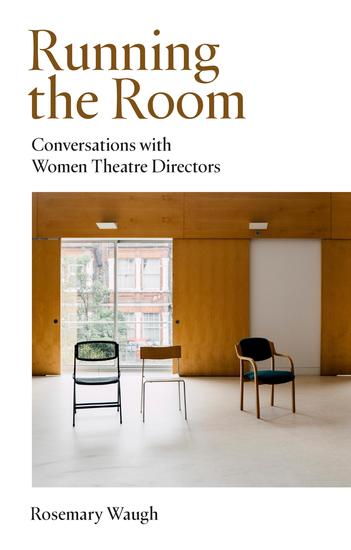
  • Running the Room - Conversations with Women Theatre Directors - cover

    Running the Room - Conversations...

    Rosemary Waugh

    • 0
    • 0
    • 0
    Our most brilliant, fearless and creative women directors open the door on their craft, discussing their work in the theatre in intimate and illuminating detail.
    Through a series of fascinating conversations with many of the leading talents working on British stages, Running the Room explores what it takes to succeed in the field, and how each director approaches the work in their own way.
    Each interview focuses on a particular facet of the director's practice, examining not just the 'how' – how to talk to actors, how to create the right rehearsal environment, how to handle cuts and previews, how to work with a living playwright – but also the 'why': why certain approaches work better than others, why there's no 'right' way to direct a play, and why work in theatre anyway?
    As this passionate, inspiring book shows, there are myriad ways to be a theatre director. For aspiring or current directors, it will give you the confidence to be uniquely yourself, develop your own approach, and create the work you want to make. For creatives in other disciplines, it will provide insight into directors' processes, along with examples of successful collaboration. And for anyone who loves theatre, this is an unparalleled first-hand account of how brilliant theatre is made – direct from those making it.
    With contributions from:
    Natalie Abrahami • Annabel Arden • Milli Bhatia • Carrie Cracknell • Tinuke Craig • Marianne Elliott • Nadia Fall • Yaël Farber • Vicky Featherstone • Jamie Fletcher •  Sarah Frankcom • Emma Frankland • Rebecca Frecknall • Debbie Hannan • Tamara Harvey • Natalie Ibu • Ola Ince • Lynette Linton • Nancy Medina • Katie Mitchell • Rachel O'Riordan • Emma Rice • Indhu Rubasingham • Jenny Sealey
    Mostra libro