Bell Witch The: The Colorful...
Charles River Editors
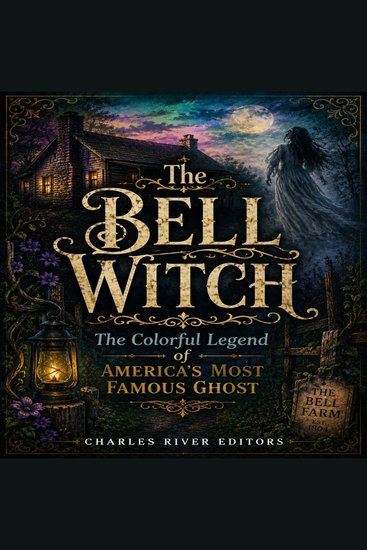
There is a small graveyard on a rise outside Adams, Tennessee, on what used to be the Bell farm. The stones are old and worn but still readable. John Bell, born 1750. Lucy Williams Bell, his wife. The children who survived them, who married and farmed, and at last lay down beside their parents. The farm itself is gone, the log house collapsed more than a century ago, and the cornfields grew back to woods. But the graveyard remains, and the road that still passes it gets its fair share of people who come from a long way off to visit it.
	They come because of what allegedly happened on that farm between 1817 and 1821, because many believe that during those four years, something occupied the Bell house. It knocked on the walls at night, dragged invisible chains across the upper rooms, pulled the bedclothes off the children, and pinched the 13-year-old daughter until her arms ran blue. It quoted the Bible in a clear human voice and sang Methodist hymns in tune. It attended church services in two different houses simultaneously, according to the testimony of witnesses who later compared notes. It even claimed to have killed John Bell with a small dark vial of poison left in his cupboard. Then, one day, it announced that it was leaving, and it left, never to be heard from again.
	This is what the family and hundreds of their neighbors said. A Methodist circuit rider attested to it, as did the two Springfield doctors who came to investigate and the county justice of the peace. James Johnston, who sat up with John Bell through the worst of the nights, also told a similar story. As far as the record shows, none of them ever recanted their claims.
	The story of the Bell Witch has been told in Robertson County for over 200 years, and it has been written about in two major works: M.V. Ingram's An Authenticated History of the Bell Witch, published in 1894, and Charles Bailey Bell's The Bell Witch: A Mysterious Spirit, published in 1934.
Mostra libro